BRITAIN’S
WONDERFUL
AIR FORCE
Part 1

WINGED
MESSENGERS OF BOMBER
COMMAND
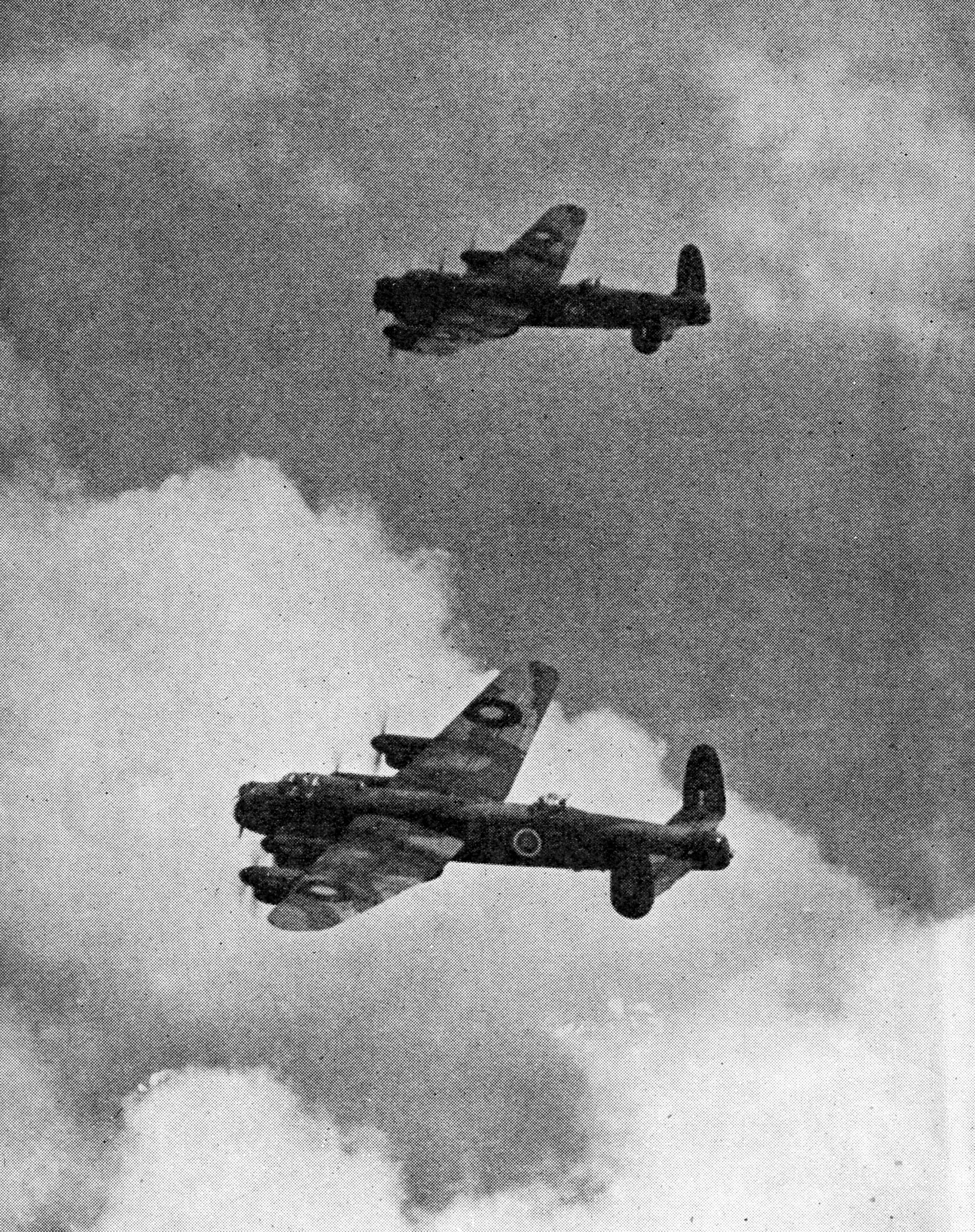
With every day that passes the
striking power of the R.A.F. increases. Above, these Avro Lancasters,
Britain’s latest four-engined bombers to go into service, are seen
setting course for an objective in Germany. They carry a crew of seven
and have great range with a heavy bomb
load
CONTENTS
Click on the blue dots  for direct access
FOREWORD
By Sir Charles Portal,
K.C.B., D.S.O., M.C.
CHAPTER 1. THE ROYAL
AIR
FORCE: ORGANIZATION AND PERSONNEL
CHAPTER
2. AERIAL STRATEGY AND
TACTICS
CHAPTER
3. A PILOT IN THE MAKING
CHAPTER
4. THE BOMBER AIRCRAFT
LIST OF ILLUSTRATIONS
Lancasters
setting course for an objective in Germany
Hurricanes
in line abreast
Almost
fully fledged - men walking to their Anson training aircraft
Mark
V Spitfires
R.A.F.
Command structure
Wellington
bombing up for a raid on enemy territory
Sunderland
flying boat taking off
Barrage
balloon being filled with hydrogen
Blenheim
bombers over the Libyan desert
Caps,
badges and sleeve markings of R.A.F. officers
Bombs
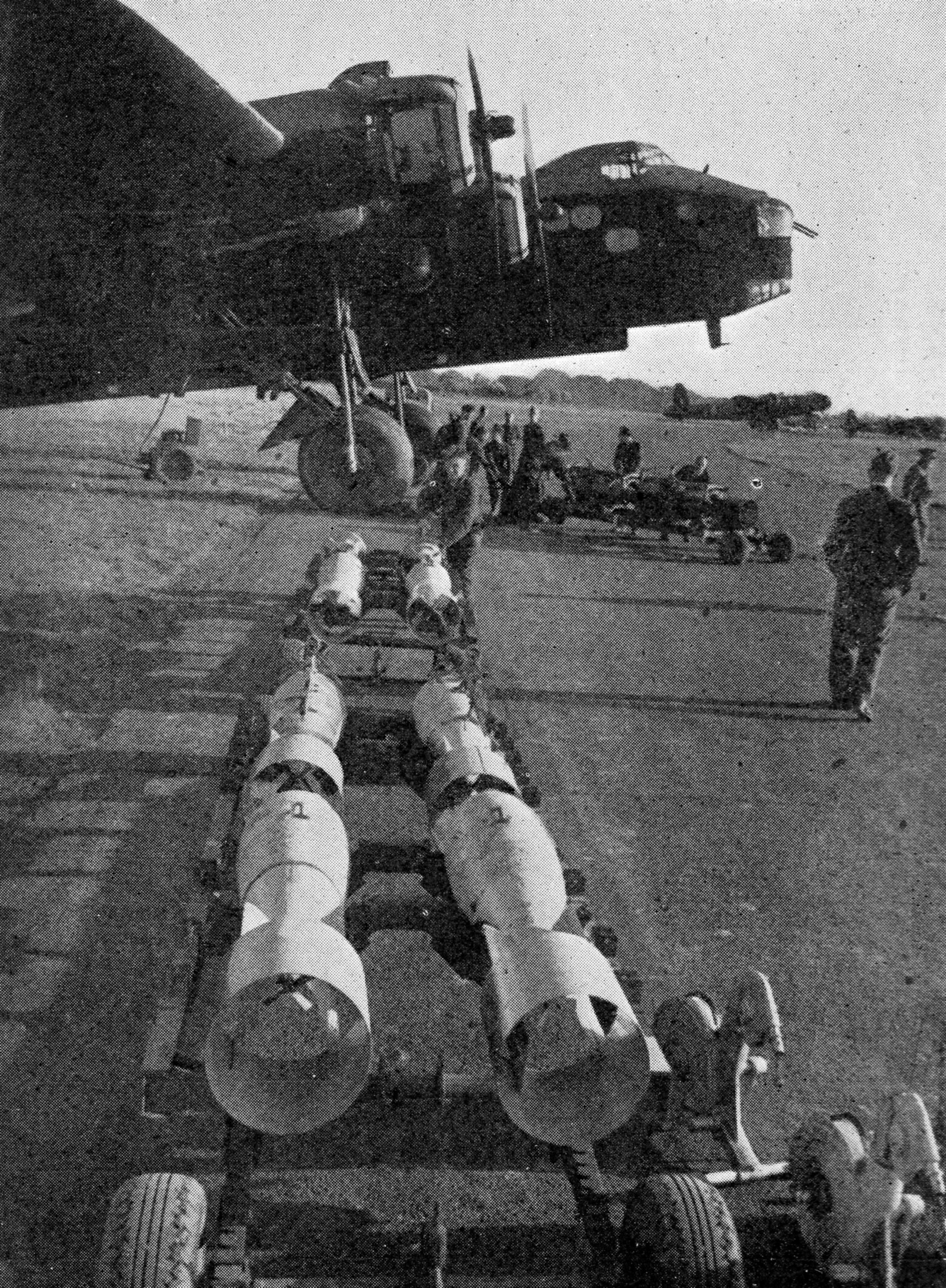
being loaded into a Stirling bomber
Pilot
under instruction in a Link trainer
An
armourer loading up the magazines of a fighter
Radio
mechanics in the control room of a transmitting station
Fitters
overhauling and adjusting the engines of a reconnaissance machine
Swimming
tank at an R.A.F. physical training school
Markings
of N.C.O.s and airmen
Badge,
ensigns, flags and targets
Sleeve
markings, caps and badges of W.A.A.F.
W.A.A.F.s
track down German raiders
Women
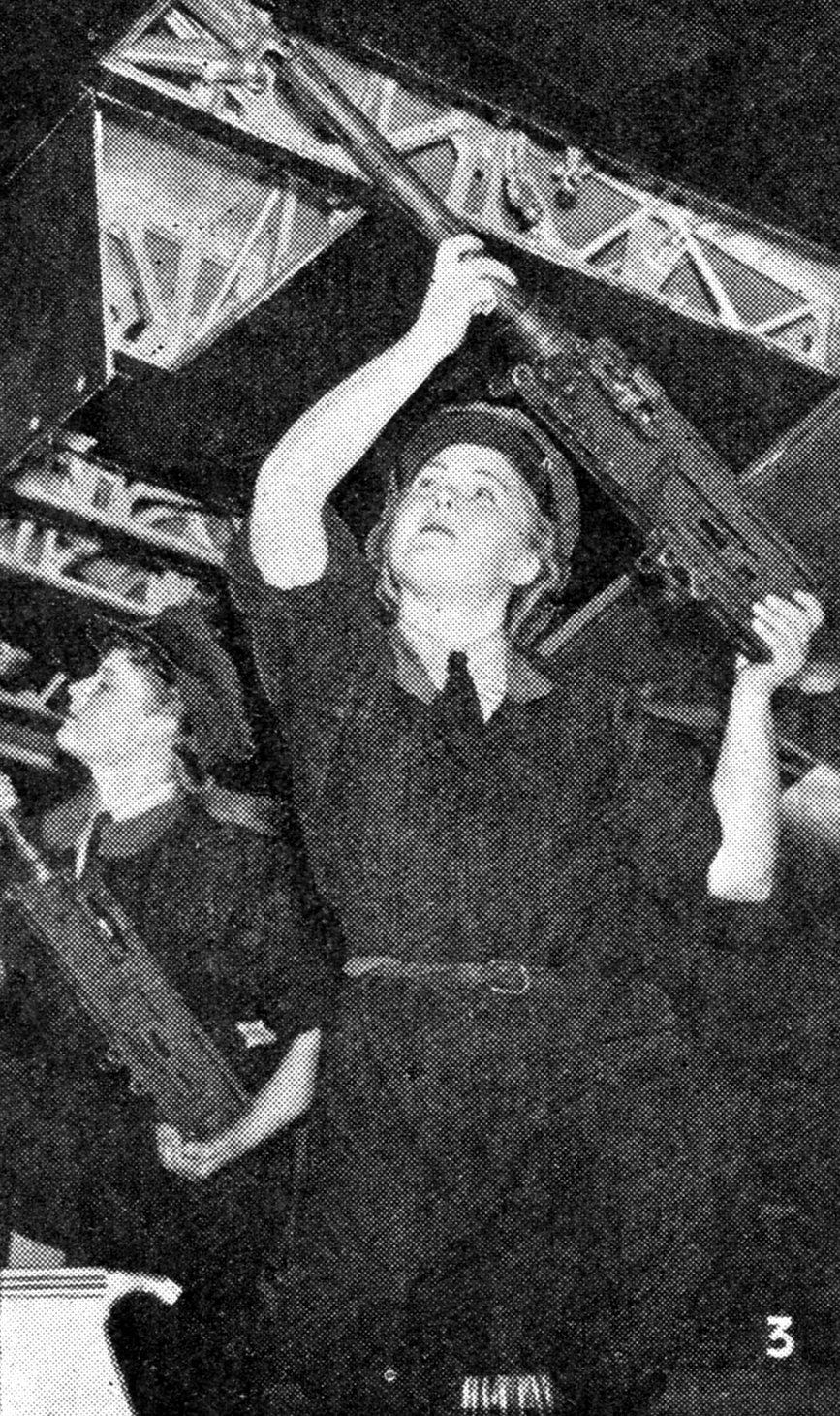
aircraft riggers at work
Women
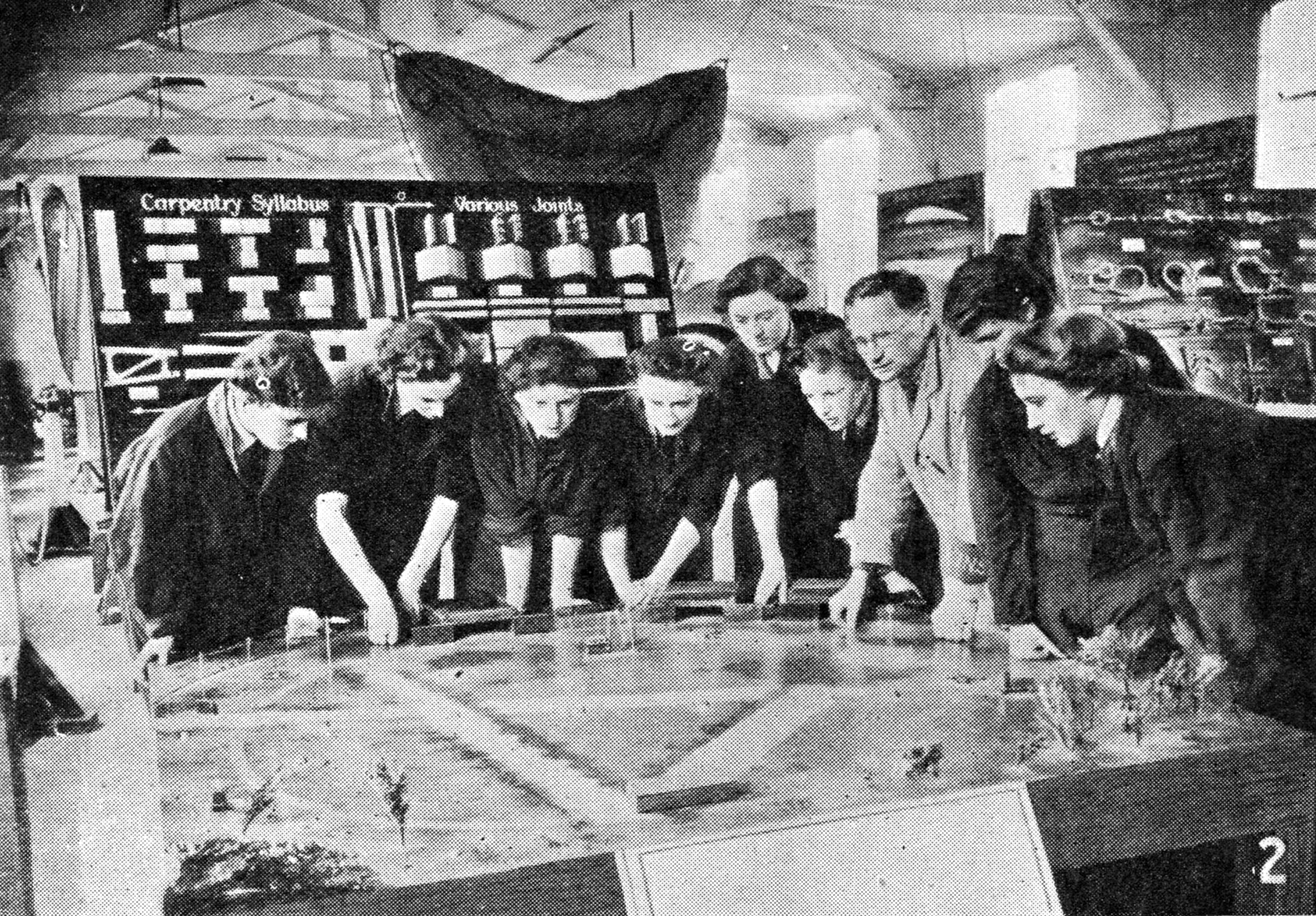
studying a model of an aerodrome
Girl
armourers at work
Women
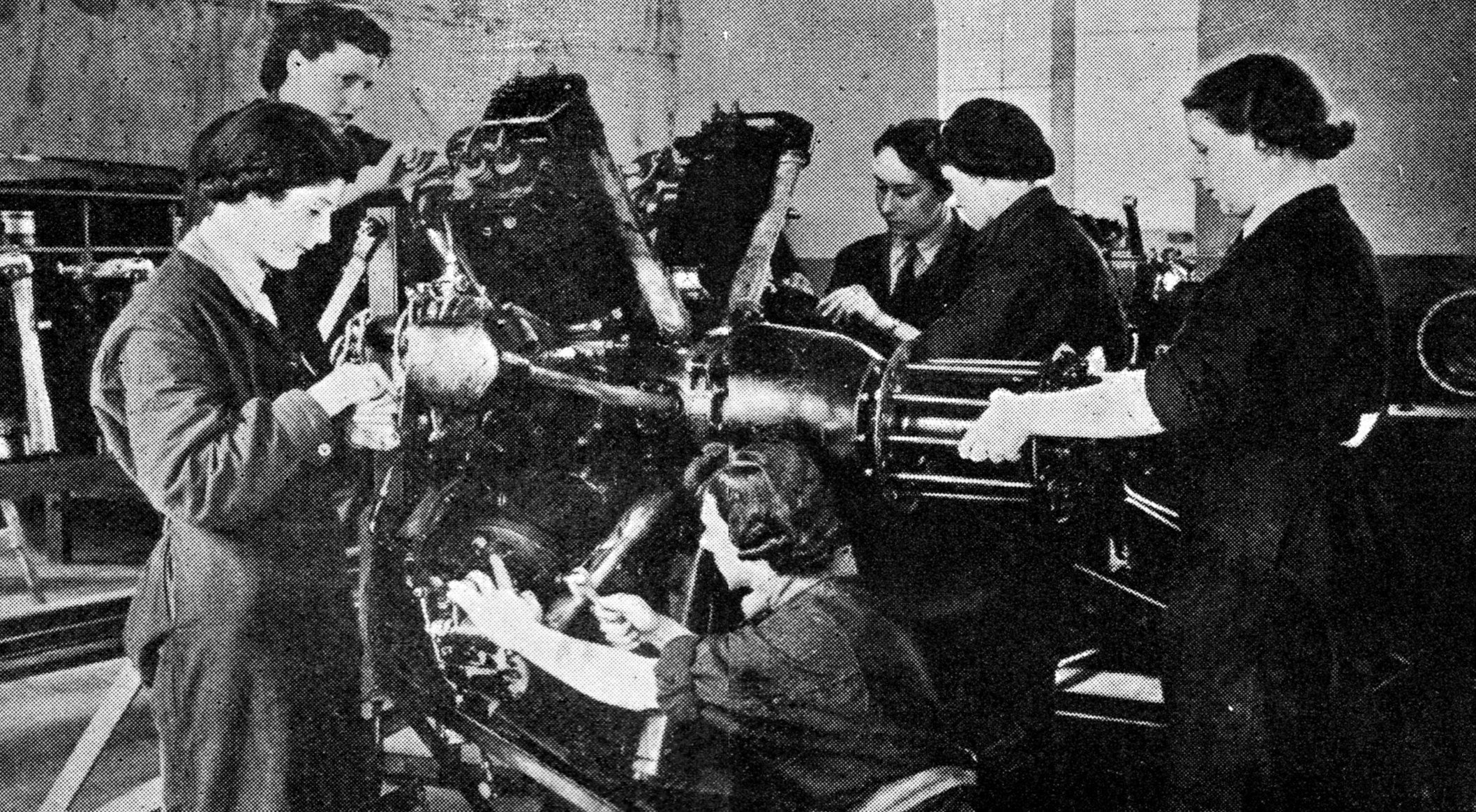
mechanics dismantling an aero engine
Girls
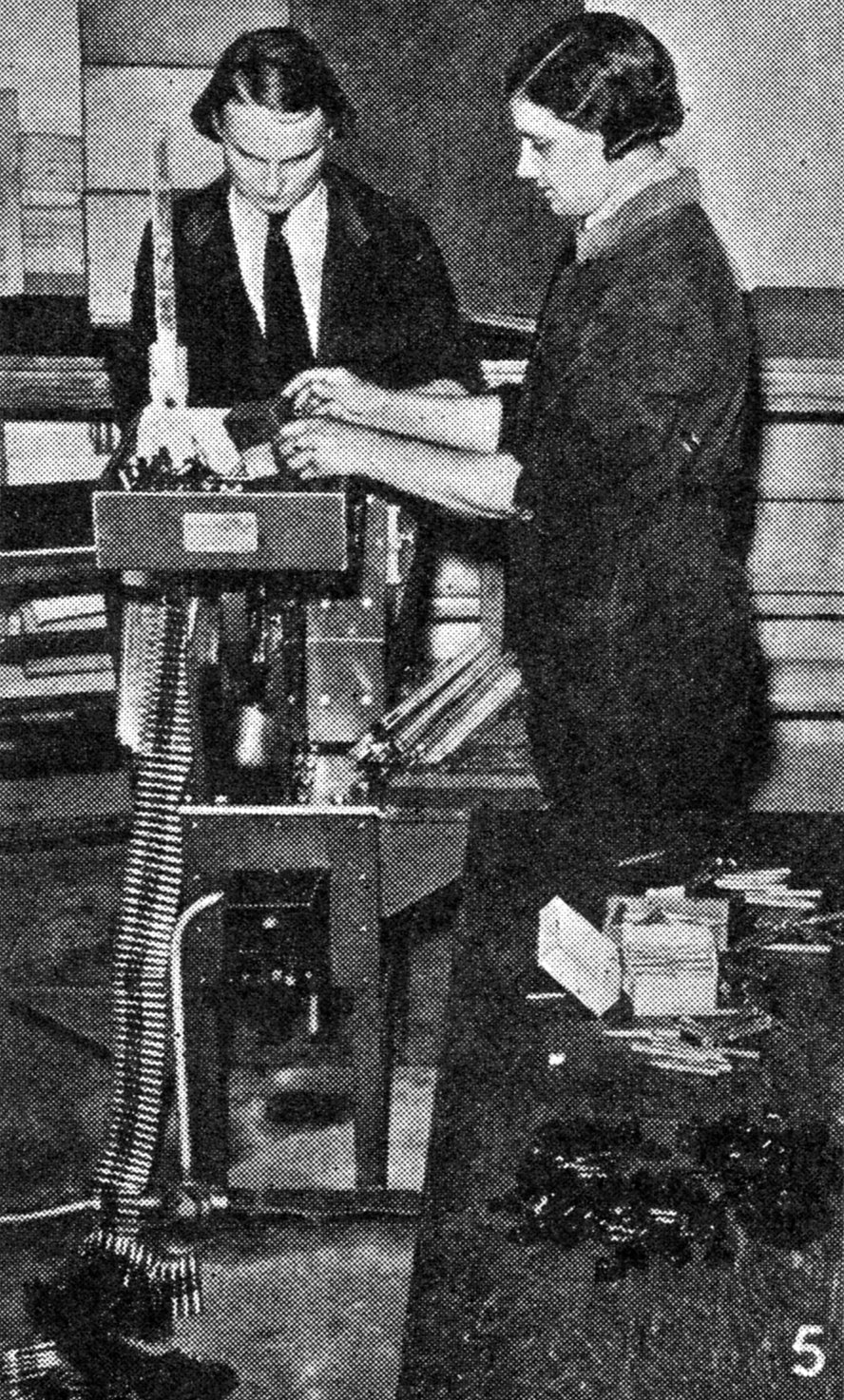
loading ammunition belts
Pilots
of tomorrow
How
a gun turret works
Medals
awarded to R.A.F. personnel
A
blow at the heart of the enemy
Stirlings
and their fighter escort
Fighters
clear the target area
Bomber
armament
Bombers
escorted by fighters
Bomber
formation
Pilots
studying target maps
High
altitude, low altitude and dive bombing
Fighters
getting inside the defensive circle
End
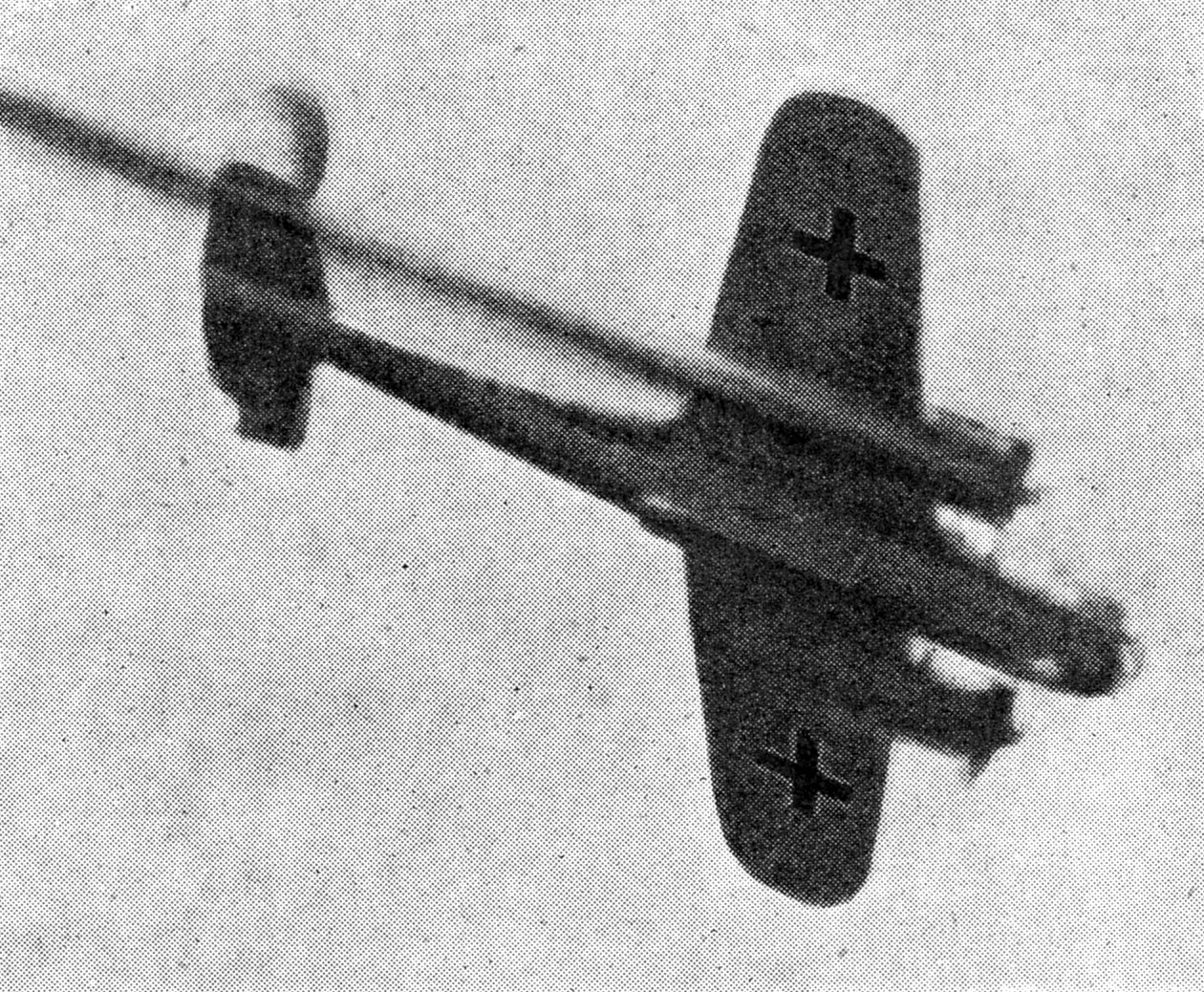
of a Dornier 17
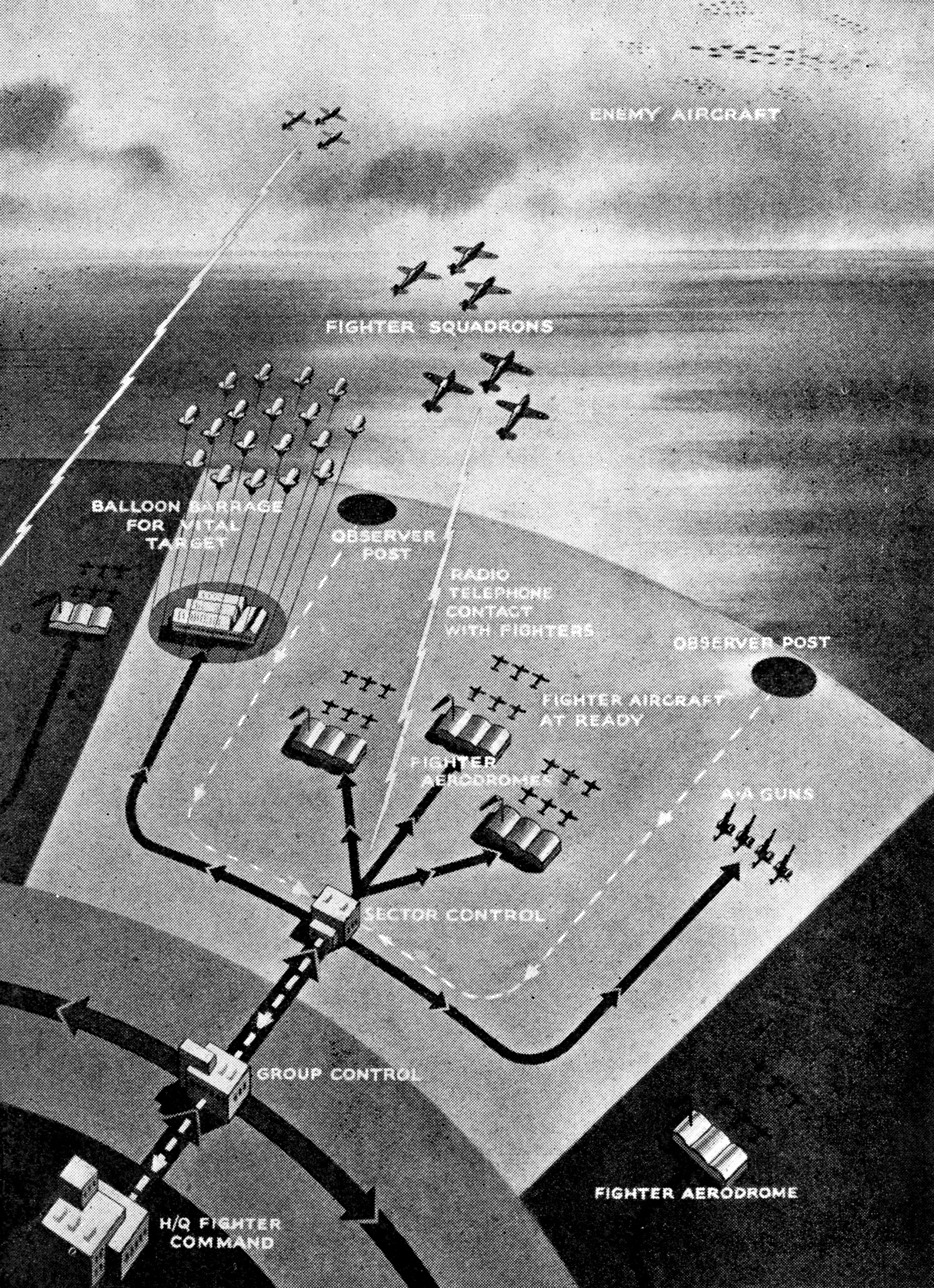
How
fighters are warned of the enemy’s
approach
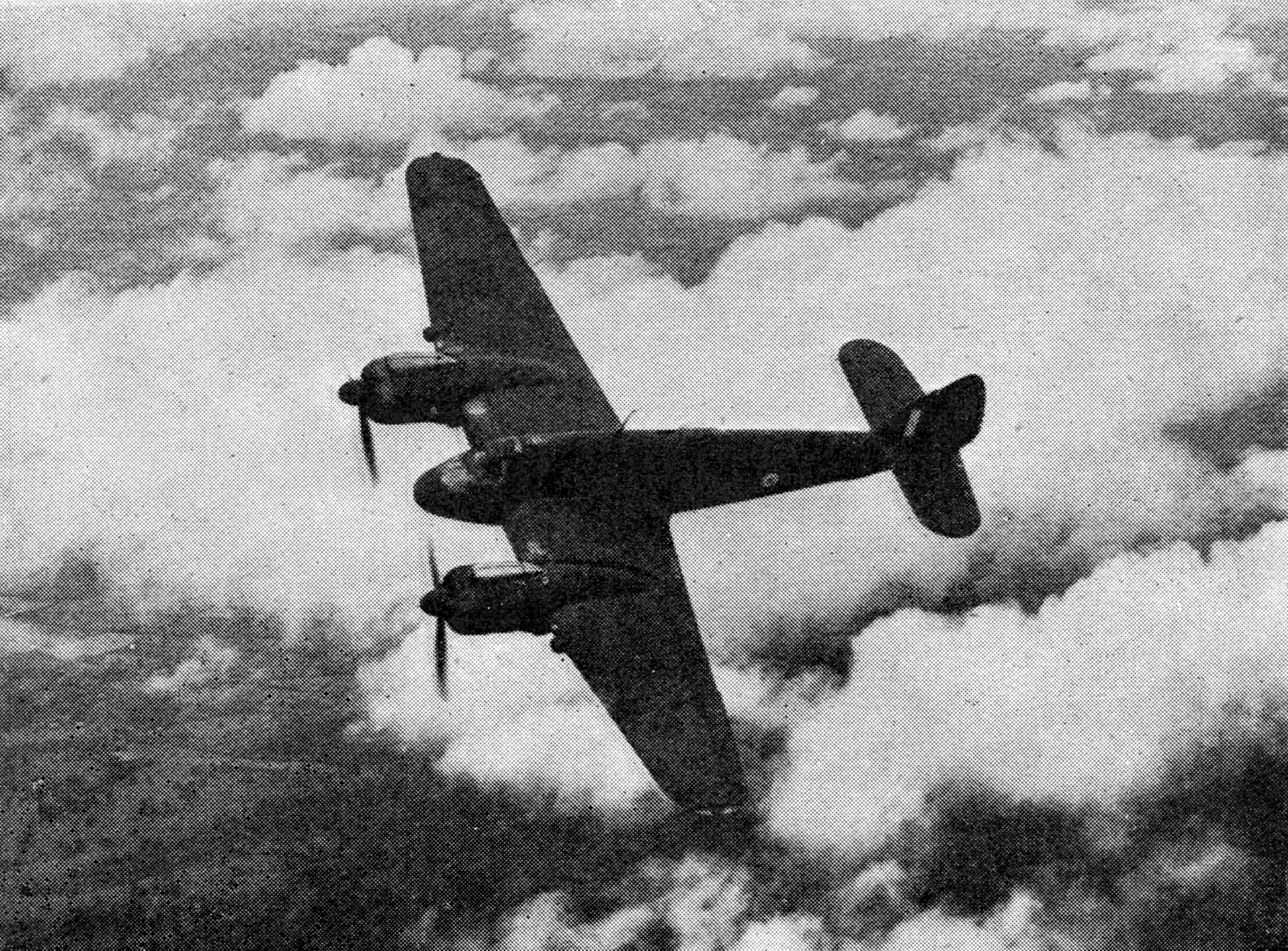
Beaufort
that torpedoed a pocket-battleship
Bristol
Beaufighter
Bombers
help the army
Hits
on Japanese positions
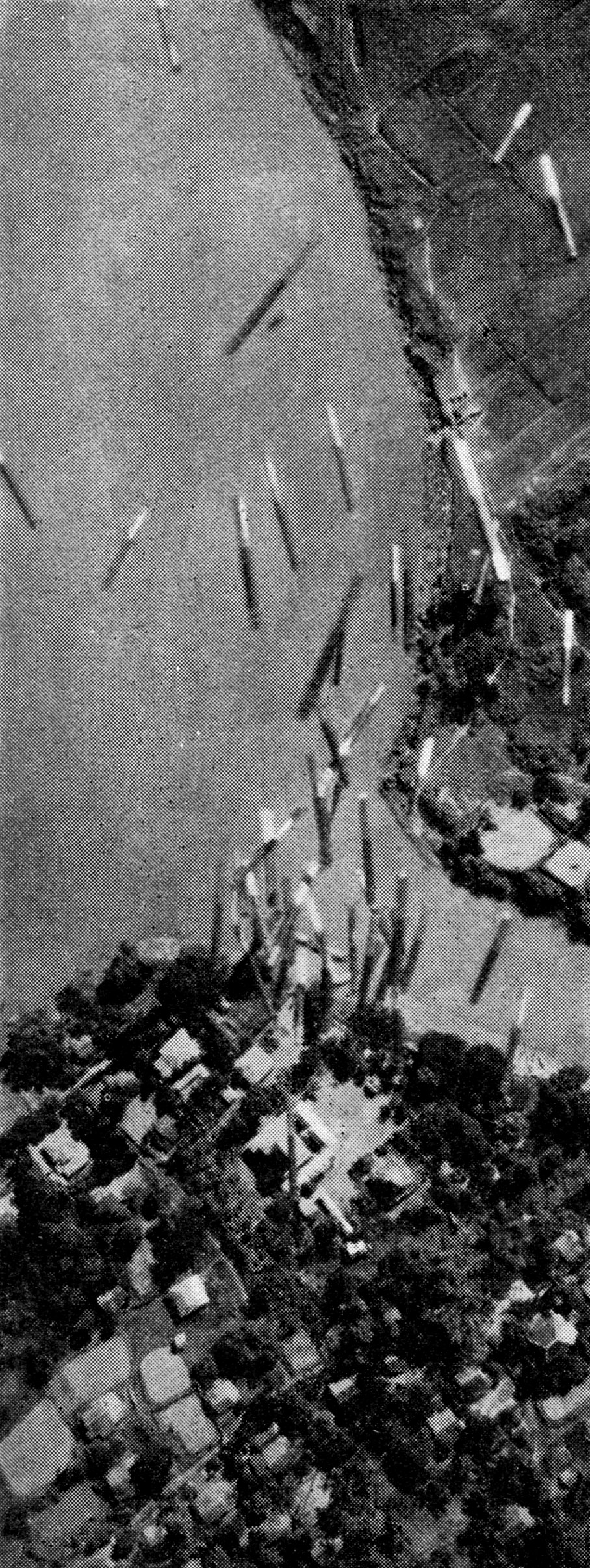
Enemy
secrets laid bare
Training
aircraft of the R.A.F.
Pilots
under training studying their maps before a cross-country flight
Secrets
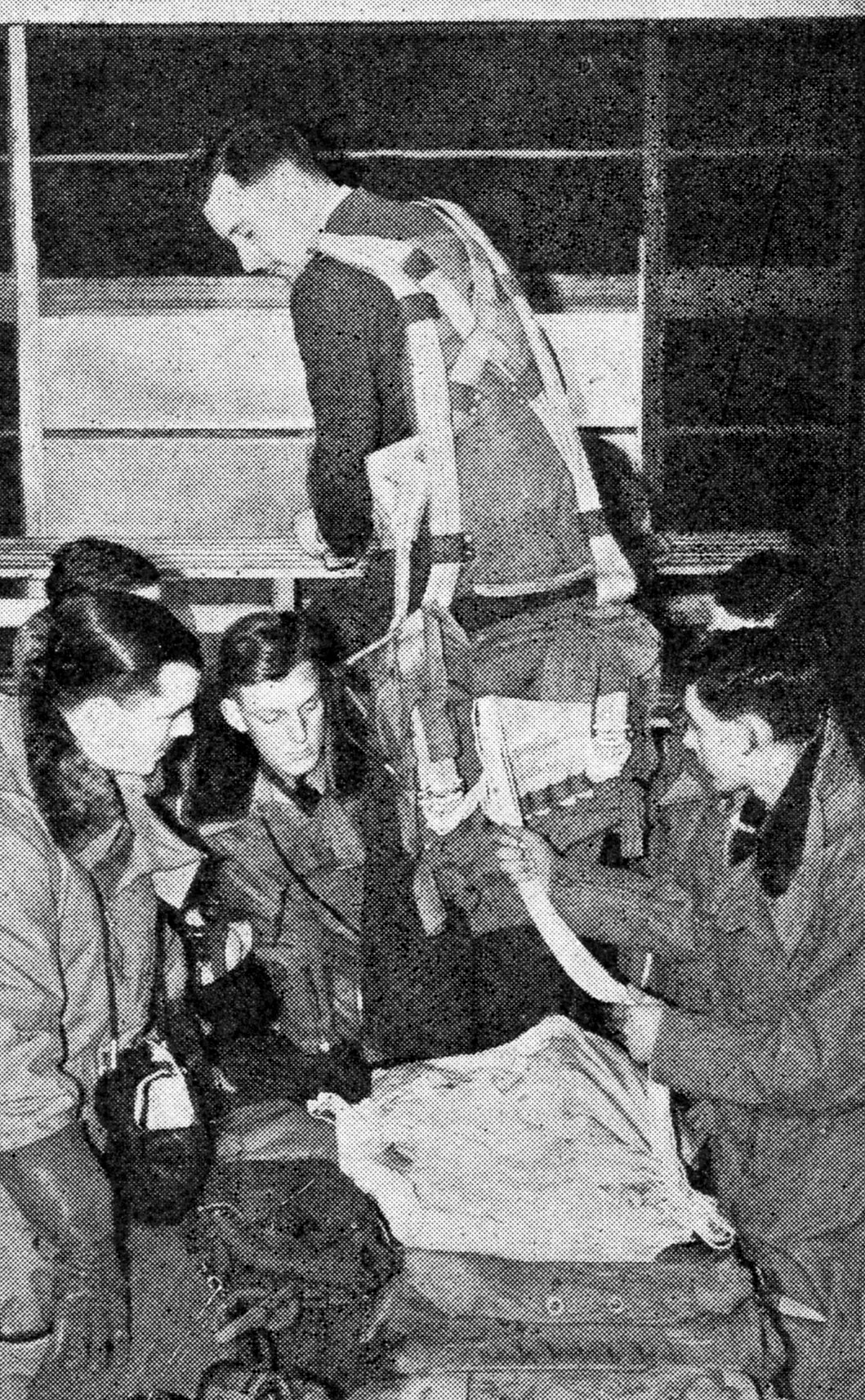
of the parachute explained
Learning
to pack the ’chute
The
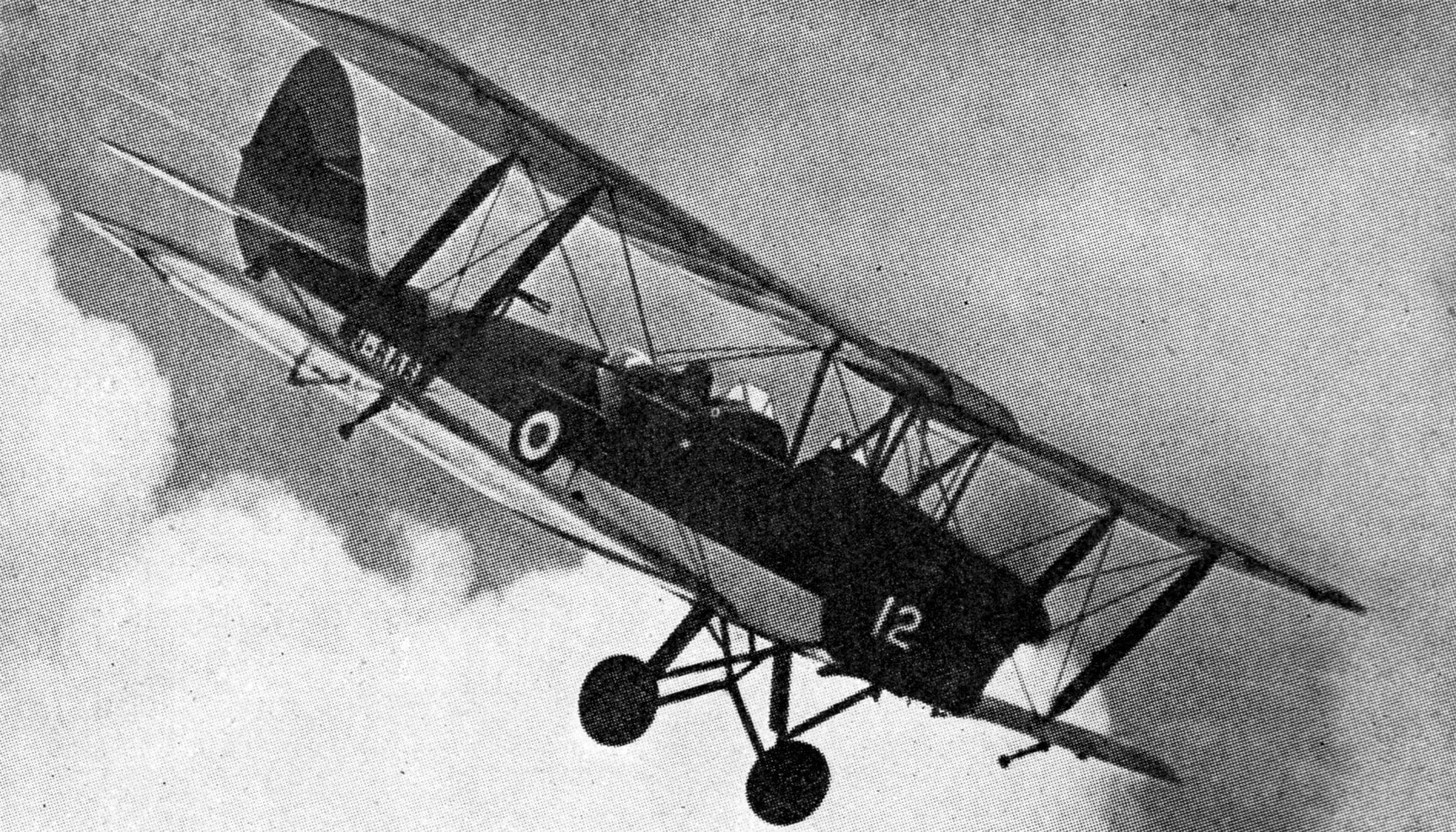
De Havilland Tiger Moth
The
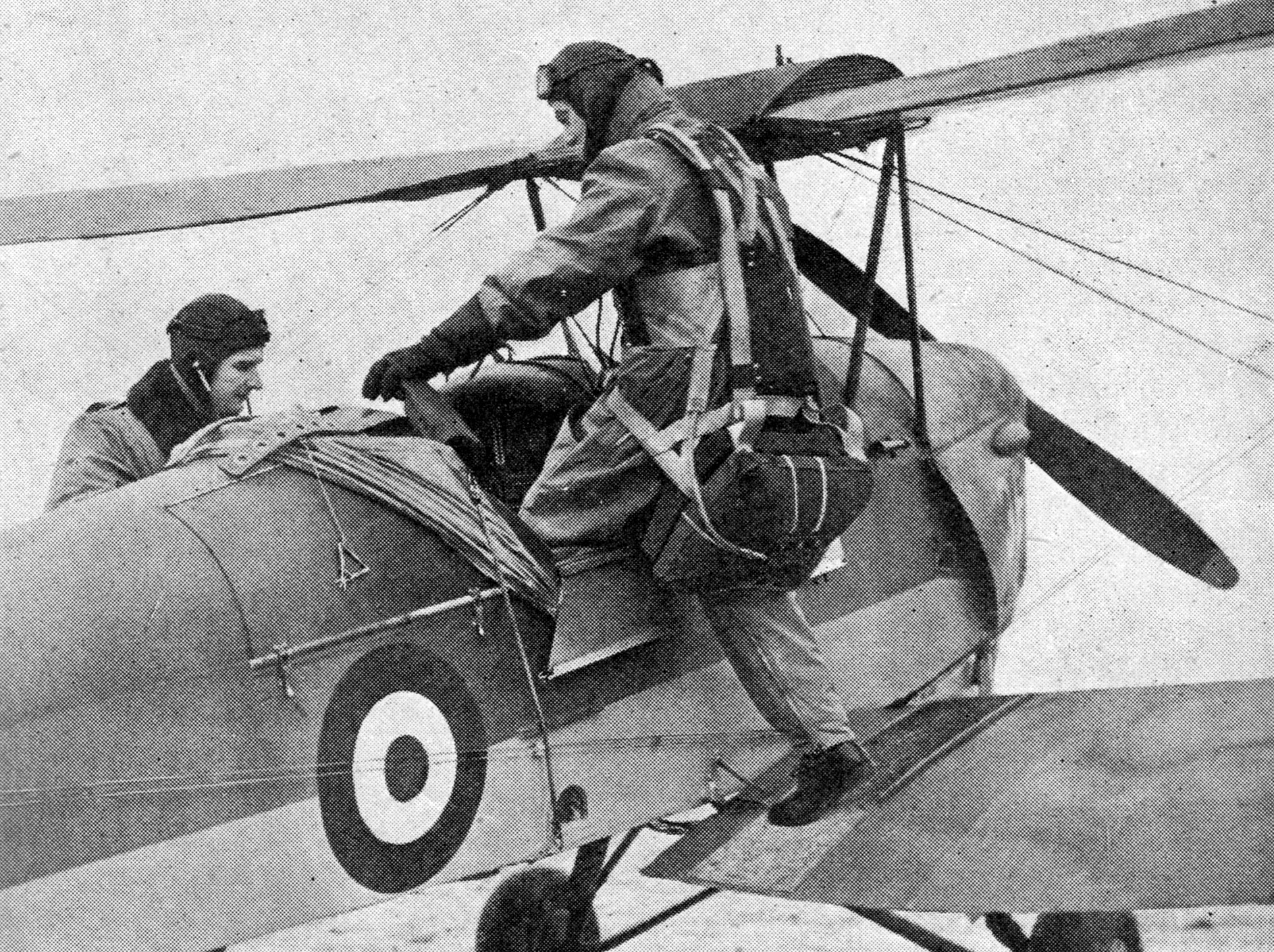
great moment—the
first flight
Miles
Magister initial trainer
Controls
of an aeroplane
Learning
“to
fly”
on the ground
The
“crab”
traces the pilot's course
Aerobatics
give pilots self-confidence
Cross-wind
landing
Airspeed
Oxford advanced trainer
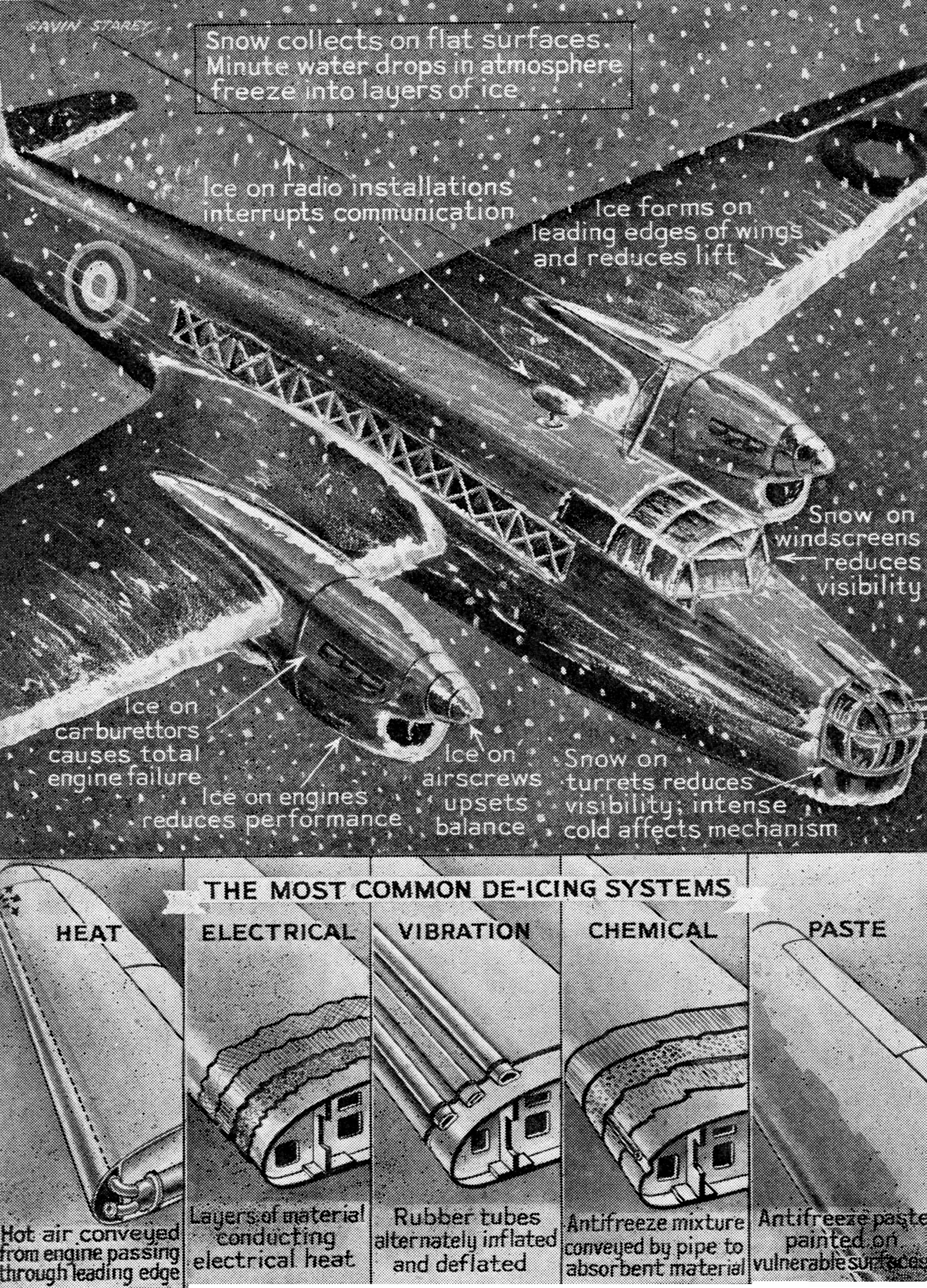
Devices
to overcome ice formation
Bomb
aiming trainer
Landing
by radio beam
A
proud moment—a
pilot sews on his wings
The
new pilot chooses Lancasters
Pilots
training in Canada
Bomber
aircraft of the R.A.F.
Bomb
safety device
Self-sealing
petrol tank
Particulars
of German bombers
Short
Stirling heavy bomber
Bombers
over the sea
Short
Stirling
Handley-Page
Halifax
Halifax
in flight
Bombs
for a Stirling
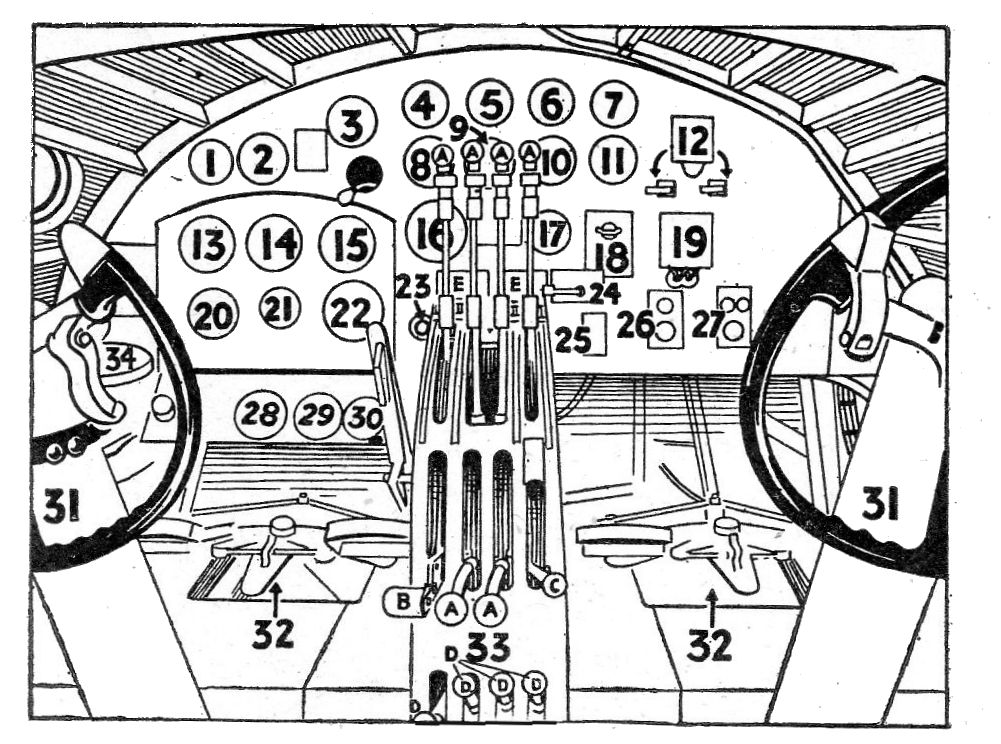
Controls
of a Stirling bomber
Details
of Stirling cockpit
Purpose
of flaps
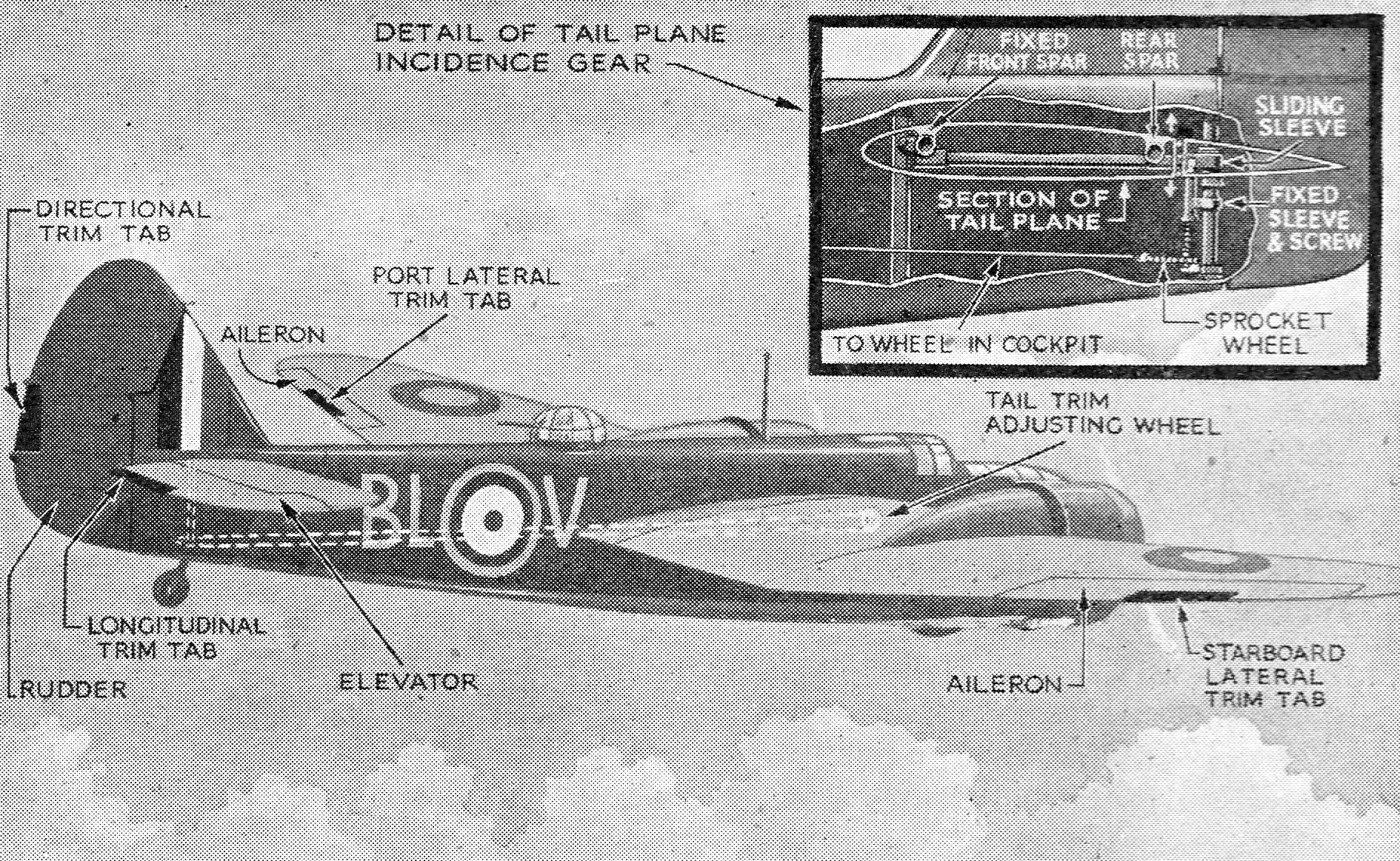
Trimming
tabs
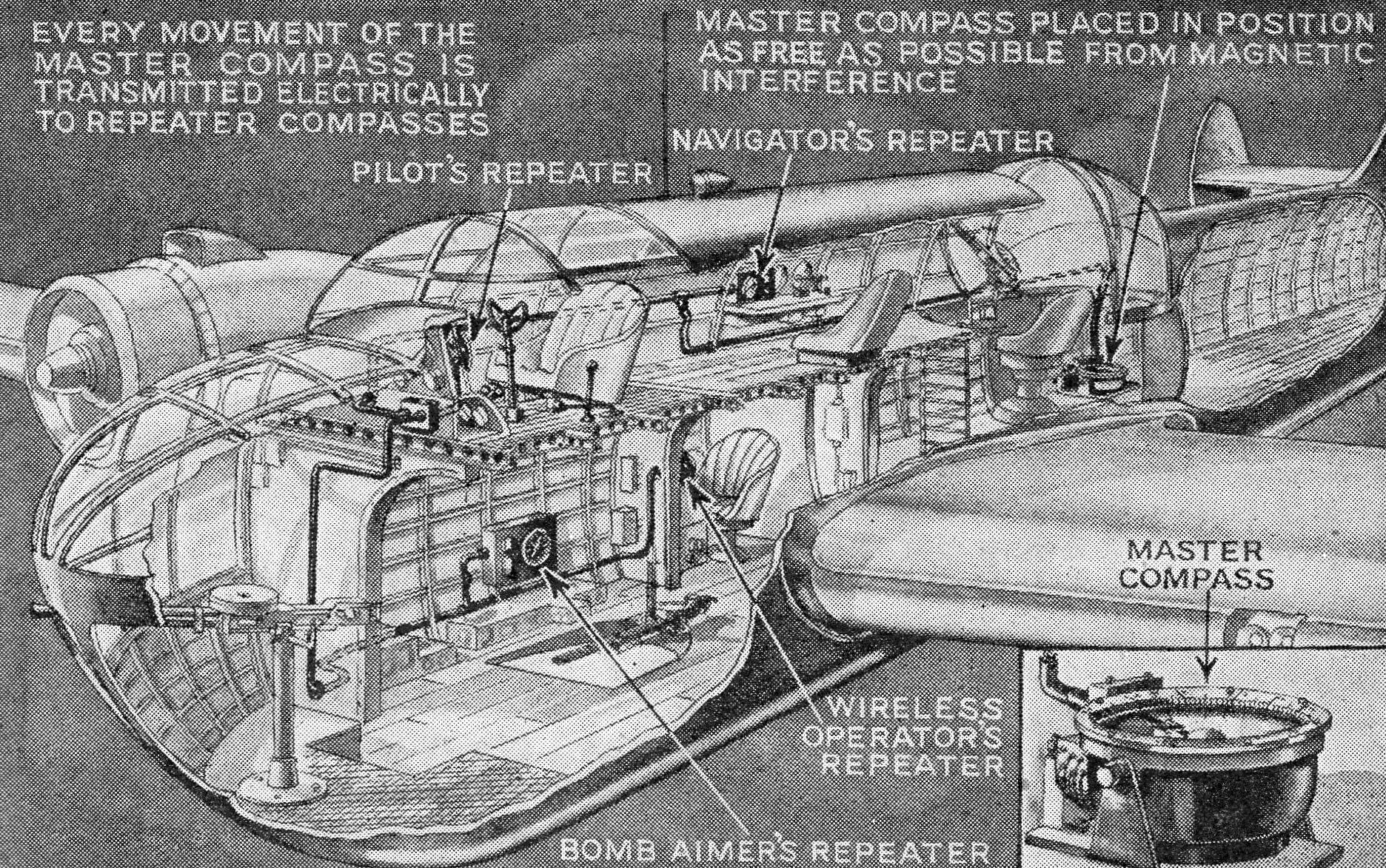
Master
compass and repeaters
Homing
in on a radio beacon
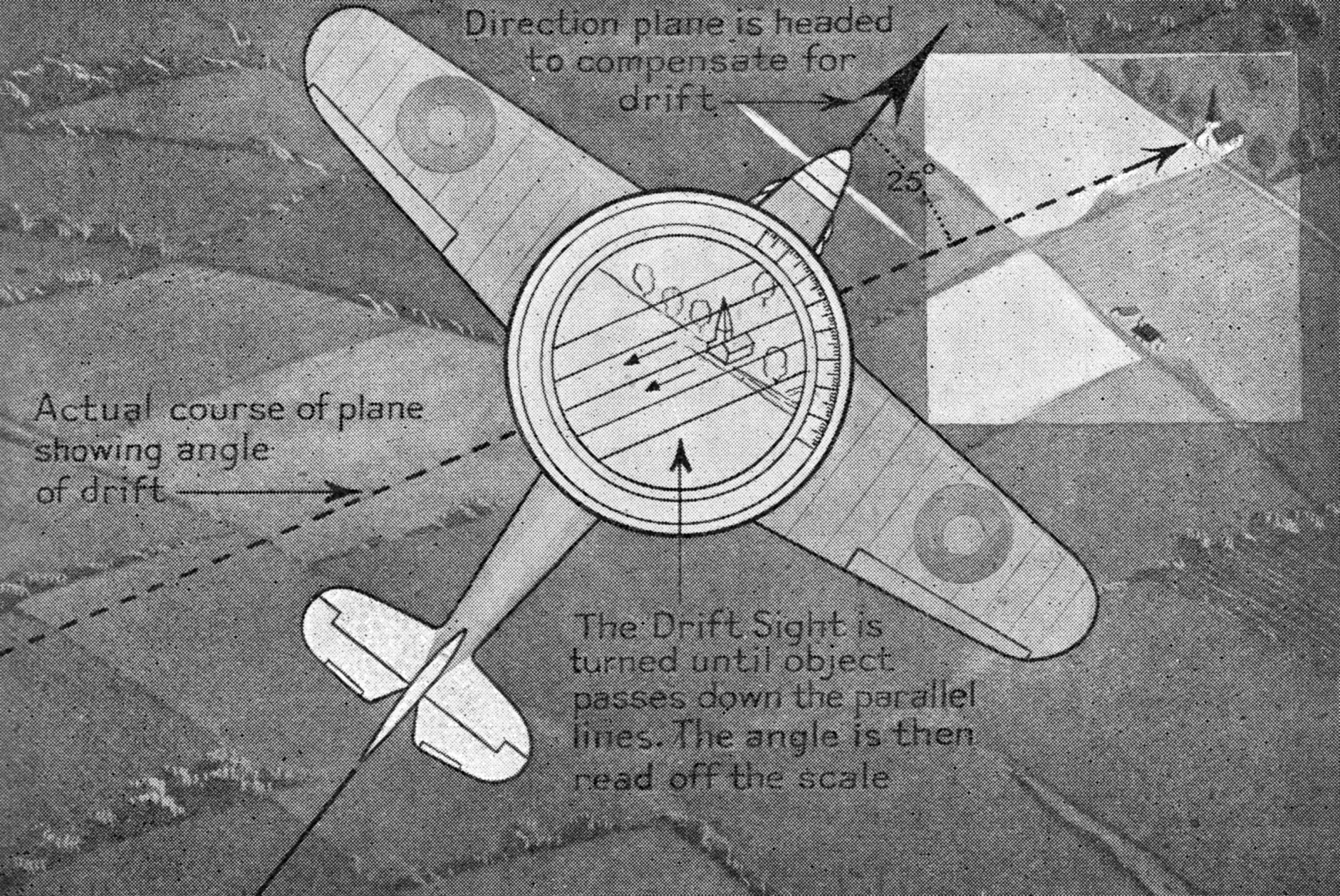
Finding
the angle of drift
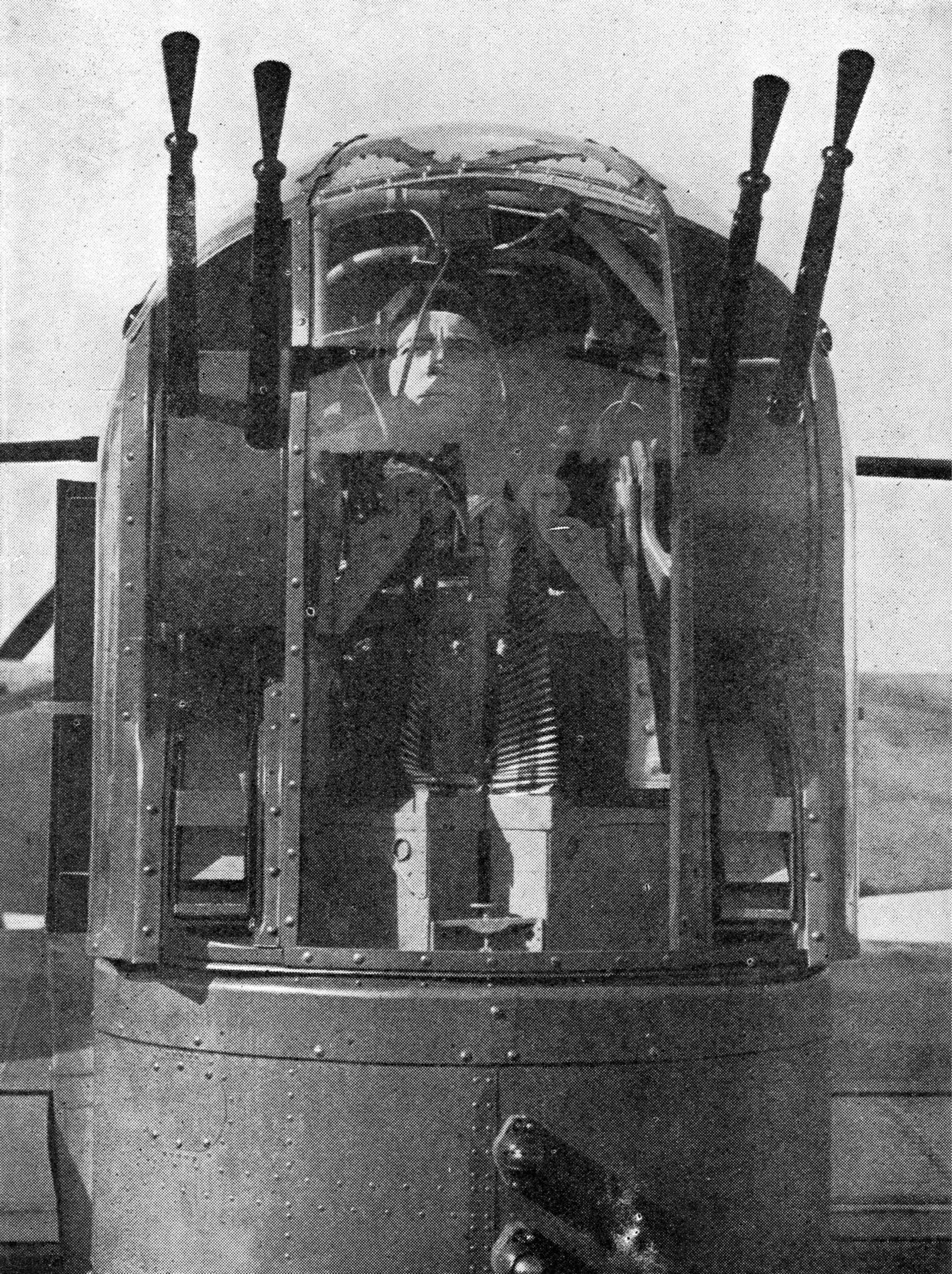
Rear
gun turret of a bomber
Whitley
gun turret
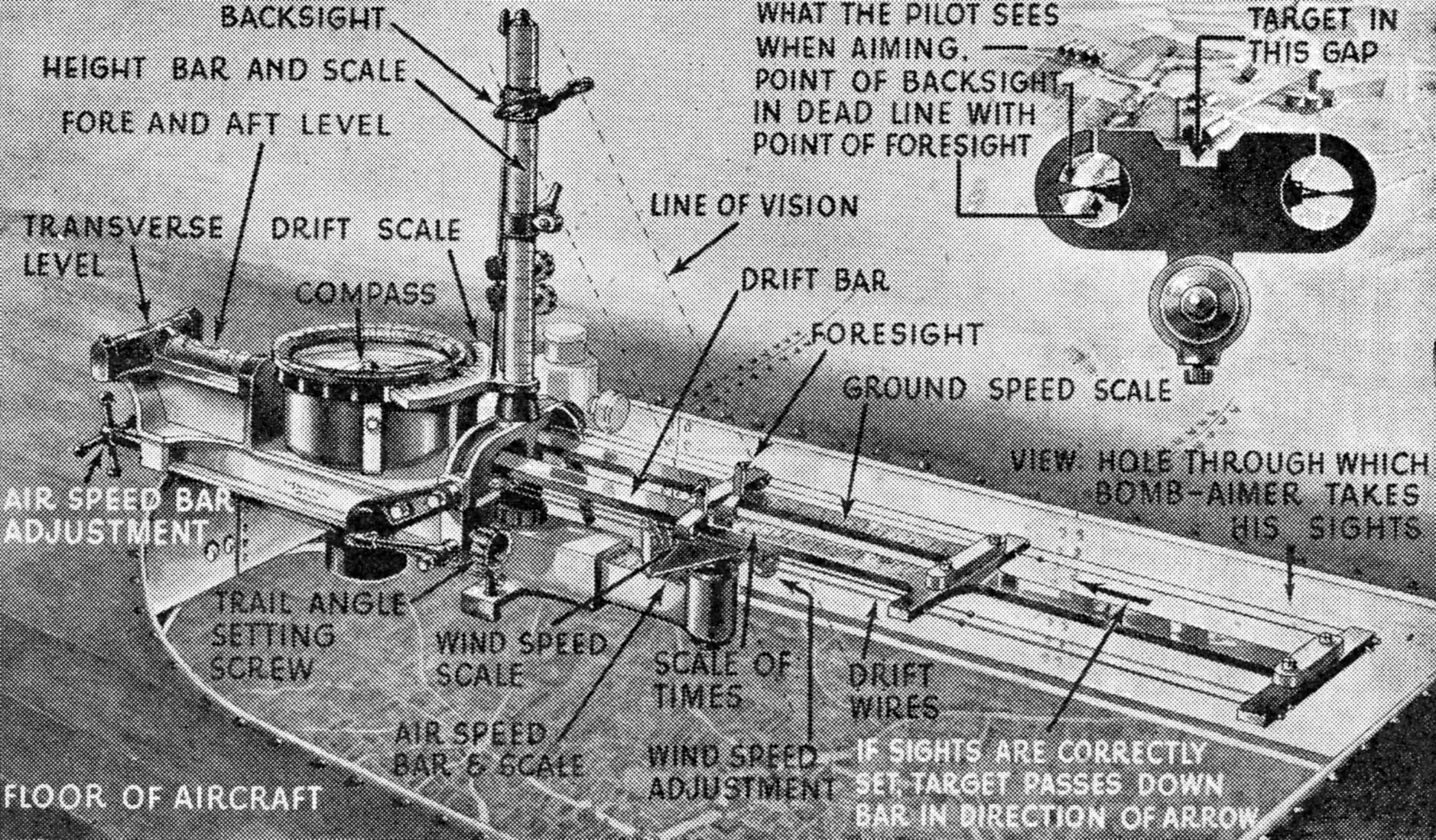
How
bombs are aimed
Wimperis
bomb sight
When
bombs must be released
Wellingtons
on the wing
Armstrong-Whitworth
Whitley
Two
methods of dropping bombs
The
automatic pilot
Vickers
Wellington Bomber
Wireless
operator’s
station
Flight
engineer’s
station
The
man who aims the bombs
Pilots
and bomb aimer of a Stirling
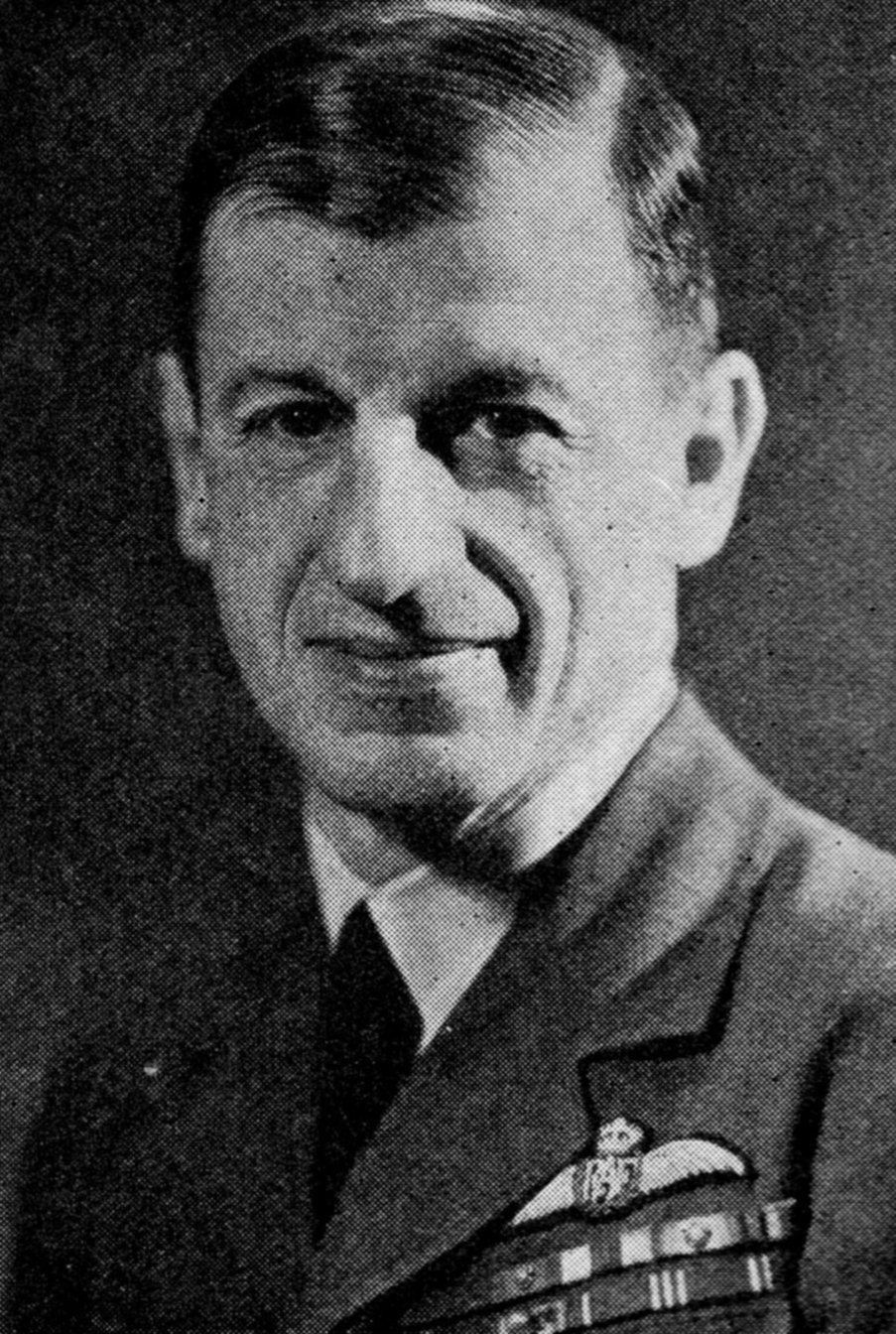
FOREWORD
BY AIR CHIEF MARSHALL SIR CHARLES
PORTAL, K.C.B., D.S.O., M.C.
EACH chapter in this book is written by an expert, and the views
expressed, although they are of course the personal opinions of the
writers, are based on intimate knowledge of the daily work of the
R.A.F. The book therefore gives a comprehensive and authoritative
picture of the great organization into which the R.A.F. has been
developed in so short a time and with such magnificent results.
The book tells its own story and I shall not try to add to it in this
foreword. But I should like to take the opportunity of paying a tribute
to the patience, skill and devotion of all those who have laboured to
make the R.A.F. what it is. I am sure that no reader of this book will
fail to share my admiration for them.
CHIEF
OF AIR STAFF
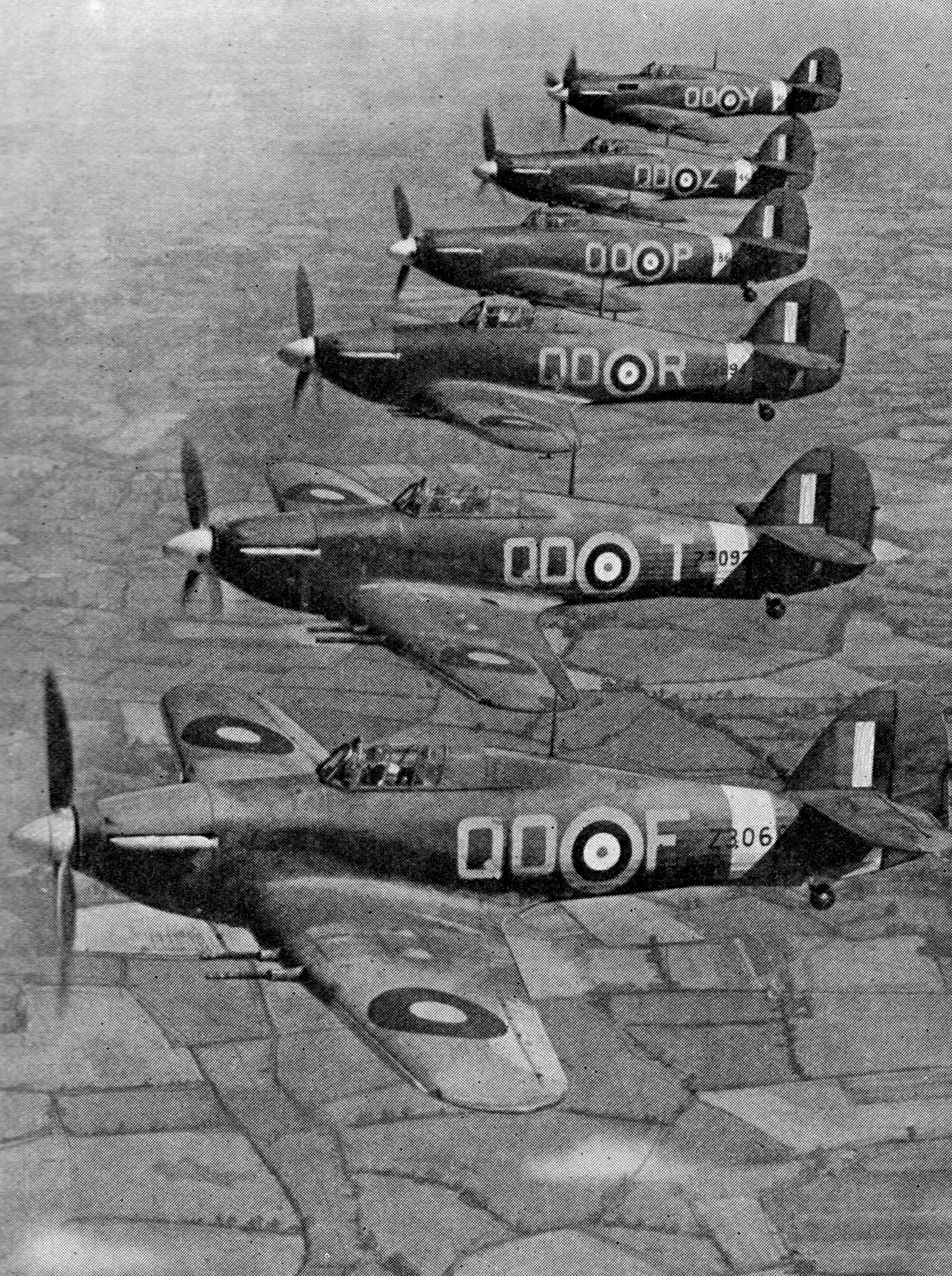
HURRICANES
IN LINE ABREAST
Hurricanes and Spitfires between
them met and decisively defeated the whole might of the Luftwaffe.
Today these machines are more deadly than ever, as can be seen from the
Mk. IIc Hurricanes above which have a devastating armament of four
20-mm. cannon
ALMOST
FULLY FLEDGED
The Flying Training Command is
responsible for turning out the required number of trained pilots,
observers, navigators and air gunners for the fighting units. These men,
walking out to their machines, are nearing the end of their non
operational career, and are completing their course on Avro Anson
advanced trainers. Soon they will be posted to an operational squadron
and will be allowed to put their new-found skill to the test on “the
nursery slopes”
CHAPTER
1
The
Royal Air Force: Organization and Personnel
The Air Council and the
Air Staff. The Air Ministry. Intelligence. Operational and
Non-operational Commands. Overseas Commands. Personnel. Permanent and
short-service commissions. Grouping of trades. R.A.F. Volunteer
Reserve. Auxiliary Air Force. Women’s Auxiliary Air Force. Trades open
to women. Comparative ranks. Air Training Corps. Medals and decorations
THE Royal Air Force, except that it does not grow its own
food, or to any appreciable extent manufacture its own equipment,
although it does maintain and repair it, is to all intents and purposes
a world in itself. From exceedingly small beginnings it has expanded
with enormous rapidity, and in this chapter it is intended to give the
reader an outline of its organization and composition.
One is rather inclined, when one thinks of the R.A.F. to think in terms
of pilots, air gunners, observers and other flying personnel and quite
forget the fact that for every man in the air there are numerous men on
the ground all of whom, in their own modest way, play as vital a part
in operations against the enemy as the pilot who sits at the controls
of a high-speed fighter, or the bomb aimer who releases his deadly load
on an important objective.
GROUND STAFF
The ground staff of the R.A.F. has to function in a multiplicity of
directions; it is a great administrative and technical body, with the
Air Ministry at its head, dependent upon which are all home and
overseas operational commands and coastal commands throughout their
formations down eventually, through areas, groups, wings and squadrons,
to the smallest operational unit—the flight.
There are also training commands, both for air and ground
organizations, the Maintenance Command, technical development units,
reception, storage and distribution units, embarkation and port
authorities, recruiting depots, and many other departments all of which
fit into the vast scheme of R.A.F. organization. In addition, the R.A.F.
has affiliations with the Treasury, the Admiralty, the War Office, the
Foreign Office, the Ministry of Labour, and so on.
THE AIR COUNCIL
The Air Ministry is the headquarters of the R.A.F., but it is not the
supreme controlling body. The highest power is vested in the Air
Council which is composed of High R.A.F. officers, permanent civil
servants and politicians. Its president is the Secretary of State for
Air, and under him come the two Parliamentary Under Secretaries of
State, one for the Commons and one for the Lords, the Chief of the Air
Staff, the Vice-Chief of the Air Staff, three Air Members—for
Personnel, for Supply and Organization, and for Training—the Permanent
Under-Secretary, and three additional members, two to represent the
Ministry of Aircraft Production and one to advise the Air Council on
financial and any kindred matters.
The status of the Secretary of State is a Cabinet one; that of the
Chief of the Air Staff is both advisory and executive.
Requirements and recommendations, diplomatic and otherwise, affecting
air policy are conveyed by the Secretary of State from the Cabinet to
the Air Council for necessary discussion.
AIR STAFF AND AIR MINISTRY
The Air Staff itself is composed of seven members. At its head is the
Chief of the Air Staff, and under him are the Vice-Chief, the Deputy
Chief and four assistant Chiefs for General Operational Requirements
and Tactics, for Radio, and for Intelligence. There are also
Directorates such as Plans, Operational Requirements (Home, Overseas,
and Naval Co-operation), Intelligence, Allied Co-operation, Ground
Defence, Signals, and the Deputy Directorate of Air Tactics.
The Air Ministry is organized under four main departments, each
controlled by a member of the Air Council, namely, the three air
members already mentioned and the Permanent Under-Secretary of State.
This last department deals with such matters as finance, accounts,
contracts and public relations.
It will be seen, therefore, that the Air Council is kept fully informed
as to all aspects of R.A.F. organization and activities through the air
members from both the Air Ministry and the Air Staff.
In the case of intelligence work the Air Ministry has a separate
department dealing with the affairs of every important nation of the
World, and the commands, even the large commands, need
maintain only comparatively small staffs to deal with such activities.
At the Air Ministry there is a room full of maps covered with all sorts
of secret signs including long-term preparations and forecasts of plans
on the part of, say, a potential enemy, together with a comprehensive
filing system extending back over years, filled with all the data
supplied by countless agents working for all Government offices—the
Foreign Office, for example, the War Office, the Admiralty, or the Air
Ministry itself. In this room national policies are estimated or
interpreted. In corresponding rooms at appropriate commands, immediate
facts on the latest raids are extricated and deductions, often
valuable, are made as to the enemy’s immediate intentions.
To understand how this chain of responsibility works in actual
practice, let us consider a particular instance, namely, the entry of
Russia into the Second Great War. Before the crisis arose, the Cabinet
would have called for reports from the heads of all services.
Intelligence sections dealing with all the countries in the area of the
anticipated disturbance, notably, Russia, Germany, Turkey, Rumania,
Finland, and Sweden would be consulted. The information they provided
would be sifted through the Chief of Staff’s departments dealing with
planning and operations, although many questions would no doubt be
addressed to other departments not directly concerned before the
complete picture would be ready to present to the Cabinet for
consideration.
SERVICE ORGANIZATION
The attitude Britain adopted was doubtless based on the total
appreciation of all factors—military, naval, air and economic—about
which it would have information in great detail. It is quite evident
that both the planning and operational sides anticipated the outbreak
of war by at least a week, when a new policy of intensive daylight
raids came into being.
So much for the political aspects. Let us now consider how the various
duties of the Service are organized.
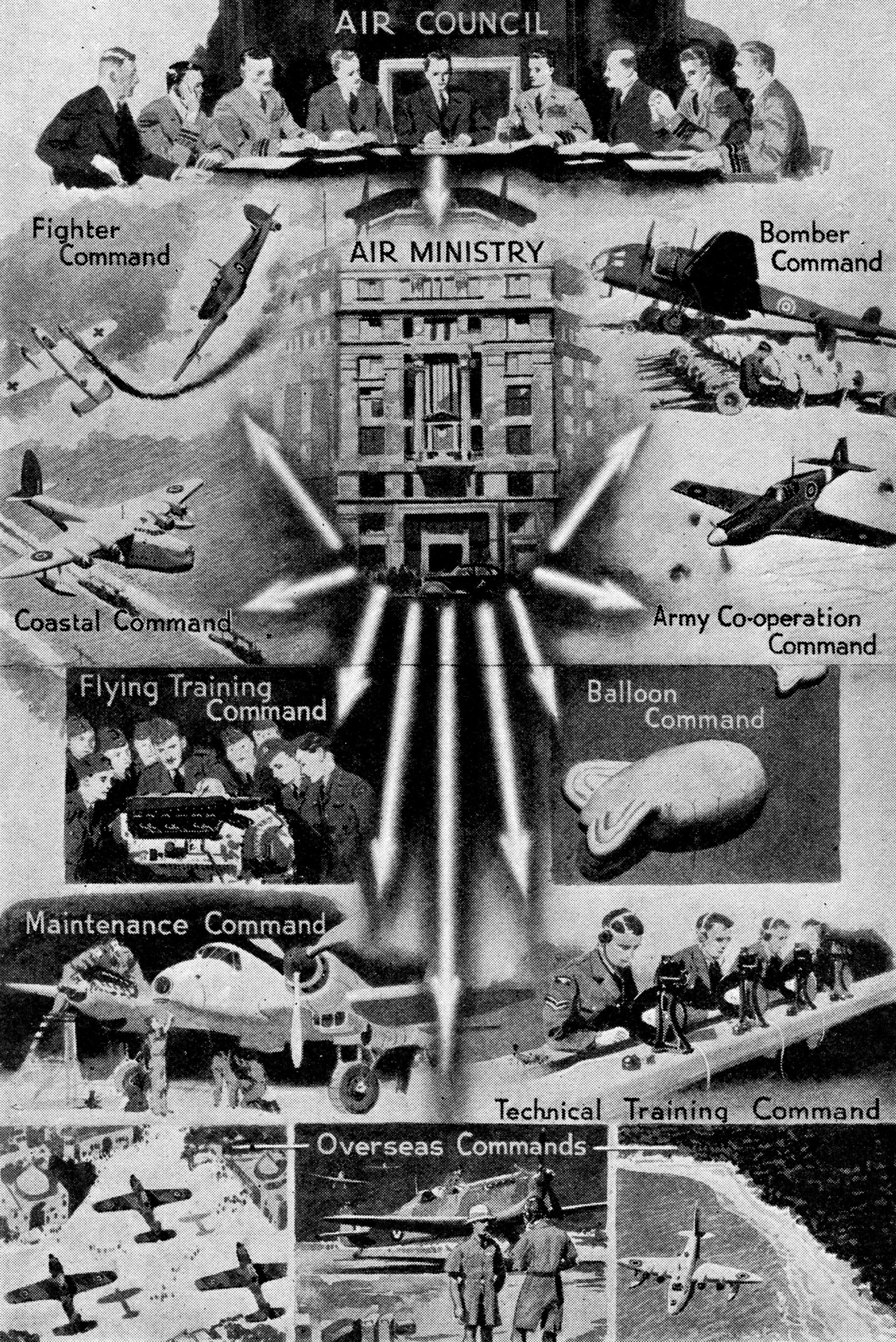
HOW
THE R.A.F. IS DIVIDED INTO COMMANDS
The Royal Air Force in Britain is divided into eight commands,
namely, Bomber, Fighter, Coastal, Army Co-operation, Flying
Training, Technical Training, Maintenance and Balloon Commands (see
above). This segregation does not apply to overseas Commands which are
composite, embodying any or all of the above named elements. In
addition there is Transport Command with headquarters at Montreal and
world wide ramifications.
Five of the Commands are operational and three, the training and
maintenance organizations are non-operational. In Bomber Command there
are the Lancasters, Halifaxes, Stirlings of the heavy machines, the
Mosquito of the lighter types and the ubiquitous Wellington.
SPEARHEAD
OF BRITAIN’S AERIAL OFFENSIVE
Bomber Command is responsible
for carrying the fight to the enemy. It employs many types of aircraft
including Wellingtons, Mosquitos, the big four-engined Stirlings,
Halifaxes and Lancasters, and the American-built Venturas, Bostons and
Marylands. The Vickers Wellington long range bomber, seen above, is
bombing-up for a raid on enemy territory
Fighter Command controls the large numbers of day and night fighter
squadrons equipped with Spitfires, Hurricanes, Beaufighters and the
latest types such as Typhoons, Mosquitos (as fighters), and Whirlwinds,
whose duty it is according to type to protect Britain and the seas
around it or carry out long range offensive operations and ground
straffing of targets in enemy occupied country.
Coastal Command shares to some extent the protection of Britain, but
its main task is the U-boat war and attacks on enemy shipping and the
policy of its operations is now decided by the navy. It also carries
out air reconnaissance of the enemy’s harbours and its aircraft attack
the targets found. It sends Sunderlands, Catalinas and other types of
flying boats, and land-based Liberators, Fortresses, Halifaxes,
Beauforts and Beaufighters out over the Atlantic and the North Sea to
protect convoys from submarine and air attack and to call up naval
forces when the enemy is found at sea.

GUARDIANS
OF BRITAIN’S SHORES
Coastal Command shares with
Fighter Command the responsibility for home defence, but it also
carries out reconnaissance of enemy harbours and shipping, and its
aircraft bomb the targets found. It sends its flying boats and
land-based aircraft out over the Atlantic and North Sea to protect
British convoys from submarine and air attack. The Short Sunderland
long range flying boat taking off above is setting out on such a mission
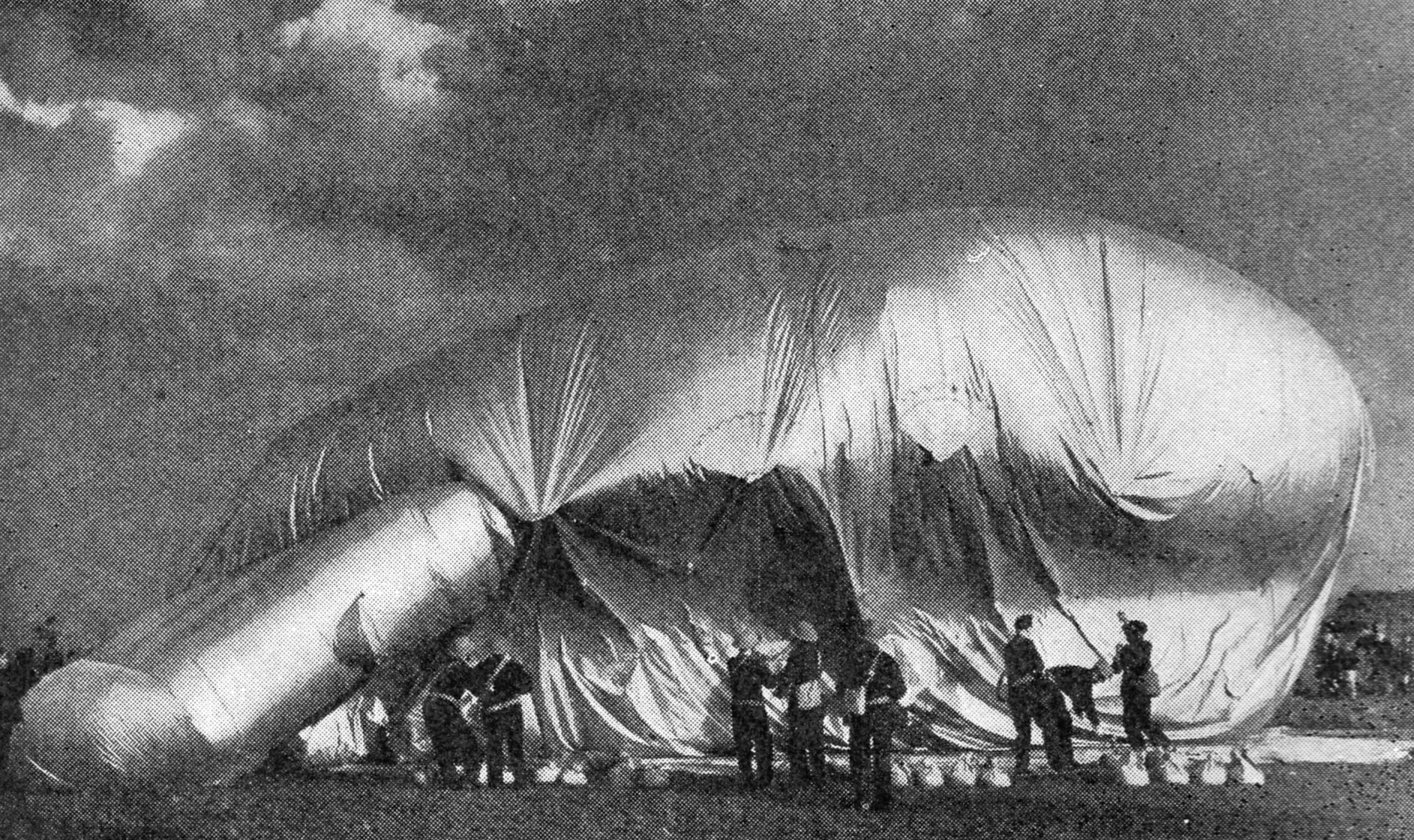
LONELY
SENTINELS OF BRITAIN’S SKIES
This barrage balloon, which is
being filled with hydrogen, will soon be on guard above some vital
objective. Although the role of the Balloon Command is purely
defensive, the balloon squadrons play a valuable part in Britain’s
defence by discouraging enemy raiders from approaching too close to
important targets. They effectively stop dive bombing
Activities of the Balloon Command are familiar to dwellers in big
cities and to those who live near important centres of war effort.
Although purely defensive, balloon squadrons fill a valuable role in
ensuring that the enemy is kept at a respectful height over important
targets.
NON-OPERATIONAL COMMANDS
So much for the present for the operational commands of the R.A.F. and
the active war they wage. They would not be able to function at all
were it not for the activities of the non-operational commands whose
appropriate training schools in the Flying Training and Technical
Training Commands turn out their allotted number of pilots, navigators,
wireless personnel, air gunners, trained mechanics and all the other
skilled men needed in the fighting units. In addition to fully-trained
officers and men, the fighting units must have spares to keep their
aircraft fit for flying. They must also have bombs, petrol, oil, and a
thousand other requirements. All these are provided by the Maintenance
Command with its vast organization of units, spread through the length
and breadth of Great Britain.
The main R.A.F. Commands overseas are in the Middle East, India, and
the Far East. Each of these is organized not only to meet its own local
obligations, but also to be capable of meeting the wider
responsibilities which the R.A.F. must bear in relation to war as a
whole. The operations of these commands are not restricted to the areas
in which they are located. Britain possesses a mobile air force which
can be concentrated where necessary, and to this end units are able to
move from one command to another, and on arrival in their new theatre
of operations will find ready for them the aerodromes, the bombs,
ammunition, petrol, and so on, that they will require.
The part played by pilots, observers, air gunners and other flying
personnel is fairly well known to the general public, but it is not
usually realized that apart from its actual flying activities, the
R.A.F. represents a complete cross-section of the community as a whole.
It has its own tradesmen, its own administration, its own social
services, doctors, dentists, chaplains, domestic staff, and so on. It
is, in fact, a world of its own.
There are about a hundred and fifty different trades for men in the
R.A.F. and some sixty, including the responsibility for maintaining
engines on operational aircraft and putting them through their flying
tests, for women. In subsequent paragraphs are discussed the different
categories into which officers, airmen and airwomen are divided, what
they all do, and how they contribute to the smooth working of the
service as a whole.
The General Duties Branch of the R.A.F. provides the officers for flying
duties, and it is from this branch, very properly, that the highest
executive posts in the Service are filled. Officers are graded as
pilots, observers or air gunners and, in the main, those possessing
pilot qualifications predominate.

BLENHEIMS
OVER THE DESERT
In the early days of the war in
Libya, Blenheims (above) gave the Regia Aeronautica a lesson in air
fighting. Our fighters accounted for hundreds of Italy’s best machines in
aerial combats over North Africa, whilst the bomber squadrons
repeatedly attacked Italian aerodromes. Now all the latest types of
aircraft operate with the Middle East Command
COMMISSIONED OFFICERS
In peace time officers for general duties are obtained from three
sources. Permanent commissions are granted to those who
pass through the Cadet College at Cranwell, entrance to which
is obtained by successful candidates in open competitive examinations,
subject only to medical and temperamental fitness. Permanent commissions
are also given to graduates of the universities.
For short-service commissions there is no entrance examination.
Candidates appear before selection and medical boards, and those chosen
are gazetted as pilot officers on probation, and are confirmed in rank
on completion of a year’s intensive course of instruction at a flying
training school.
In wartime entry for air-crew duties is exclusively by way of the
ranks, the only exception being in respect of already qualified pilots.
Non-flying officers are employed in either the Technical, Administrative
and Special Duties, Balloon, Accountant, Equipment, Medical, Dental,
Legal, or Chaplain’s Branch.
A high degree of skill is demanded from officers of the Technical
Branch of the R.A.F. In the main they are recruited from those who have
engineering or science degrees, hold engineering certificates, or are
members of approved institutions with at least some practical
experience in their respective crafts.
GROUND PERSONNEL
The Administrative and Special Duties Branch provides officer personnel
for the varied ground duties required by a large operational force. For
such duties those with managerial experience in civil life are fitted.
This branch includes not only officers for purely administrative
duties, but also officers required for intelligence work, marine craft
duties, photographic work, physical training, catering and police
duties, all of whom are required to have already some knowledge of the
particular subject. For example, intelligence officers should be able
to speak fluently one or more foreign languages, collect and appreciate
the value of information, and have the ability to interrogate officers
and others.
Officers for marine craft duties are required to have at least a second
mate’s Board of Trade certificate. They man the sea rescue services
around Britain’s coasts and search for aircraft in high-speed launches
flying the R.A.F. ensign. For photographic duties the potential officer
should have a theoretical training in photography. He it is
who supervises the processing of air photographs from which so much can
be learned. Physical training officers are required to supervise
physical training and games and must possess the personality and
ability to encourage all forms of physical development.
BALLOON BRANCH
Officers of the Balloon Branch are responsible for deciding at what
height the balloons shall fly according to meteorological and other
factors, for their tactical employment, for maintaining supplies of
hydrogen for inflation and “topping
up,” and for numerous other duties. Officers for this branch are
recruited mainly from the ranks, and it would be possible to say the
same of all other branches, had sufficient airmen the necessary
qualifications.
Equipment oflicers are responsible for provisioning the stations not
only with foodstuffs but also with aircraft, aircraft spares and
components, transport vehicles, clothing, fuel, furniture, and in fact
all the multitudinous assortment of stores necessary for the life and
efficient operation of a unit. The absence of even a spare sparking plug
might lead to an aircraft being grounded; conversely, large accumulated
stocks are wasteful and uneconomical.
We must now turn to the many spheres of activity open to airmen. Those
fortunate enough to possess necessary qualifications to be chosen for
air crews perhaps steal the limelight from their less fortunate
comrades on the ground; but it is a point to remember that an aircraft
cannot even take off until a veritable army of unheralded and unsung
individuals performs considerable feats of unromantic, unexciting, and
very often, unnoticed work behind the scenes.
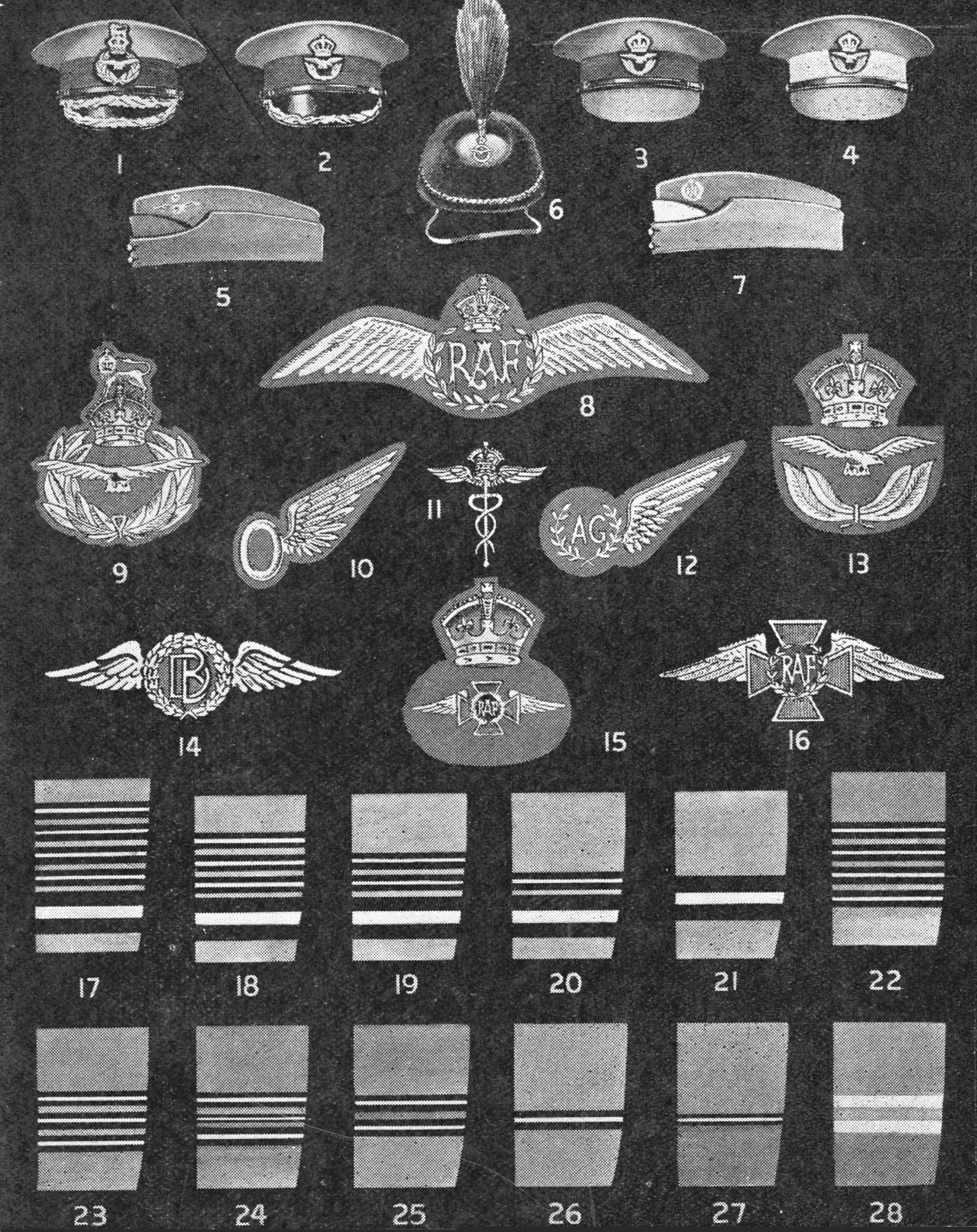
CAPS,
BADGES AND SLEEVE MARKINGS OF R.A.F. OFFICERS
1, Officers of air
rank; 2,
group captain; 3,
other officers; 4,
officer cadet; 5,
field service cap; 6, full-dress
headwear; 7,
field service cap of officer cadets; 8,
pilot’s wings; 9,
cap badge of officers of air rank; 10,
observer’s wing; 11,
medical officer’s collar badge; 12,
air gunner’s wing; 13,
cap badge of officers below air rank; 14, dental officer’s
collar badge; 15,
chaplain’s cap badge; 16,
chaplain’s collar badge. Sleeve
markings (black and pale blue bands); 17, marshal of the
R.A.F.; 18,
air chief marshal; 19, air marshal; 20, air
vice-marshal; 21,
air commodore; 22,
group captain; 23,
wing commander; 24, squadron leader;
25, flight
lieutenant; 26,
flying officer; 27,
pilot officer; 28,
flight lieutenant, full dress (gold bands)
BEHIND THE SCENES IN THE R.A.F.
For
every man who flies there are many men on the ground, all of whom, in
their own modest way, play as vital a part in operations against the
enemy as the gallant airmen who fly the machines. There are about a
hundred and fifty trades in the R.A.F., every one of which is a vital
link in the huge chain of R.A.F. organization, and the following
pictures illustrate only a few of the many duties that have to be
performed.
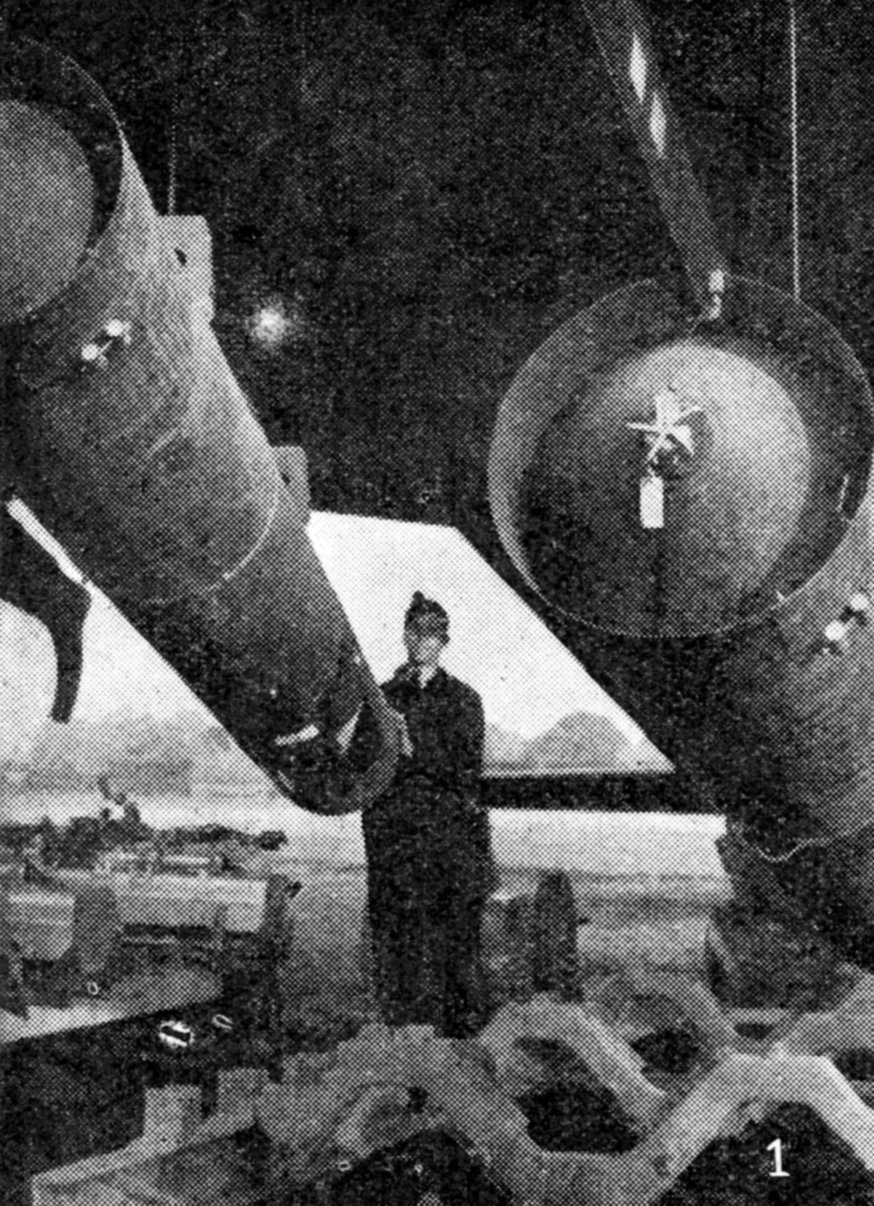
Some
formidable 2,000 lb. bombs being hauled up under a Stirling bomber
before setting off
A Link trainer
instructor initiating an embryo
pilot into
the intricacies of aeroplane control. This wonderful machine reproduces
all the actions of a plane in flight and corrects “ham-handedness”; it
is of untold benefit to young pilots under instruction
An
armourer loading up the magazines of a fighter aeroplane
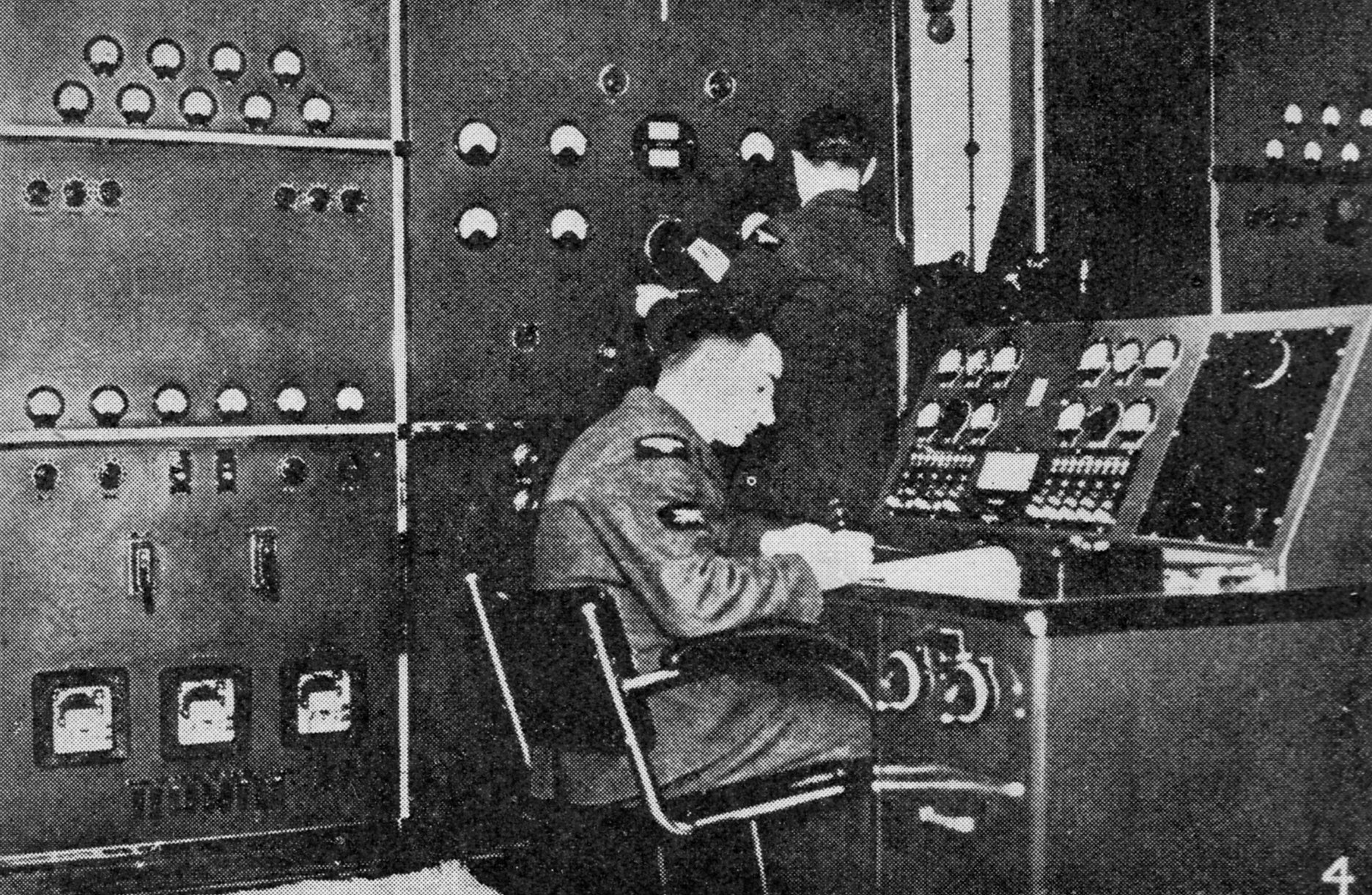
Radio
mechanics in the control room of a transmitting station for
Radiolocation
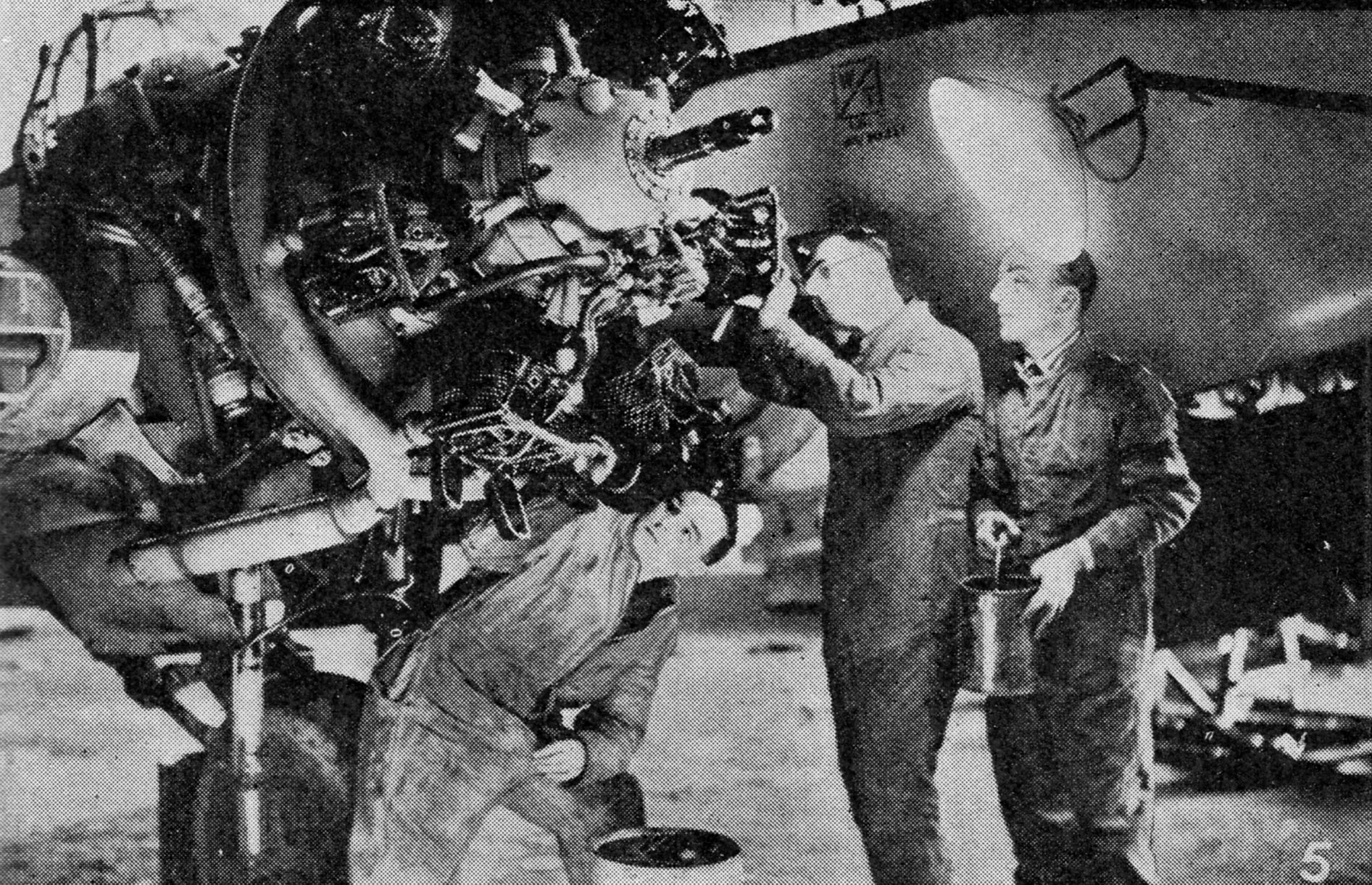
Fitters overhauling
and adjusting the engines of a
reconnaissance machine, working at night by the aid of powerful flood
lamps
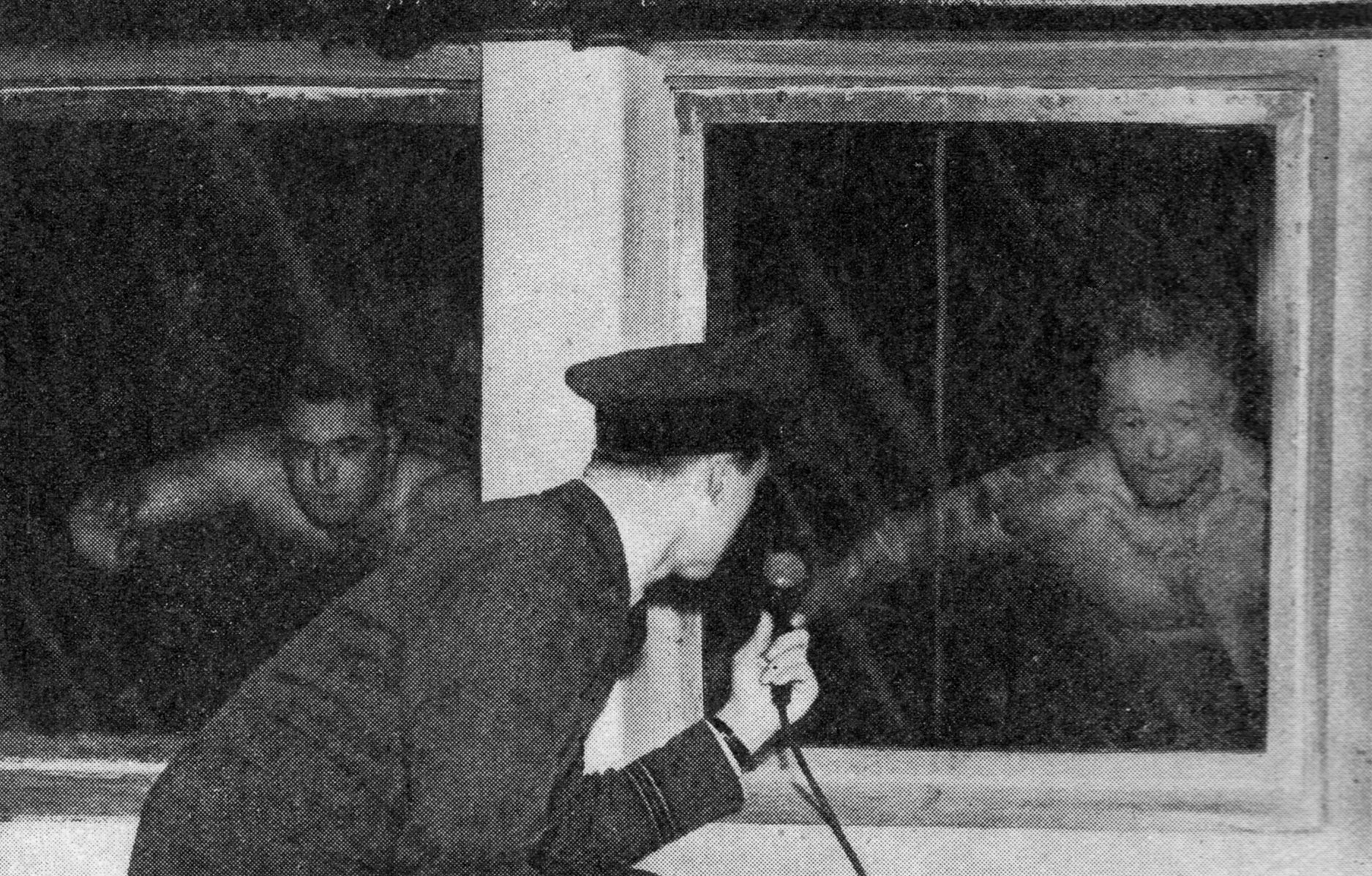
R.A.F.
AQUARIUM
Physical
fitness is essential for flying duties in the R.A.F., and great
importance is attached to the bodily well-being of all ranks. The men
seen above are physical training instructors under instruction in a
specially constructed swimming tank at an R.A.F. physical training
school. The officer outside the tank is watching the action of the
swimmers under water and correcting any faults with the aid of a
microphone
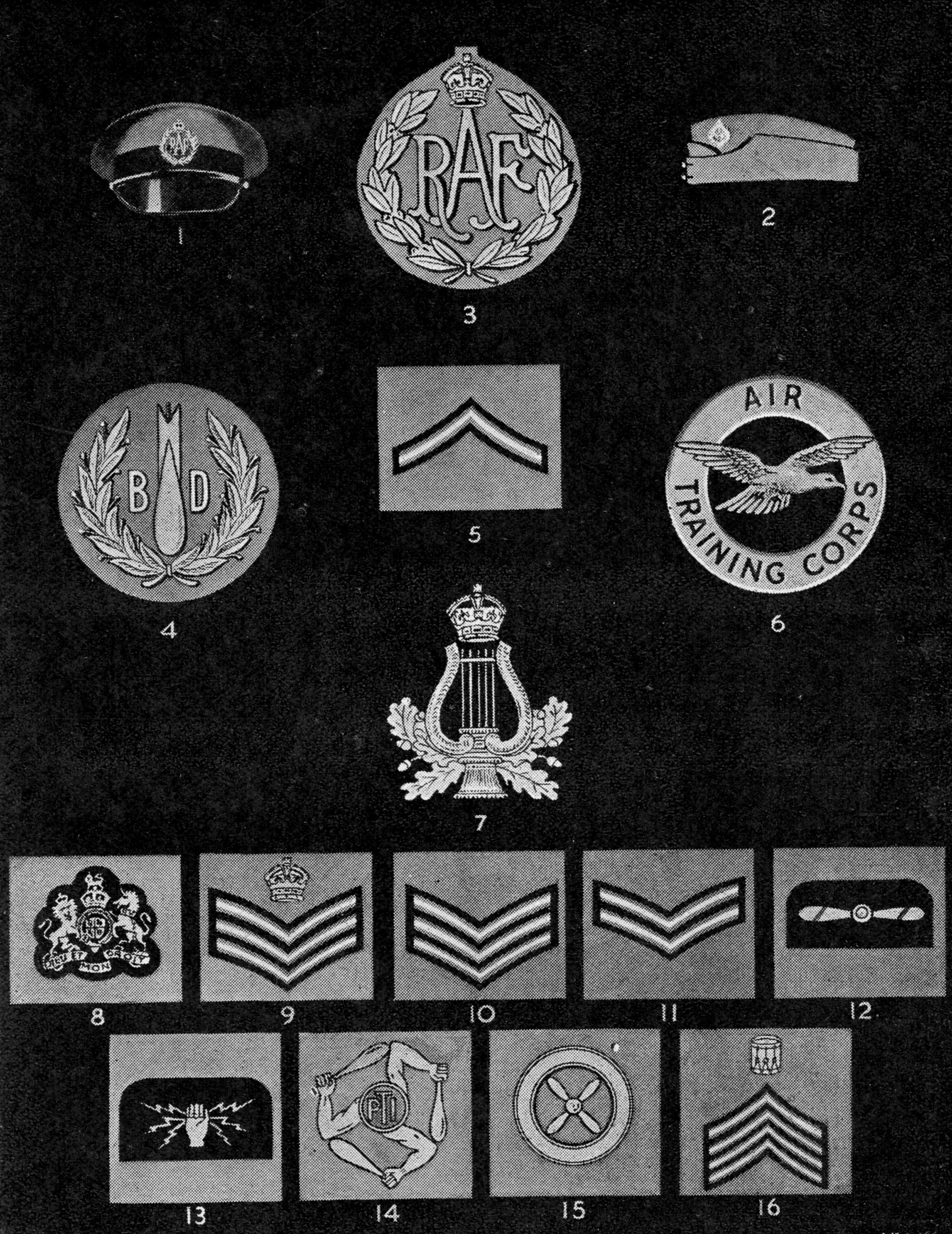
CAPS,
BADGES AND SLEEVE MARKINGS OF N.C.O.s AND AIRMEN
1, Ceremonial and
walking-out cap; 2,
field service cap; 3,
cap badge; 4,
sleeve badge of bomb disposal squad; 5, good conduct
stripe; 6,
badge of the Air Training Corps; 7,
airman of the R.A.F. band; 8,
warrant officer’s badge; 9,
flight sergeant; 10,
sergeant; 11,
corporal; 12,
leading aircraftman; 13,
wireless operator; 14,
physical training instructor; 15,
apprentice and boy entrant; 16,
drum major. Note:
Pilots’, observers’, and air gunners’ badges are worn on the left
breast and are the same as those worn by officers as previously
illustrated
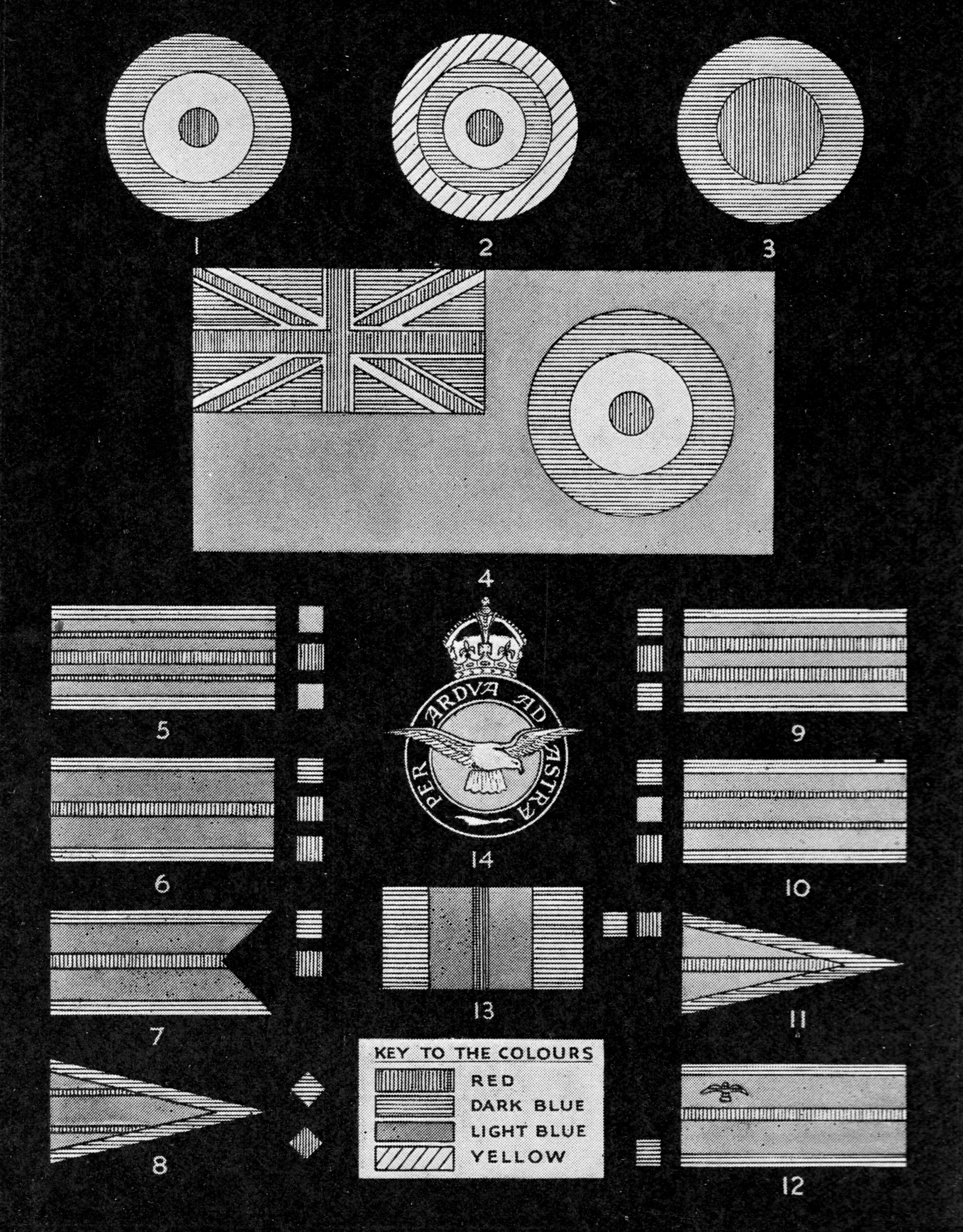
BADGE,
ENSIGN, FLAGS AND TARGETS OF THE R.A.F.
Distinguishing
marks, flags and lights carried by R.A.F. aircraft. The numbers indicate:—
1, Under surface
marking; 2,
fuselage marking; 3,
upper surface marking; 4,
ensign of the R.A.F.;
5 to
12,
distinguishing flags and lights carried by British aircraft, the lights
replace the flags at night; 5,
marshal of the R.A.F.; 6,
air marshal; 7,
air commodore; 8,
wing commander; 9,
air chief marshal; 10,
air vice-marshal; 11,
group captain; 12,
squadron leader; 13,
commander of armoured car; 14,
badge of Royal Air Force
TRADES OF THE R.A.F.
The
trades of the R.A.F. are divided into five groups according to the
degree of skill demanded, rates of pay being scaled. In addition there
is a medical group for the health of the service and the
treatment
of casualties. The groups are:—
GROUP 1. Airfield controller;
architectural draughtsman; blacksmith and welder; carpenter; carpenter
(boat builder); civil engineering assistant; clerk of works;
compass adjuster; coppersmith and sheet metal worker; draughtsman;
draughtsman (mechanical); electrician, grade 1; fitter, grade 1; fitter,
grade 2 (airframe); fitter, grade 2 (engine); fitter (armourer); fitter
(armourer) (bombs); fitter (armourer) (guns); fitter (general); fitter
(marine); fitter (M.T.); fitter (stationary engine); fitter (torpedo);
instrument maker; instrument repairer, grade 1; Link trainer
instructor; machine tool setter and operator; metal worker; navigation
instructor; R.D.F. mechanic; wireless and electrical mechanic; wireless
mechanic; wireless operator mechanic.
GROUP 2. Acetylene welder;
aerial erector; armoured car crew; armourer; armourer (bomb disposal);
armourer (bombs); armourer (guns); Balloon operator; blacksmith;
bricklayer; carpenter; copper-smith; driller; electrician, grade 2;
electrician (works); flight mechanic (airframe); flight mechanic
(engine); foreman of trades; grinder; instrument repairer, grade 2;
interpreter (technical); mechanic (stationary-engine); meteorologist;
miller; M.T. mechanic; pattern maker (architectural); photographer;
plant operator; plumber; quarryman; R.D.F. operator; safety equipment
worker; sheet metal worker; steel erector; turner; wireless operator.
GROUP
3. Balloon fabric worker; balloon rigger; concreter; cook and butcher;
drainlayer; driver (winch) (balloon); fabric worker; hydrogen worker;
motor boat crew; P.A.C. operator; shoemaker; tailor.
GROUP
4. Clerk (accounting); clerk, equipment accounting; clerk, pay
accounting; clerk (general duties); clerk (provisioning); clerk
(signals); clerk (special duties); equipment assistant; radio telephony
operator; radio telephony operator (balloons); teleprinter operator.
GROUP
5. Aircrafthand; armament assistant; barber; batman; C.W. fighter;
driver (M.T.); ground observer; groundsman; gunner; maintenance
assistant; messing duties; motor cyclist; musician; packer; physical
training instructor; pigeon keeper; R.A.F. police; safety equipment
assistant; station police; telephonist; torpedoman; works hand.
MEDICAL
GROUP. Chiropodist; dispenser; laboratory assistant; masseur; medical
orderly under training; mental nursing orderly; nursing orderly;
operating room assistant; optician orderly; radiographer; sanitary
assistant; special treatment orderly; trained nurse; dental clerk
orderly; dental mechanic; dental orderly under training.
Some of
these trades are for the R.A.F. Works Service, an organization whose
main function is the speedy repair of aerodromes and buildings damaged
by enemy attack, the construction of new aerodromes and the maintenance
of buildings in which personnel is housed. In addition there are the
members of the R.A.F. regiment who are responsible for the defence of
air stations.
GRADING OF TRADES
It
will be noticed that most R.A.F. trades have approximate equivalents in
civil life, and, therefore, to bring a skilled civilian into line with
his Royal Air Force counterpart all that is necessary is for him to
have a short course of instruction to adapt him to service equipment
and procedure. The foregoing list shows that there is a grading of
skill. In Group 2, for example, there are the separate trades of
blacksmith and of acetylene welder, and again of coppersmith and of
sheet-metal worker, whereas in Group I the pairs of trades are
amalgamated to form one highly skilled trade. A man’s service usually
has an upward tendency; a flight mechanic in Group 2, after being
trained and gaining some experience may, for example, be up-graded to
fitter in a Group I trade.
Without going into too much detail,
the reader may be interested to have a brief summary of
the functions of those trades that are peculiar to the R.A.F.
THE FITTER GROUP
The
fitter group of trades comprises, as is natural in such a mechanized
service, the bulk of R.A.F. tradesmen. There are many kinds of grades
of fitters—the
fitters who work on actual aircraft, fitters who specialize on armament,
fitters who are responsible for the efliciency of high-speed launches,
fitters who keep mechanical transport on the roads, fitters who ensure
that when a torpedo hits a warship “something disintegrates.” Also
included in the fitter group are the less skilled flight mechanics—both
for engines and air-frames.
Briefly, the less skilled man in
Group 2 confines his activities to testing and minor overhauls,
inspections and maintenance requirements. To the flight mechanic
(engine) falls the happy lot of being permitted to sit in the pilot’s
cockpit and run the engine, and to the armourer (guns) during his
testing activities, that of imagining himself to be blazing merrily
away at an enemy machine.
Tradesmen in Group I are required to
undertake major repairs and overhauls, and supervise less skilled men.
How thorough and competent was the work of our fitters was clearly
demonstrated during the Battle of Britain when our aircraft were
refuelled and rearmed time and time again without developing technical
defects.
Radio-mechanic and radio-operator trades are of
comparatively recent institution and are of the highest importance in
the defence of Britain. These are the trades about which some publicity
has been given under the term radiolocation—one
of the best-kept secrets of the war. For most of us, both in and out of
the service, the details of radiolocation are still a jealously guarded
secret, but we have been permitted to learn, very broadly, how this
entirely new form of military science works.
RADIOLOCATION
Ether
waves, which are unaffected by darkness or fog, are constantly sent out
to act as scouts beyond the limits of our shores. Day and night distant
outposts of the ether are perpetually “manned,” so to speak, by
wireless electronic watchmen ever ready to flash us tidings of the
enemy’s approach with the speed of light itself. Radiolocation makes it
largely unnecessary to maintain standing patrols and so has saved
Britain immense expenditure on petrol, engines, and wear and tear of
aircraft. It has also obviated the tremendous strain on personnel
which, otherwise, would have been unavoidable.
The duty of radio
mechanics is to maintain at one hundred per cent efficiency the
delicate and intricate radiolocation apparatus. Anything less,
throughout twenty-four hours a day might well have serious consequences.
Wireless
mechanics test, install, set up, maintain and repair the varied
wireless apparatus used both on the ground and in aircraft. They are
required to have a knowledge of radio telephony procedure sufficient
to carry out tests on equipment, and to be capable of Morse
code
flashing at a speed of eight words a minute.
Wireless operators
are required for operating, inspecting, maintaining and testing of
wireless, visual signalling and intercommunication equipment.
Link-trainer
instructors are, as an Irishman might say, “ground flying instructors.”
Their work is designed to reduce considerably the amount of instruction
which would otherwise have to be given in the air to an embryo pilot.
With the help of their ingenious apparatus they are able to correct
flying faults, eliminate “ham-handedness,” and inculcate in the pupils
an air sense of untold benefit to them when actually aloft.
Airmen
mustered for armoured car crews are called upon to drive, maintain and
operate armoured cars, more often than not over the sandy wastes of the
desert—an exciting life both in peace and war. Balloon operators are
skilled tradesmen who possess the qualifications of rigger, fabric
worker, driver (winch) and driver (M.T.). They are required to
supervise the handling, flying, and general maintenance of balloons. In
addition, they must be capable of driving and maintaining various
transport vehicles allotted to balloon units.
The duties of
motor boat crews commend themselves to airmen with a love of the sea.
Various types of marine craft are in use with the R.A.F. from the
high-powered speed launches to powered dinghies. An airman of this
trade is not promoted corporal until he possesses a second-class
coxswain’s certificate. A rather gruelling test for this trade is
swimming fully dressed.
NECESSARY QUALIFICATIONS
R.A.F.
photographers carry out all photographic processes and production, and
maintain photographic equipment and records. Clerks are classified for
general and accounting (pay and equipment) duties, similar to those
undertaken by civilian clerks but adapted, of course, to service
requirements. A clerk for the Special Duties Branch is required for
plotting work in various operations rooms. Equipment assistants keep
equipment section records and books and prepare forms for accounting
for equipment and handling storage and care of equipment.
Teleprinter
operators require a thorough knowledge of R.A.F. signalling procedure
and must be capable of passing signals traffic over line circuits
terminated by teleprinters at a proficiency of forty words a minute.
Ground gunners and ground observers are primarily concerned with the
defence of aerodromes. Parachute packers are required for the care,
maintenance, packing and fitting of parachutes—all responsible tasks and
ones upon which the lives of flying personnel depend.
Titles of the medical trades clearly indicate the duties performed.
Entry
into the R.A.F. in wartime is principally by way of the R.A.F.
Volunteer Reserve. Commissions in the General Duties (Flying) Branch
are given to men in the ranks of the Reserve, but in the Technical,
Administrative and Special Duties, Equipment, Accountant, Medical,
Dental and Legal branches they are granted direct from civil life.
The
R.A.F.V.R. was instituted in 1936 and was open to men in civil life
with no experience of flying. It was originally formed to provide pilots
only. Later sections were formed for most other categories of airmen.
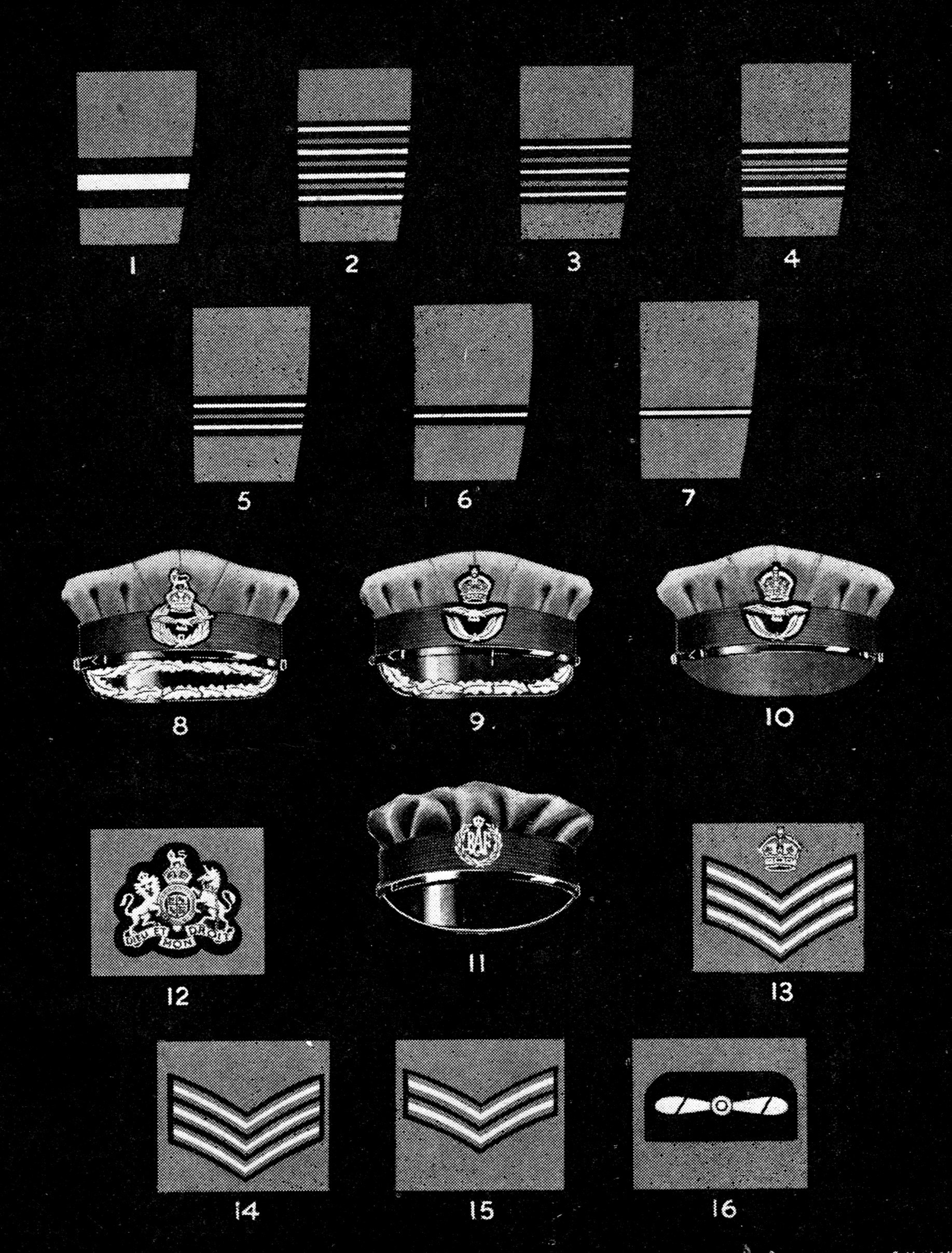
SLEEVE
MARKINGS, CAPS AND BADGES OF W.A.A.F.
Sleeve
markings of 1,
air commandant; 2
, group officer; 3,
wing officer; 4,
squadron officer; 5,
flight officer, 6,
section officer; 7, assistant
section officer; 8,
cap of officer
of air rank with patent leather peak and two rows of oak leaf
embroidery; 9,
cap of group officer;
10, cap of
other commissioned officers;
11, cap worn
by all ranks other than commissioned officers;
12, badge of
warrant officer; 13, senior sergeant; 14, sergeant; 15, corporal; 16, leading aircraft-woman. A
table of comparative ranks of the R.A.F. and the W.A.A.F. is given later
AUXILIARY AIR FORCE
The
Auxiliary Air Force bore the same relationship to the R.A.F. as did the
Territorial Army to the Regular Army. It was brought into being in 1924
under the Auxiliary Air Force and Air Force Reserve Act, and included
flying and balloon squadrons. Enrolment for officers in peace time was
for five years on the active list, to be followed by a similar period on
the Auxiliary Air Force Reserve. Airmen were required to join for four
years after which they could either apply for extension or for transfer
to the reserve.
The value of this organization was shown when
war broke out in 1939, the Auxiliary Air Force being able to put twenty
flying and forty-four balloon squadrons into immediate operational use.
On the outbreak of war all recruiting for the A.A.F. was stopped.
Pre-war volunteers can be recognized by the “A” badge worn on the lapel.
W.A.A.F.’S
TRACK DOWN GERMAN RAIDERS
Radiolocation
is a job for which women are particularly well suited. The girl
operators work in subterranean operations rooms where they plot the
movements of enemy aircraft. The girls above are working in one of the
detection posts. Here the personnel keeps watch day and night, while
the actual operation is done by specially selected and trained girls.
THE
W.A.A.F.
It
is the aim of the R.A.F. in wartime to employ women to the greatest
possible extent, and the ideal towards which the service is progressing
is that no man should be employed on work which can be undertaken
equally well by a woman.
Women form part of station personnel,
and the W.A.A.F. officer in charge of a detachment is responsible to
her R.A.F. officer commanding for the efficiency, discipline, well-being
and training of all ranks of her detachment, generally complying with
orders, rules and regulations and instructions laid down for the R.A.F.
itself. The W.A.A.F. are separately messed and accommodated.
The
duties on which W.A.A.F. officers can be employed are being increased
in the light of experience, and though originally, with the exception
of code and cypher officers, women were employed only on administrative
duties, they are now being substituted for R.A.F. officers in the
Accountant and Equipment Branches, and in the Administrative and
Special Duties Branch in which duties include intelligence work,
catering and photography.
Radiolocation is a job to which women
are well suited. They are employed largely in R.A.F. subterranean
operations rooms where they plot the course of enemy aircraft on huge
maps.
TRADES OPEN TO WOMEN
The
process of substitution is being widened in respect of airwomen, as the
rank and file are known, and the trades in which they are employed are
given below. Constant consideration is given to the practicability of
employing women in still more trades either exclusively or in
co-operation with men of the R.A.F. Women work in the following trades:—
GROUP 1. R.D.F. mechanic; Wireless mechanic.
GROUP
2. Acetylene welder; armourer (guns); balloon operator; electrician,
grade 2; flight mechanic (air frame); flight mechanic (engine);
instrument mechanic; instrument repairer, grade 2; meteorologist; M.T.
mechanic; photographer; R.D.F. operator; sparking plug tester; wireless
operator; W.T. (slip reader operator).
GROUP 3. Cook; fabric worker, aero; fabric worker, rigger, balloon;
hairdresser; parachute repairer; shoe repairer; tailor.
GROUP
4. Administrative; charging board operator; clerk, equipment
accounting; clerk, general duties; clerk, pay accounting; clerk,
personnel selection; clerk, special duties; clerk, special duties
(watch keeper); equipment assistant; R.D.F. operator; R.T. operator;
teleprinter operator; tracer.
GROUP 5. Aircrafthand general
duties, armament assistant; balloon parachute hand; batwoman; bomb
plotter; Cine projectionist; Drogue packer and repairer; M.T. driver;
maintenance assistant; mess steward; orderly; parachute packer;
telephonist; waitress; workshop hand; W.A.A.F. police.
MEDICAL
GROUP. Chiropodist; dental clerk orderly; dispenser; laboratory
assistant; masseuse; nursing orderly; operating room assistant;
optician orderly: radiographer.
A number of jobs detailed above
are undertaken by women in civil life, and no doubt it will be claimed
that such jobs as clerical duties, telephone operating, teleprinter
operating, and domestic organizing are really more suitable to women
than to men. Many trades have been started for which they can be
trained and in which they have already proved highly successful.
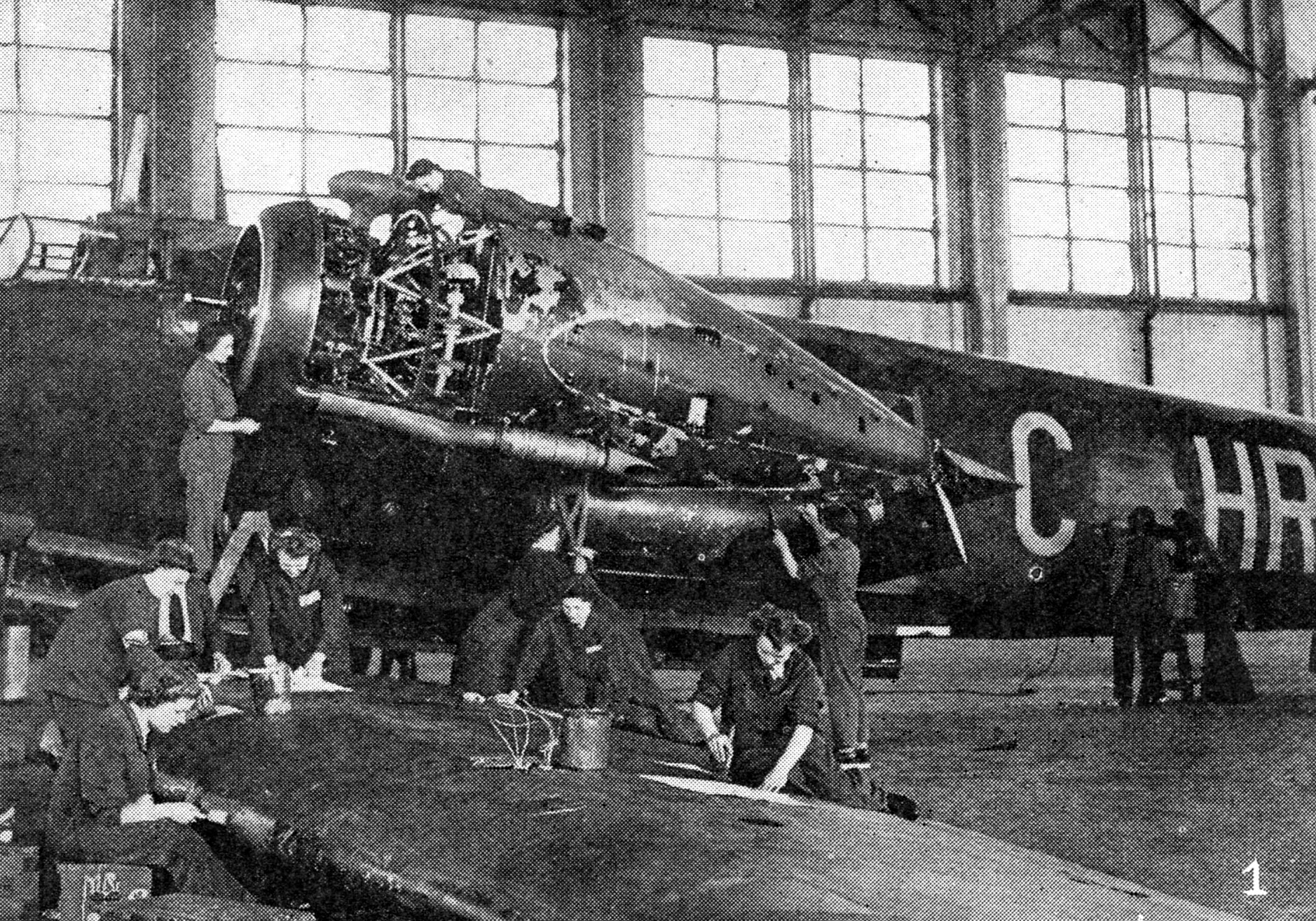
WOMEN DO A MAN’S JOB IN THE
W.A.A.F.
The
R.A.F. believes that no job should be done by a man if women can do it
equally well. Below are some of the tasks undertaken by W.A.A.F. girls.
Girl
riggers at work
Studying the layout of an
aerodrome with the aid of a model
Girl armourers at work
Mechanics
dismantling an aero engine
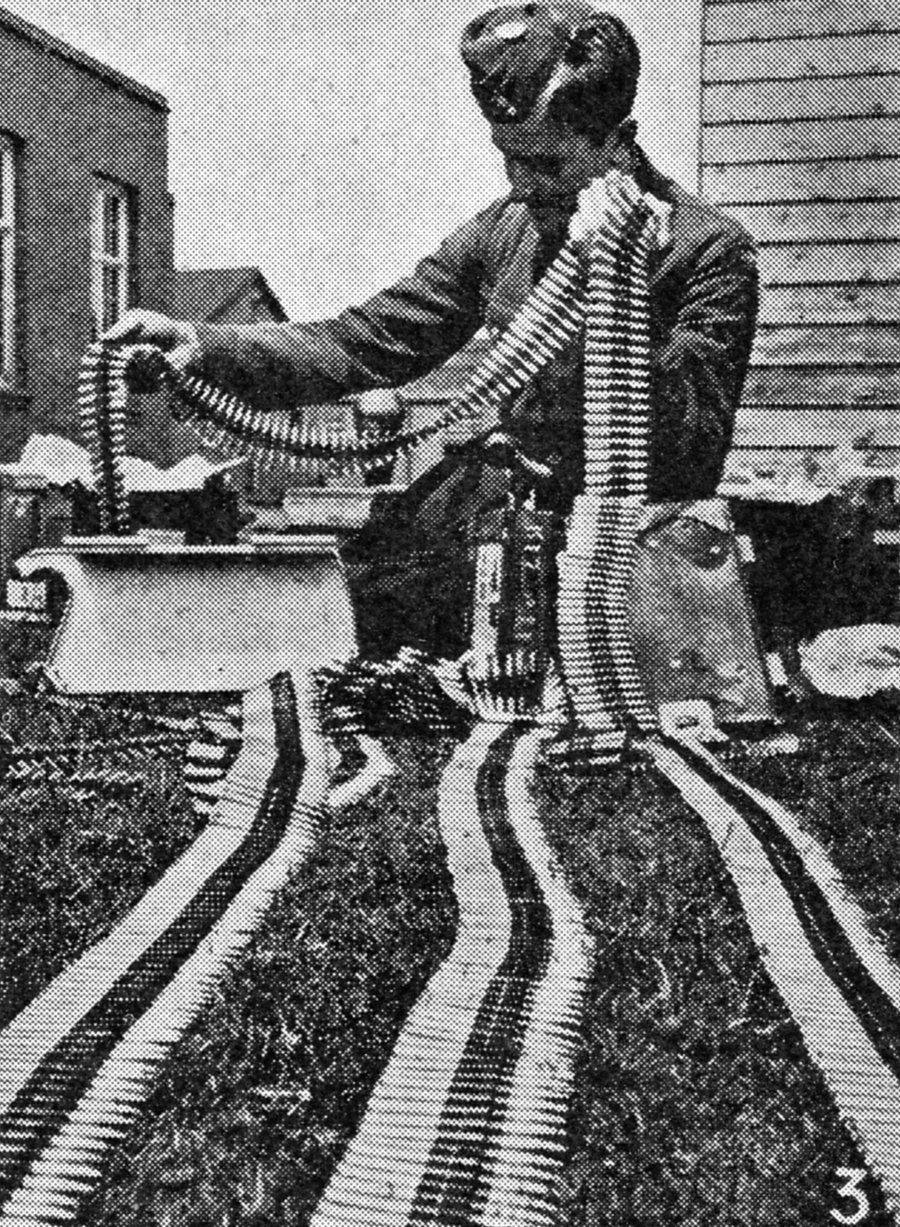
Girls loading ammunition belts
Women
radio operators and clerks, special duties, must be of high character
and integrity, able to assume responsibility under active war
conditions, and mentally alert and accurate. They must have
exceptionally good eyesight and sound nervous control as their
occupations are a severe test of fitness.
Teleprinter operators
can be trained quickly if they are competent typists with a speed of
not less than thirty words a minute. Clerks, general duties, should be
able to type at thirty words a minute and/or write shorthand at 120
words a minute. Girls who have book-keeping or company experience, such
as hotel cashiers and ledger clerks, can very quickly be trained as
clerks, accounting, and those with experience of handling goods and
accounts in stores, shops or warehouses make ideal equipment
assistants. The trade of fabric worker commends itself to seamstresses,
upholsterers or tailors. They are mainly employed on the maintenance of
barrage balloons, aircraft fabric or as upholsterers at aircraft
maintenance and repair units. The jobs of wireless operator and
slip-reader operator call for a high degree of skill and ability to
co-ordinate hand and eye. A knowledge of Morse is, of course,
necessary. The slip reader must be a touch typist; her job is an
exacting one, as she has to read Morse tape as it emerges from the
Creed receiver and simultaneously convert it to typescript.
Cooks
must be accustomed to dealing with large numbers. Restaurant, hotel or
catering cooks are admirable for this work. Sparking-plug tester duties
consist of dismantling sparking plugs taken from aircraft, cleaning and
reassembling them and adjusting the spark gap. For this work a girl
must have a high sense of responsibility. Slovenly work might have
tragic consequences. Skilled hands from gramophone factories or
wireless assembly shops are particularly well fitted for the trades of
instrument mechanic and instrument repairer.
An ideal type of
woman for the trade of sick quarters attendant is she who is capable of
tending members of her family during minor ailments, whilst a woman who
has had experience as a receptionist or clerk to a civilian dentist is
suitable for the work of dental clerk orderly.
Aircrafthands must be strong, intelligent, and active. They are
employed on the following duties: all forms of domestic duties,
cleaning and so on; in workshops (including unskilled duties); as
waitresses (including cleaning of mess-rooms); as orderlies (including
messenger duties); and as parachute packers.
The administrative trade is open to women who have held positions of
control, and who are willing to start “on the ground floor,” in order to
adapt themselves to the ways of the service and such women are rapidly
earmarked for promotion to positions of control in the W.A.A.F.
The comparative ranks of the W.A.A.F. are given here:
| W.A.A.F.
RANK |
RELATIVE
R.A.F. RANK |
Commandant-in-Chief
Air Chief Commandant
Air Commandant
Group Officer
Wing Officer
Squadron Officer
Flight Officer
Section Officer
Assistant Section Officer
Under Officer
Senior Sergeant
Sergeant
Corporal
Aircraftwoman, 1st Class
Aircraftwoman, 2nd Class
|
Air
Marshal, or above
Air Vice-Marshal
Air Commodore
Group Captain
Wing Commander
Squadron Leader
Flight Lieutenant
Flying Officer
Pilot Officer
Warrant Officer
Flight Sergeant
Sergeant
Corporal
Aircraftman, 1st Class
Aircraftman, 2nd Class
|
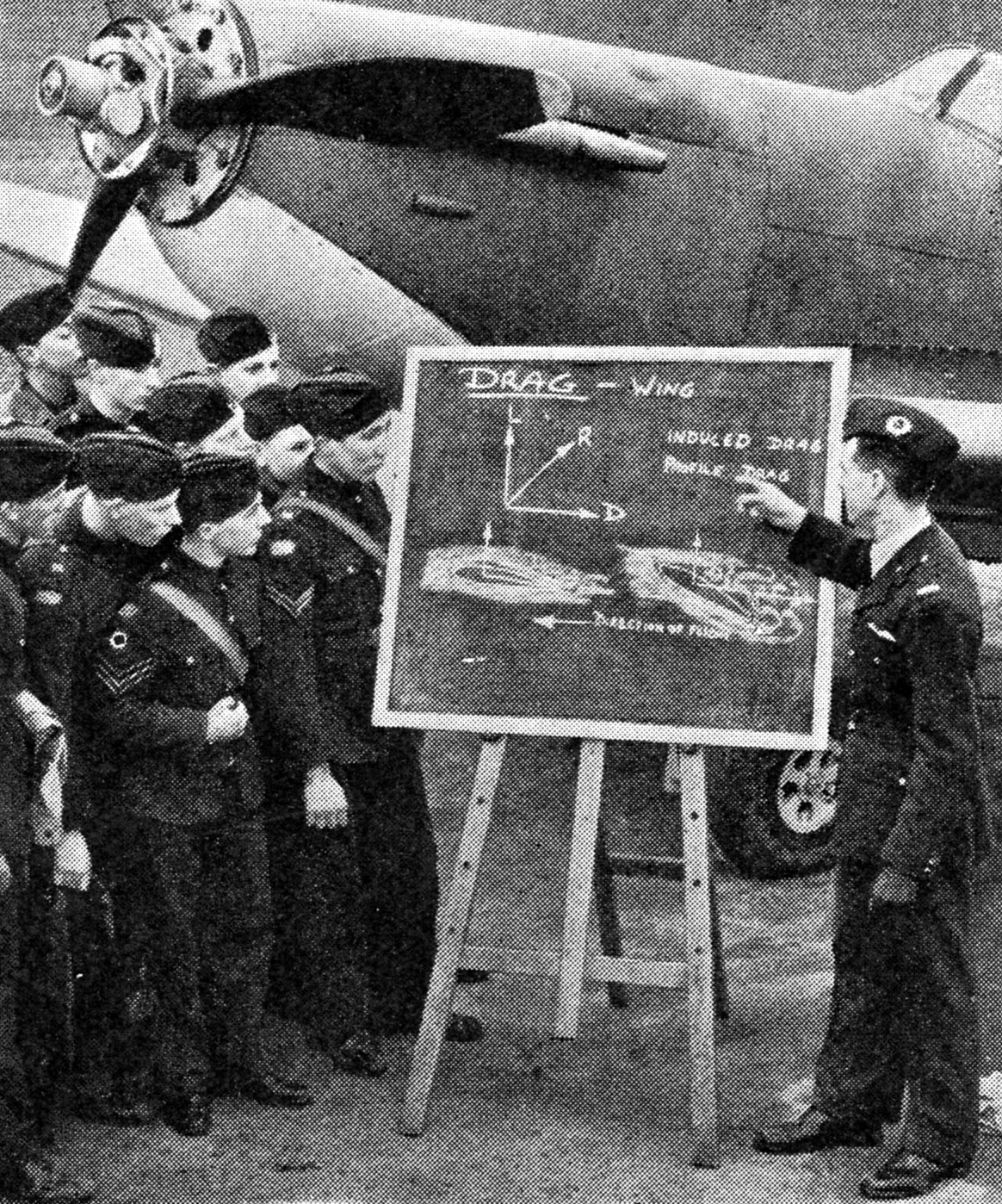
PILOTS
OF TOMORROW
These young members of the
A.T.C. are receiving instruction in the principles of flight in the
shadow of a Hurricane fighter. The lectures are made interesting by
giving practical as well as theoretical instruction
THIS
IS HOW A GUN TURRET WORKS
Actual
contact with operational machines stimulates the imagination of A.T.C.
boys. A few moments’ practical instruction, such as these boys are
receiving, is worth a whole course of theoretical lectures in
a
classroom
AIR TRAINING CORPS
The
organization methods which have been built up for the training of
both flying and ground personnel are discussed fully
in later chapters, but before closing this chapter mention should be
made of the Air Training Corps which was formed in February, 1941, its
aim being to act as a reservoir from which the R.A.F. can draw in the
future for its air and ground crews. All physically fit boys of sixteen
and upwards who would like eventually to join the R.A.F. or the
Fleet Air Arm are eligible for the A.T.C. The training consists first
of all of drill, mathematics, Morse code and lectures of general
interest. Later the cadets take specialized courses to prepare them
for the branch of the service for which they are best fitted. These
specialized courses fall under two main headings,
namely air crews and technical occupations. The former comprises such
subjects as mathematics, navigation, Morse code, aircraft
identification, etc., whilst the latter includes courses for wireless
operators, wireless mechanics, flight mechanics, riggers, instrument
repairers, electricians and motor transport
mechanics.
A.T.C. units are organized by university and school authorities, while
local units are raised by civic authorities. Uniform is issued free,
and each efficient cadet receives an annual grant of
£1.
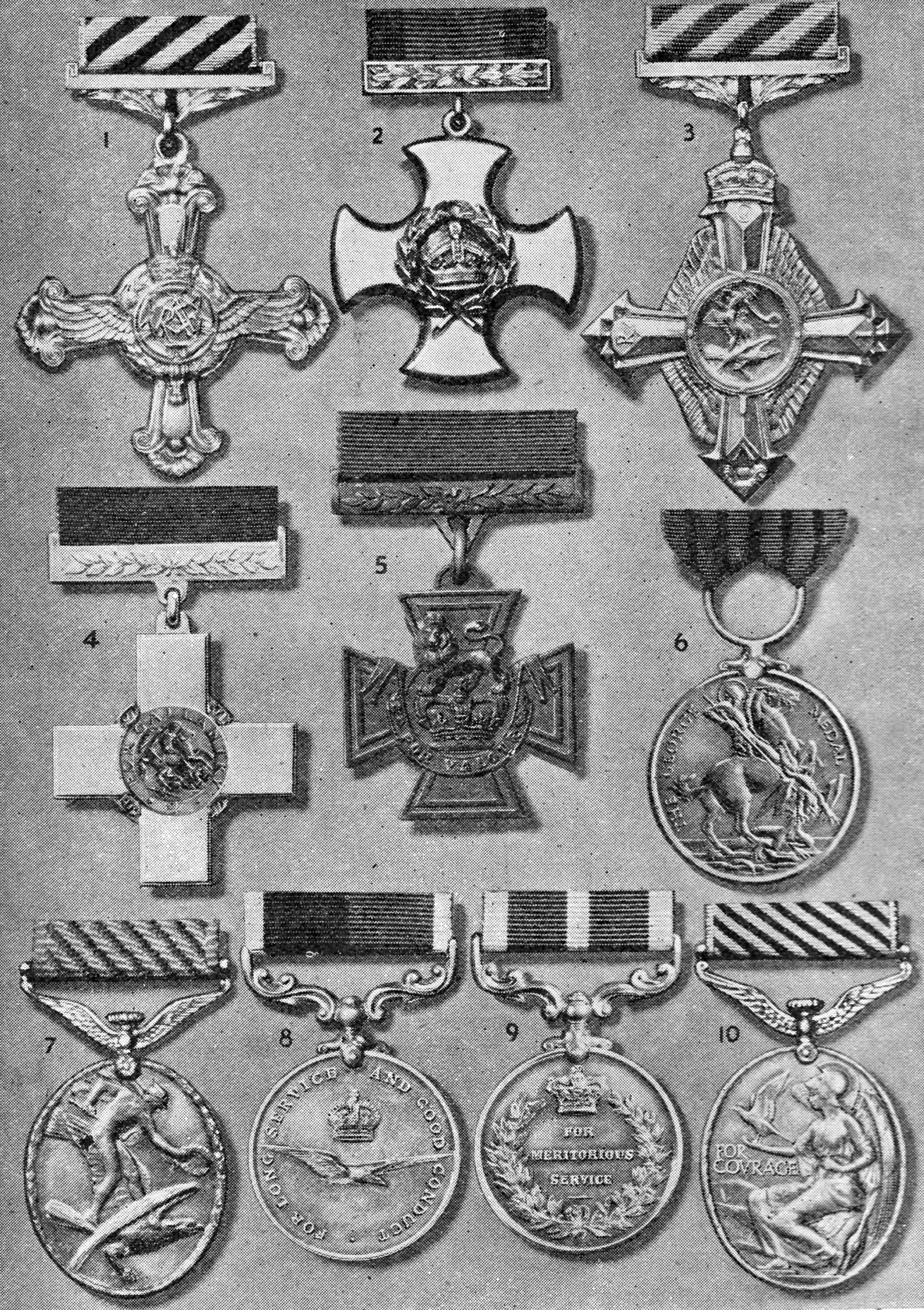
MEDALS
AWARDED TO R.A.F. PERSONNEL
1, Distinguished
Flying Cross; 2,
Distinguished Service Order; 3,
Air Force Cross; 4,
George Cross; 5,
Victoria Cross; 6,
George Medal; 7,
Air Force Medal; 8,
Long Service and Good Conduct Medal; 9, Meritorious
Service Medal; 10,
Distinguished Flying Medal
HONOURS AND DECORATIONS
Many honours and decorations may be conferred quite irrespective of the
service to which the recipient may belong. Others are only awarded to
particular services. The following four decorations may be won by
members of the three Services, and in the case of the George Cross and
George Medal, by civilians also:—
VICTORIA CROSS (Fig. 5). Most highly prized distinction of the fighting
services, It takes precedence over every other. It was instituted in
1856 and is awarded for the performance in the presence of the enemy of
some pre-eminent act of valour or devotion to duty. When the ribbon
only is worn a miniature of the medal is fixed in the centre of the
ribbon. This applies also to the George Cross. The V.C. ribbon, which
is one and a half inches wide, was originally blue for the Navy and
claret for the Army. The latter colour was adopted for all three
Services during the war of 1914-18. The V.C. may also be awarded to
officers and men of the Merchant Navy serving under naval, military or
air force authority.
GEORGE CROSS (Fig. 4). Instituted in 1940 to recognize exceptional
deeds of valour. It may be awarded to members of the fighting Services
as well as to civilians. It embraces the functions under which
was formerly awarded the Empire Gallantry Medal, recipients of which
are entitled to the later decoration. It ranks second only to the V.C.
The ribbon is plain blue.
GEORGE MEDAL (Fig. 6). Instituted in 1940, it is awarded for valour and
may be won both by men and women, civilian or otherwise. The medal
ribbon is red with a thin blue vertical stripe.
DISTINGUISHED SERVICE ORDER (Fig. 2). Instituted in 1886 for
commissioned officers specially recommended for meritorious or
distinguished service in action before the enemy. The D.S.O. is the
most colourful of medals here described. It consists of a cross
enamelled white, with gold edges. The laurel wreath is enamelled green
and the crown is of gold on a red background. The ribbon consists of a
wide red central band edged with blue.
The following medals are exclusively R.A.F. decorations:—
DISTINGUISHED FLYING CROSS (Fig. 1). Dating from 1918, it is awarded to
officers and warrant officers of the R.A.F. only for exceptional
valour, courage or devotion to duty while flying on active operations
against the enemy. The ribbon, which is an inch and a quarter wide, is
of violet and white in alternate diagonal stripes, one eighth of an
inch wide.
AIR FORCE CROSS (Fig. 3). Instituted in 1918. It is awarded to officers
and warrant officers of the R.A.F. and to civilians for acts of valour,
courage or devotion to duty while flying. The ribbon is similar to that
for the D.F.C. except that red stripes replace the violet.
DISTINGUISHED FLYING MEDAL (Fig. 10). Founded simultaneously with the
D.F.C., it is awarded to non-commissioned oflicers and men of the R.A.F.
for exceptional valour, courage or devotion to duty whilst flying in
active operations against the enemy. The ribbon is similar to the
D.F.C., but the stripes are one sixteenth of an inch wide.
AIR FORCE MEDAL (Fig. 7). Awarded in the same circumstances as the
A.F.C., but to N.C.O.’s and airmen of the R.A.F., to members of the
other services, and to civilians. The ribbon is similar to the A.F.C.
except that the stripes are one sixteenth of an inch wide.
LONG SERVICE AND GOOD CONDUCT MEDAL OF THE R.A.F. (Fig. 8). Awarded to
N.C.O.’s who have completed eighteen years exemplary service. The
ribbon is dark blue and crimson equally divided, with white edges.
MERITORIOUS SERVICE MEDAL (Fig. 9). Instituted in 1845, it is awarded
to warrant officers, N.C.O.’s and men for valuable services in the field
as distinct from flying services. The R.A.F. have a distinctive ribbon
for the M.S.M. It is of red and blue, equally divided, with white edges
and a white central stripe.
In addition, the O.B.E., the M.B.E., and the B.E.M. are granted to the
R.A.F. while they have also become eligible for the Distinguished
Service Cross and the Distinguished Service Medal if serving with the
Fleet, and also for the Military Cross and the Military Medal.

A
BLOW AT THE HEART OF THE ENEMY
The
basis of all aerial strategy is attack, and the bomber is the main
weapon used for this purpose. The R.A.F. sends its bombers to attack
objectives of vital importance to the enemy for it believes that this
is the best means of breaking down his will to continue the war. These
attacks are concentrated upon war factories, troop concentrations and
communications of all kinds including port installations and convoys.
The Blenheim above has just scored a direct hit on an enemy tanker, the
loss of which will help to immobilize his war machine
CHAPTER
2
Aerial Strategy and Tactics
Types of aircraft
employed. Day and night operations. Co-operation between fighters and
bombers. Use of fighters as bombers. Effect of ground defences. Bombing
tactics. Tactics of air fighting. Tactics in close support of naval
forces. Tactics in close support of land forces. Quality versus
quantity. Morale of air forces
THE main purpose of an air force is to seek out and attack the enemy
wherever he may be. Every lesson learned in the present war has
confirmed this elementary principle. The use of air power in conjunction
with land power as an indivisible whole, as the spearhead to, and cover
for, land operations is a simple development of that idea. It follows,
therefore, that attack must always be the basis of all air strategy for
attack is also the best form of defence.
SCOPE OF AIR POWER
An air offensive, however, is not concerned only with attack against
opposing forces in the same way as an army goes into battle against
another army and a navy hopes to entice an opposing fleet to sea so that
it can join combat and destroy it. There is a long arm to air power. It
can reach “over the top” behind the enemy lines. Far more than with the
other two services, it can “seek out” the enemy. Its targets can be,
and are, anything and everything of importance to the enemy—his
armament industries, his ports, his convoys, his road and rail
communications and his reserves behind the actual fighting lines. Their
relative importance as primary and secondary targets is the relative
value which the enemy places upon them and the use he is making of them
at the moment. At the height of the U-boat war, for instance, the whole
weight of Britain’s Bomber Command offensive was turned to the
destruction of U-boat bases and the centres at which submarine parts
were manufactured.
But air warfare is double-edged, for the enemy in turn relies on his
bomber forces to inflict serious damage to the vital centres of his
opponent. Both sides, therefore, are obliged to allot a considerable
proportion of their aircraft industry and flying personnel to the
question of defence. They must produce fighter craft and train fighter
pilots so as to render themselves as immune as possible from the
attention of bombers, secure control of the air above their own
production centres and be in a position to provide escorts for their
own bombers in attack.
This situation of air superiority is not likely, though, ever to be
complete over the whole of enemy territory. Even if superiority is
obtained in a particular area of operations, it is probable that the
enemy will still muster considerable fighter forces in his more distant
areas with which to oppose long range bombers.
FIGHTER ESCORTS
The main object of the Fighter Command of the R.A.F. is to defeat the
enemy fighters in the air, but this is only possible within the radius
of action of fighter aircraft and it is therefore necessary that bombers
should have a fighting capacity which, allied with their powers of
evasion by use of clouds or darkness, will enable them
to operate alone in spite of probable heavy fighter opposition.
TYPES
OF BOMBERS
It is true to say that the bombers of the R.A.F., with the
exception of the specialized American Flying Fortress, have a heavier
defensive armament than those of any other country and this, coupled
with the power-operated turrets used on most British types gives them a
very high degree of immunity from attack. Nevertheless, bombers are
always at a disadvantage unless accompanied by fighter escorts, and
the R.A.F. are constantly developing new types of fighter aircraft and
endeavouring to increase their radius of operation so that they can
give their bombers the greatest possible support.
Let us now consider
the qualities required by the various types of machines used in an
air offensive. First of all come the bombers. These machines must have
a long range, a high speed and a great load-carrying capacity. In
addition they must have a powerful defensive fighting armament to give
them as high a degree of immunity from enemy fighter aircraft as
possible. They must have a high ceiling—i.e., they must be able to fly
at a great height—so that they can keep clear of enemy ground defences
on their journey to and from their objective. Britain has always
designed her machines so that they would possess these qualities. They
helped to bring about the success of the earlier Hampdens, Whitleys and
Wellingtons and have made the giant four-engined Stirlings, Halifaxes
and Lancasters the finest aircraft of their type in the world.
TYPES OF
FIGHTERS
Fighter aeroplanes normally have a much shorter range than
the bombers because they are designed primarily to intercept and bring
enemy bombers to combat. They therefore require a very high speed, a
very high service ceiling, and great engine power to enable them to
climb rapidly. Single-seater fighters such as the famous
Spitfires and Hurricanes, and the twin-engined Beaufighters and Mosquitos
rely entirely on fixed guns or cannons firing forward.
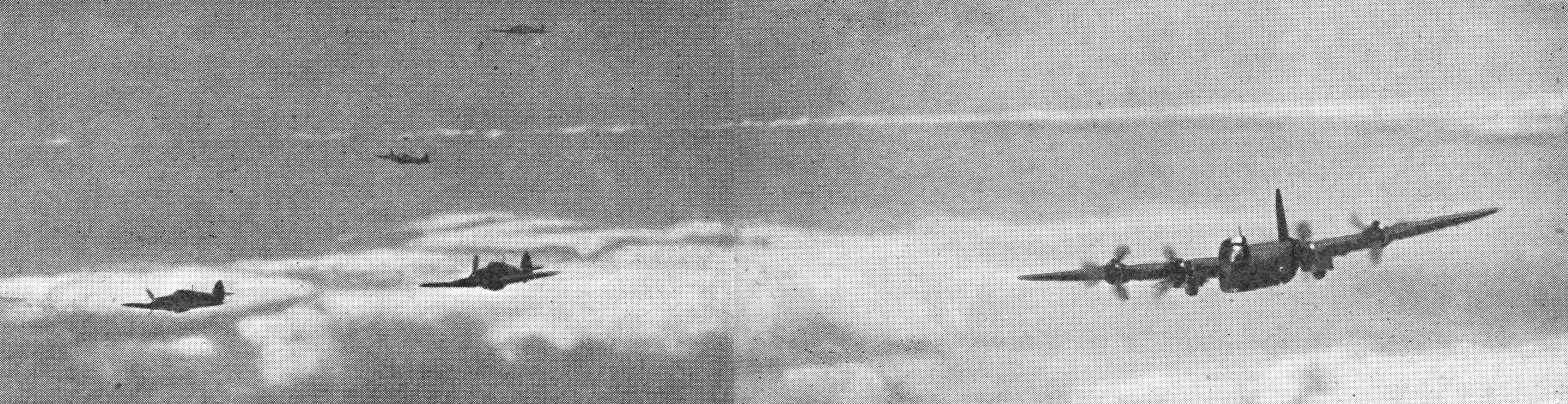
STIRLINGS
AND THEIR FIGHTER
ESCORT
Although British bombers carry a
heavy defensive armament with machine guns firing all round they are,
nevertheless, at a considerable disadvantage in combat with fast
interceptor fighters during daylight raids, and they are, therefore,
escorted by fighters. Fighters, however, have a comparatively short
range and for long-distance raids bombers operate alone by
night. The big Stirling bomber above is one of a squadron attacking
objectives in enemy-occupied France. Its escorts are
Hurricanes armed with twelve machine guns
NIGHT FLYING
Reconnaissance aircraft carry cameras and are usually without great
offensive power. They rely chiefly upon speed or height to perform their
task. Their duty is to obtain information and bring it safely home and
they must, therefore, avoid combat wherever possible. They are not
normally used for bombing, although they frequently carry bombs, and
coastal reconnaissance planes may carry a torpedo.
The effectiveness of all kinds of air operations is reduced by
darkness. In daylight fighters can readily gain contact with enemy
bombers, but at night the high-flying raider is very difficult to find and
to attack. True, Britain’s night fighters have met with great success in
establishing contact with the enemy, but given daylight there is little
doubt that their “kills” would have been infinitely more.
To offset the advantage which darkness gives to the bombers is the fact
that it is more difficult at night for bomber crews to identify their
targets and attack them with accuracy. In general, effective air
bombardment by night demands much higher skill in navigation and bomb
aiming than do similar operations in daylight.
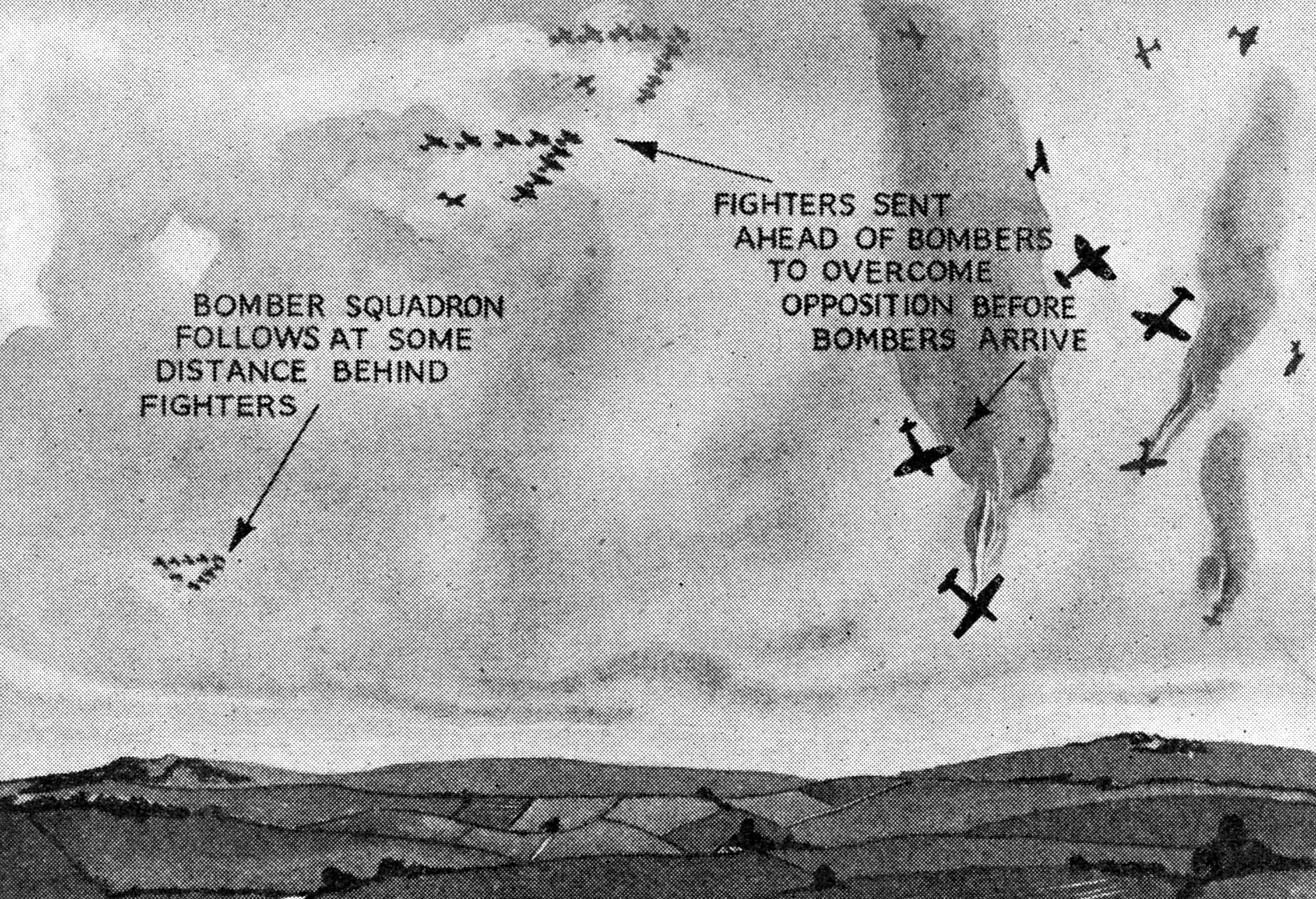
There have been many schools of thought regarding the use of fighters in
co-operation with bombers. The ideal to be aimed at by an attacking air
force is to send fighters on ahead of the bombers to clear the sky of
opposing fighters before the bombers arrive over the target, thereby
enabling the bombers to select and attack their targets at their
leisure and unhampered by enemy interference (Fig. 1).
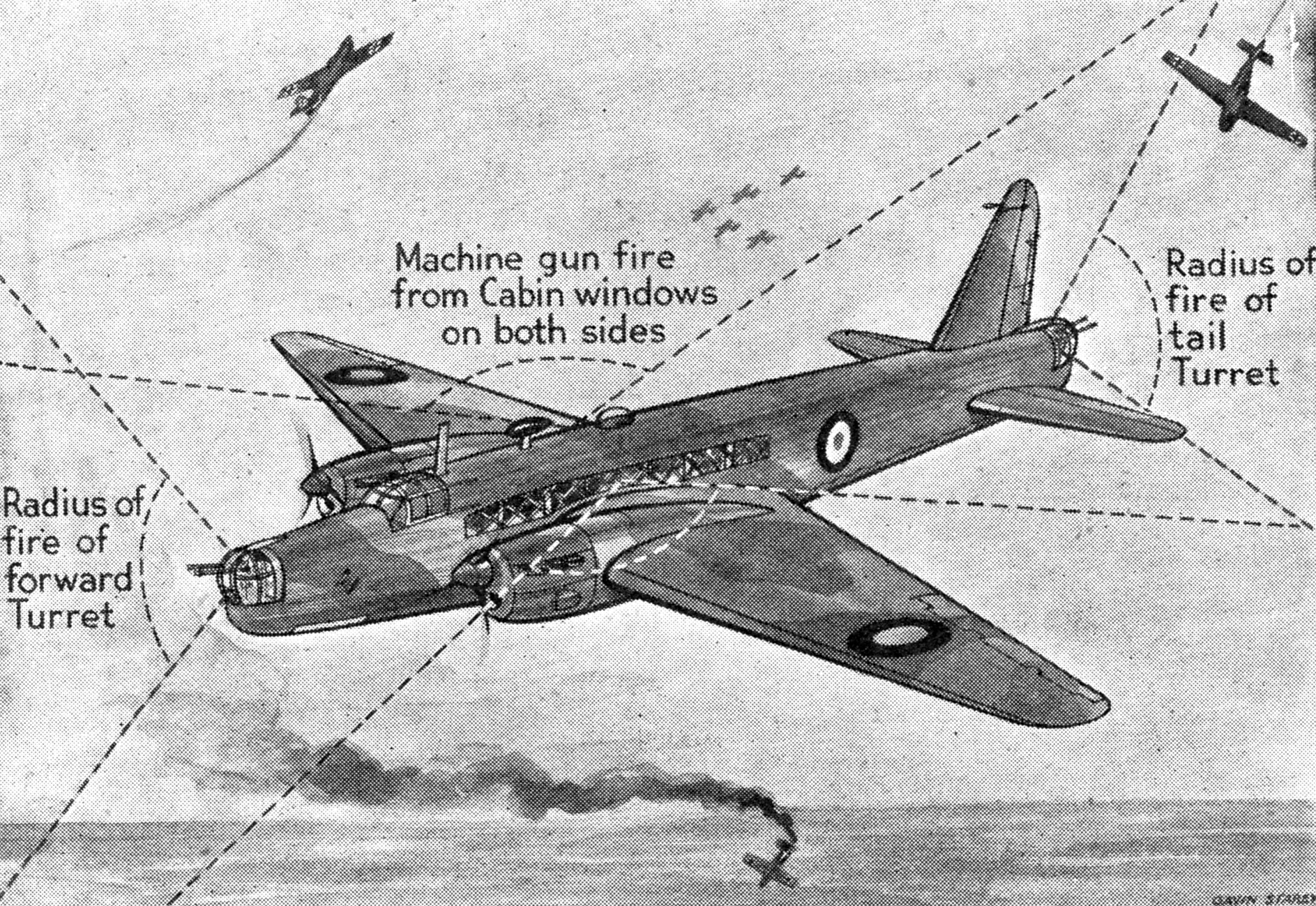
FIGHTER PROTECTION
Another school of thought takes the view that the bombers themselves
should be so heavily armed as to be capable of beating off any enemy
fighter attacks without assistance from their own fighters. The
Americans, in their design of the Flying Fortresses and the use they
have made of them, have adopted this principle. These ideals, however,
are unlikely to be attained by either of two air forces of nearly equal
size unless one is very inferior in quality or morale (Fig. 2).
FIGHTERS
CLEAR THE TARGET AREA
Fig. 1. One ideal to be aimed at by an
attacking force is to clear the sky of opposing fighters before the
bombers arrive, as shown above. The bombers could then select and bomb
their targets at their leisure, unhampered by interference from
defending fighter aircraft
BOMBERS
UNESCORTED
AND
ESCORTED
Fig. 2. Some experts maintain that
bombers should be so heavily armed as to be capable of beating off
enemy interference unaided. R.A.F. bombers, although they cannot always
do this, are extremely well armed as can be seen from the Wellington
which has power-operated turrets in nose and tail as well as machine
guns firing from the cabin windows on each side.

One form of co-operation that can be adopted is for bomber formations
to be accompanied by fighters whose duty it is to protect them whilst
carrying out their mission (Fig. 3). This method was tried by the
German Luftwaffe in the Battle of Britain in 1940 wherein their large
bomber formations were escorted by still larger formations of fighters
which attempted to keep the path clear, locally at any rate, whilst
their bombers carried out attacks on the selected targets. It is a
method of attack which has also been tried by Britain. The Germans
failed with it, mainly because their fighters never succeeded in dealing
properly with the opposition that they met and thereby allowed the
British fighters to get in among the bomber formations. Britain has, at
all times succeeded in using the method, because British fighters,
technically superior, have always remained dominant. They have never
allowed themselves to be broken up as
formations.
It was the inability of the German fighters adequately to protect their
bombers that caused the enemy high command to resort to night
operations. This switch from day to night bombing, incidentally,
followed the precedent which the Germans themselves set in the war of
1914-1918. It was an attempt to obtain from darkness and bad weather
the cover for his bomber forces which his fighters had been unable to
give him in daylight.
This
expedient has, however, led to the rapid development of fighter
operations by night which, in combination with an elaborate and highly
technical system of radiolocation has succeeded in inflicting very heavy
losses on the enemy.
USE OF FIGHTERS FOR BOMBING
Fighters
can be and are used as bombers, but this is a specialized class of work
for which British Hurricanes were adapted. It is dealt with in a later
chapter. The Germans use fighter bombers such as Me 109F.s and F.W.190s
similarly and for tip-and-run raids on coastal towns. The fighter can
use its great speed and manoeuvrability for purposes of evasion and it
stands a better chance of penetrating enemy ground and air defences,
but it has only a limited range and any extra weight it has to carry in
the shape of bombs means that a corresponding weight of fuel must be
sacrificed.
Efficient ground defences impose important
limitations on offensive air operations. These defences consist of
heavy and light anti-aircraft guns, balloon barrages and searchlights.
Anti-aircraft fire is a serious danger to an aeroplane which flies at
moderate heights and on a steady course.
Attacking planes are
forced to take evasive action by altering course, height and speed
whenever they encounter A.A. gunfire. This, of course, makes bomb aiming
less accurate and, if heavy enough, almost impossible. In consequence,
guns grouped round important targets have a strong deterrent effect.
Light anti-aircraft fire is a valuable defence of small isolated targets.
Balloon
barrages, especially at night or in very cloudy weather are a valuable
deterrent to enemy raiders. They make enemy pilots extremely wary and
keep the raiding machines at a height that will enable the A.A. guns to
get at them and they, in consequence, very frequently succeed in
bringing them down. In addition, they effectively stop low altitude
bombing of towns and factories.
USE OF SEARCHLIGHTS
Lastly,
searchlights not only very greatly help the ground gunners to locate
aircraft by night, but their light dazzles the bomb-aimers and entirely
upsets the accuracy of their aim.
We have said that the main
object of British air strategy is attack, and the bomber is the chief
weapon used to carry the fight to the enemy. We will now consider how
the bomber is employed. The tactics of aerial bombing may be summed up
as comprising: (1) accurate navigation to the target area, (2)
prevention of enemy interference on the way, (3) recognition of the
target, and (4) accurate bomb-aiming.
The first of these calls
for considerable skill because the modern bomber must fly for hundreds
of miles to reach its target, very often through clouds, fog or
darkness. During its flight over enemy territory it will almost
certainly be attacked either from the ground or by enemy fighters, but
it must not tum back until it is severely damaged, or until it has
accomplished its mission. Interference from enemy fighters whilst the
bombers are going to or returning from their objective is overcome in
different ways. In daylight or clear weather the bombers fly in close
formation each relying on the air gunners of the whole formation to
deal with enemy fighter attacks. The bomber formations adopted vary
according to local requirements. Sometimes the aircraft fly in V
formation (Fig. 4), sometimes in box formation (Fig. 5), or in diamond
formation (Fig. 6), but always with the aim of combining flexibility
with mutual fire support, which is another most important factor.

Fig. 4. Formation of aircraft varies
with the local needs. Here are aircraft in V formation; Fig. 5. Showing a further assemblage of
bombers flying this time in box formation; Fig. 6. In daylight bombers fly in close
order, known as the diamond formation
Recognition
of the target and accurate bomb-aiming are of outstanding importance.
It is useless to have reached the target area if on arrival the target
cannot be recognized or the bombs, when released, fall wide of the mark.
Targets
can only be recognized after careful study of maps and photographs
prior to the raid. In this respect the R.A.F. takes special pains to
see that its pilots are given the fullest possible information, both
photographic and otherwise before they set out to attack a target. In
certain cases models of the target are made from photographic data and
the best methods of approach and means of attack are discussed by the
pilots before they embark on the enterprise (Fig. 7).
Having
identified the target, the next thing to do is to hit it with bombs.
Good bomb aiming calls for a very high degree of skill, great
determination, and coolness at the critical moment just before the
bombs are released. Bombing has been carried out from heights up to
40,000 feet; it can be done from aircraft flying very low, or by dive
bombing, in which the aircraft starts at a great height and dives at
maximum speed upon the target, releasing its bombs at point-blank range
and pulling out of the dive at the last possible moment (Fig. 8).
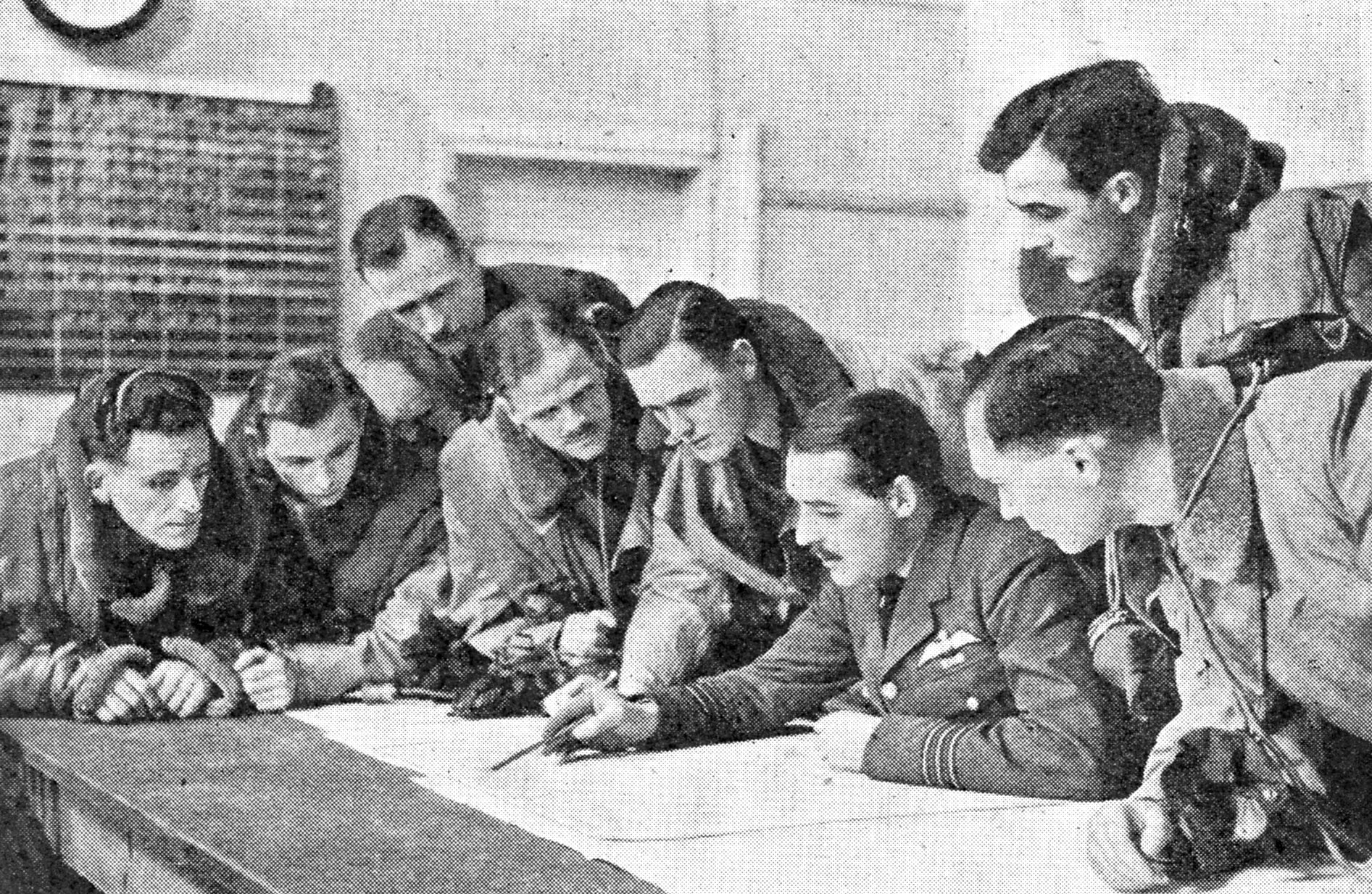
STUDYING
THEIR TARGET
Fig. 7.
Accurate navigation to and recognition of the target are of outstanding
importance in all bomber operations. These pilots and navigators are
taking no chances: they are studying maps and photographs containing
the latest available information concerning the objective which, in a
few hours’ time, they will be blasting with high explosive bombs
HIGH
ALTITUDE, LOW ALTITUDE AND DIVE BOMBING
Fig. 8.
Three methods of hitting a target with bombs. High altitude bombing is
most effective in clear weather, but rarely secures surprise.
Low
altitude bombing secures surprise, but makes the recognition of targets
difiicult. Dive bombing, developed by the Germans, gives
considerable accuracy, but is mainly effective against ill-defended
ground targets
High-level
bombing is most effective in clear weather or when there are gaps in
the clouds. It has the advantage that targets can easily be found, and
the approach and bomb aiming are not interfered with too greatly by
anti-aircraft fire. Bombs dropped from a great height have great
penetrative power and accuracy. This method of bombing, however, rarely
secures surprise, whereas very low bombing can secure surprise although
approach to and recognition of land targets is made difficult by the
speed at which the pilots pass over landmarks. Low bombing, too,
exposes the aircraft to light anti-aircraft fire which in well-defended
areas may be very effective. Bombs for low-altitude bombing are fitted
with delayed-action fuses to enable the aircraft to get clear of the
target before the explosion takes place. Blast can be very dangerous.
DIVE BOMBING
Dive
bombing has been specially developed by the Germans. It gives
considerable accuracy added to which the noise of the diving plane can
add considerably to the moral effect of the bombing. On the other hand,
if dive bombers are met by cool and well-aimed fire from the ground,
very high casualties can be inflicted upon the attacking aircraft. The
bombers after pulling out of their dives can also be caught easily by
fighters. Dive bombing is therefore mainly effective against
ill-defended ground targets or against ships when there is not
sufficient protective cover by fighters.
Let us now consider the
tactical employment of fighters in modern warfare. Fighter tactics are
of two kinds, namely, fighters against fighters, and fighters against
bombers. In addition small bodies of fighters may work on roving
commissions such as shooting up enemy aerodromes or other special
targets. Normally fighters operate in formations, so that a strong
offensive fire can be brought to bear while at the same time the members
of the formation protect each other and the whole from surprise.
IMPORTANCE OF HEIGHT
In
all circumstances height is of the greatest value in fighter attack. It
enables advantage to be taken of cloud cover, and the direction of the
sun, and also allows attacks to be made at great speed. Maximum
performance at great heights is therefore a primary need in fighter
aircraft. On occasion, when one body of fighters has encountered
another, the V formations in which aircraft usually fly may be modified
so that they fly round in a defensive circle, each aircraft covering the
one in front of him. All, or any can dive out of the circle to attack
isolated enemies, or the whole circle can manoeuvre slowly until it
withdraws from the combat. This formation was often adopted by the
Germans during the Dunkirk period at the end of the Battle of France in
1940, and also in their later attacks in the Battle of Britain. The
defensive circle formation was sometimes outwitted by British fighters
getting inside the circle, flying round it in the opposite direction to
the Germans, and thereby getting them one by one in their gun sights
(Fig. 9). The volume of frontal fire of which the modern fighter is
capable is very great indeed. Fighter actions, therefore, consist of
considerable periods of manoeuvre for position with only short but
intense bursts of actual firing.
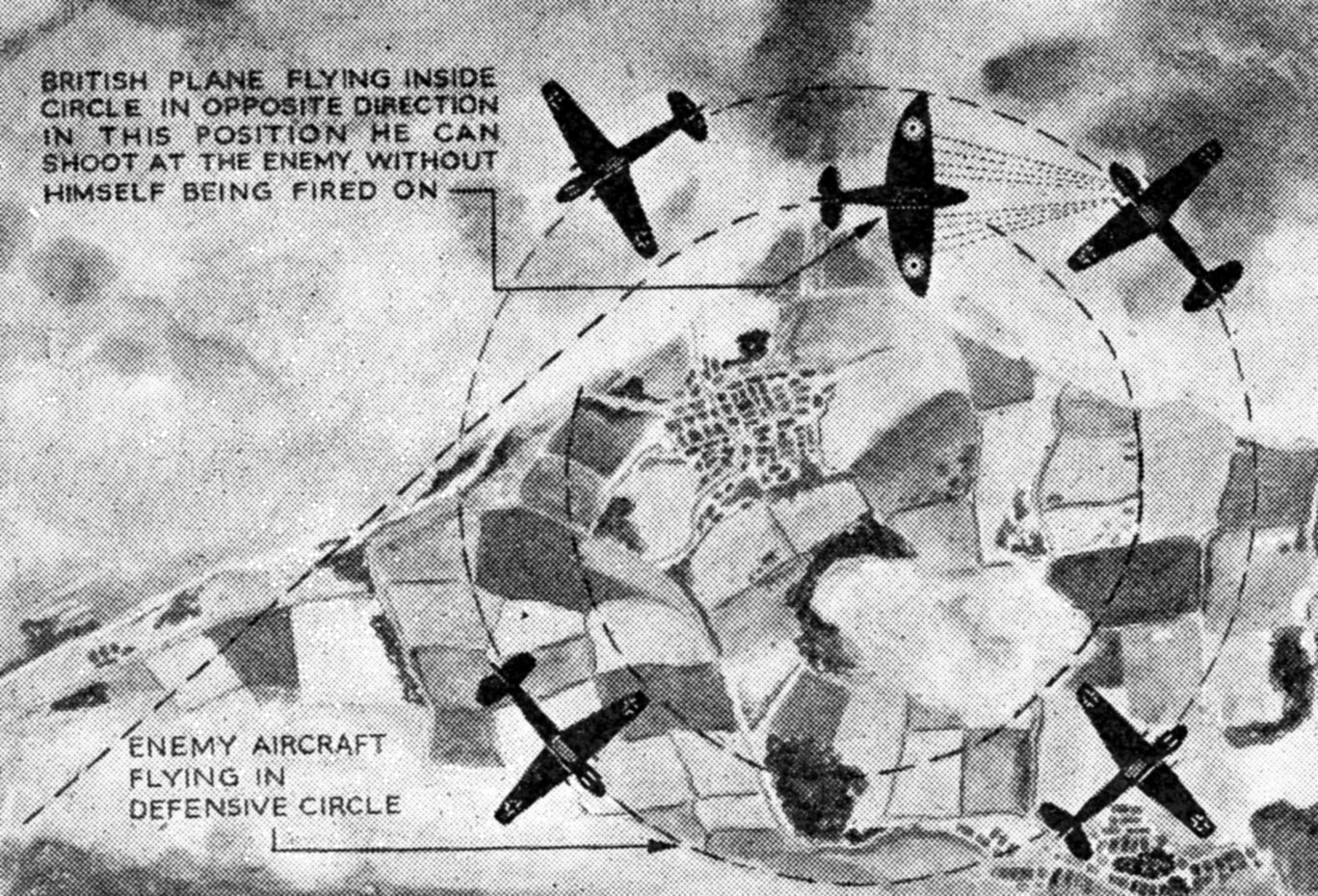
GETTING
INSIDE THE DEFENSIVE CIRCLE
Fig. 9.
Enemy aircraft flying in a defensive circle, each machine covering the
one in front as they withdraw slowly from the combat. A British fighter
has entered the circle flying in the opposite direction and is picking
the enemy machines off one by one
Fighter attacks
upon escorted bomber formations naturally depend in the first instance
upon avoiding or dealing with any fighter escort. Once this has been
done the method of attack upon bombers themselves is to split up the
formation and then to deal with each member individually, several
fighters attacking a single bomber from various directions and thus
distracting the enemy air gunners from concentrating their fire.
Fighters
that have to deal with the isolated bomber, which usually operates in
bad visibility or clouds, have first to make contact with the bomber and
then attack it before being observed; In these circumstances the work
of the fighters might be described as “stalking.”
END
OF A FLYING PENCIL
When
fighters attack bomber formations they split the formation up and then
deal with each aircraft individually. The Dornier 17 above is diving to
its doom after having been caught in the deadly stream of fire from a
Spitfire
HOW
FIGHTERS ARE WARNED OF THE ENEMY’S APPROACH
Fig. 10. This
diagram, reproduced from the “Battle of Britain,” shows how the ground
warning organization of the R.A.F. functions. Instead of patrolling the
skies in search of the enemy, the fighters wait on their aerodromes
until warned of the approach of a hostile force. When in the air they
are directed to within sight of the enemy by radio telephone
In all fighter operations successful results
can best be obtained when the fighters have a proper warning
organization on the ground to assist them. Then, instead of spending
unnecessary time in patrolling, they can wait on the aerodromes until
warned of the approach of the enemy.
When
in the air they can be directed by radio to within sight of their
quarry. The R.A.F. has brought to a fine art this co-operation between
ground observers and fighter pilots, and this system contributed in
large degree to the great successes achieved by British fighter pilots
in the air battles over Britain in the autumn of 1940 (Fig. 10).
LAND AND SEA CO-OPERATION
Besides
the actual offensive and defensive duties carried out by bombers and
fighters, planes of the R.A.F. co-operate in many ways with both land
and sea forces. There are two main aspects of such co-operation; the
first and most important of these is that there should be a favourable
air situation before ships and armies can work successfully. If naval
bases are subject to heavy air bombardment, if ships themselves whilst
at sea are in constant danger of torpedo or bomb attack from the air,
if the area in which they are working can be filled with mines dropped
from aircraft, then naval forces have to work under a severe handicap
and may have to face heavy losses. The same applies to the operation of
military forces. The bases from which they receive their supplies of
food and ammunition must be secure from air bombardment; the railways
and roads along which their reinforcements and their daily needs are
brought must be reasonably free from air attack. The troops themselves
in their billets or camps must be able to get proper rest with total
relaxation in the intervals of their fighting on the ground.
To
ensure, therefore, that naval and land forces can operate effectively
it is vital that a favourable air situation be produced by the air
force to give them security from enemy aircraft, and to inflict
upon the enemy those very difficulties which would prove embarrassing
to its own ships and men. To obtain this favourable situation is part
of the general air strategy of the war, and we must now consider how an
air force achieves it.
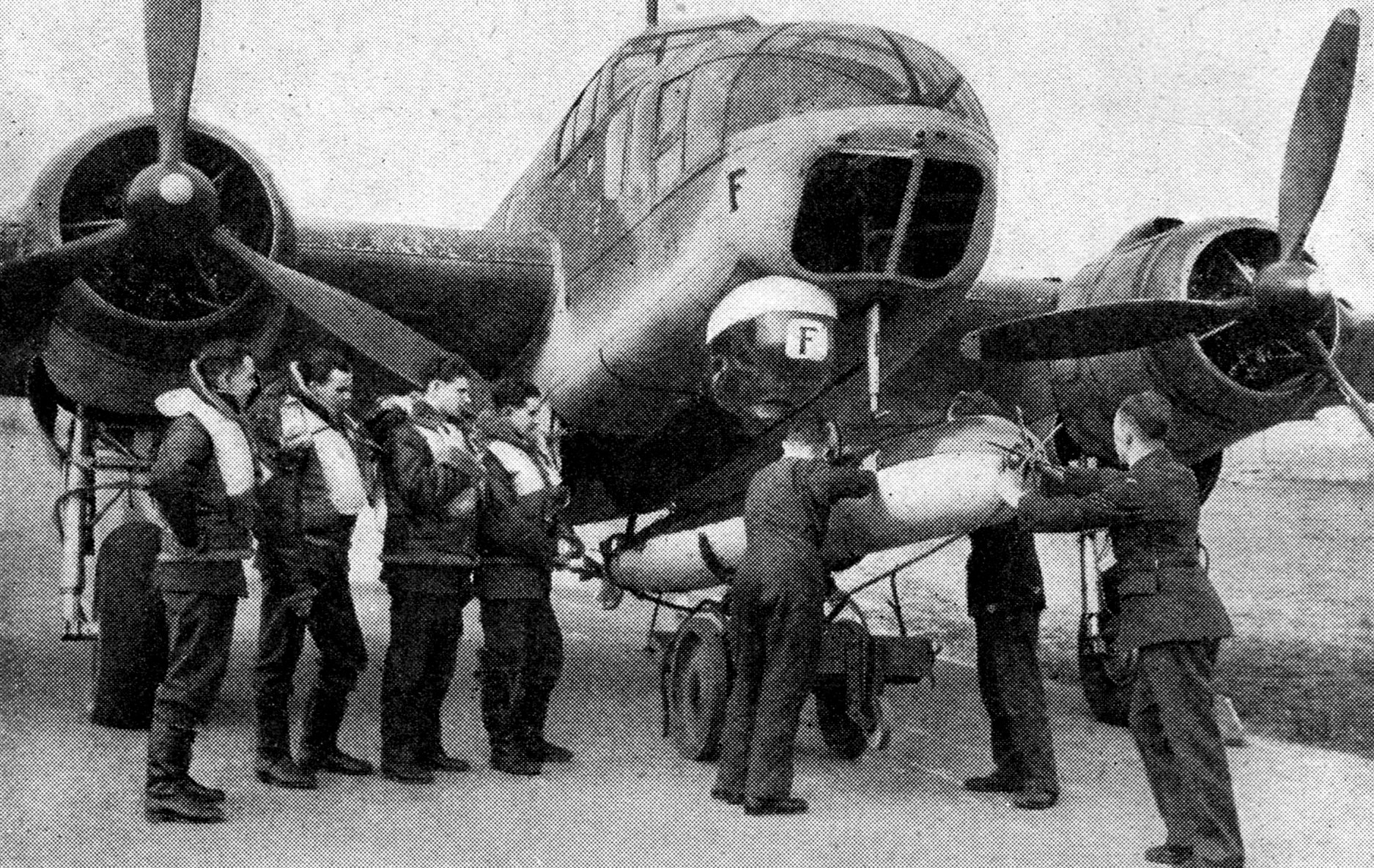
BEAUFORT
THAT TORPEDOED A POCKET-BATTLESHIP
The
R.A.F. co-operates in many ways with naval forces. It carries out
continual reconnaissance of the seas around Great Britain and attacks
enemy ships whenever they are found. This Bristol Beaufort
torpedo-carrying bomber above scored a direct hit on a German
pocket-battleship either the “Lutzow” or the “Admiral
Scheer,” off the coast of Norway
BRISTOL
BEAUFIGHTER
This twin-engined day and night
fighter has a span of 57 feet 10 inches; a length of 41 feet 4 inches,
and its wing area is 503 square feet. The Bristol Beaufighter’s armament
comprises four 20 m.m. cannon in the fuselage nose and six .303 inch
machine guns in the wings. Four of these are mounted in the starboard
wing and two in the port wing. It has a top speed of 330 m.p.h. and a
cruising speed of 200 m.p.h. Mainly used by Coastal Command against
enemy shipping
SEA AND AIR CO-OPERATION
The
first stage of air support for naval forces is air reconnaissance. This
should provide warning when enemy ships are assembling or have put to
sea, and thenceforward give an accurate picture of the enemy’s
dispositions and the courses which he is steering in order that contact
at sea can be made and a naval battle brought about. A classic example
of this type of reconnaissance is the case of the German battleship Bismarck,
which was reported by reconnaissance planes to have put to sea on May
25, 1941. As a result she was brought to action by naval forces in a
battle in which the British battle cruiser Hood
was sunk. Although the German ship succeeded in withdrawing from the
action under cover of darkness, she was later located by Catalina flying
boats of the Coastal Command and attacked by torpedo carriers of the
Fleet Air Arm who succeeded in reducing her speed and summoning British
naval forces. Her destruction on May 27 was no less a triumph for the
air forces of Britain than for the Navy.
The second stage in close co-operation between air forces and the Navy
is that air attacks should be delivered against enemy ships,
synchronized with, or even prior to, a naval action. If important ships
can be hit by torpedo or by bomb their speed and their effectiveness
may be very seriously reduced, to the great advantage of naval forces
in the subsequent operations. Here again the Bismarck affords a
model example of this type of co-operation.
The detailed tactics of bombing ships at sea differ little from the
bombing of targets on land except that a high degree of skill is
required in judging the speed of movement of the target, and when low
bombing, in pressing home the attack against a concentration of
anti-aircraft fire. Torpedo attack by aircraft against ships requires
the aircraft to descend very low and in close proximity to the enemy,
and again calls for great judgment of speed and course to ensure a hit.
Aircraft can also co-operate very effectively by directing ships’
gunfire when the fleets are engaged. The Navy’s air requirements at sea
are mostly met by aircraft in carriers and aircraft catapulted from
warships. Effective support is also given, however, by shore bases
reconnaissance, bombing and torpedo-carrying aircraft.

BOMBERS
OVER TARGET
Allied raids on occupied
territory are becoming more and more intensified. The top picture shows
a Ventura aircraft of the R.A.F. Bomber Command over its target—The
Royal Dutch Blast Furnaces and Steel Works at Ijmuiden in Holland. U.
S. Flying Fortresses can be seen below attacking the Rotterdam
shipyards and dock installations. Hits have already been made on the
chief part of the engineering works, and on the submarine slips and
repair shops
BOMBERS
HELP THE ARMY
Bombers
are used to destroy objectives which the army cannot reach with its own
guns. Such targets are frequently crowded roads, or bridges, like that
seen above, which has been destroyed by a well-aimed bomb
HITS
ON JAPANESE POSITIONS
Fire
bombs raining down on Japanese territory. Over fifty incendiaries were
dropped at one time by Allied Aircraft on this Japanese village in the
Taungdaung district of Burma, where considerable destruction was caused
to enemv positions, and many fires were started
LAND AND AIR CO-OPERATION
The question of the precise relationship between an air force and an
army has been answered in many different ways since the war began, but
experience has now shown, not only that an army is useless without
supporting air power but that air and land forces must work together
under one control if effective use is to be made of either. The air
force must be at the tactical disposition of the army if any
strategical land attack is to be carried through to a successful
conclusion. It must be prepared to carry out perpetual reconnaissance,
provide an air cover to keep enemy aircraft away and be ready at a
moment’s notice to bomb targets which the army deem essential. When
this war began, however, this conception of the relationship between
air forces and armies was not fully understood. It took many months and
the formation of a new Command, Army Co-operation, for it to become
practice. Lessons learned in the Middle East had to be turned to
account. The use of paratroops, gliders, fast fighters, such as the
American Mustangs, had to be developed for army work. The result is
dealt with in a later chapter.
QUALITY VERSUS QUANTITY
A problem that has always faced the organizers of air forces is to
decide between the relative merits of large numbers of aircraft as
against a force of smaller size but of quality greatly exceeding that
of the enemy. This question of quality applies not only to the design
of the aeroplanes themselves, but to the material of which they are
constructed, to the workmanship by which that material is put together,
and to the training of the fighting crews.
It is always possible that a very large force used with great
determination may overwhehn an opponent who has relied upon fewer
numbers but greater quality, before he has recovered from the initial
blows. This policy, however, entails very grave risks because of these
initial blows should fail to destroy the enemy, the better aircraft and
the more skilful crews can then assert themselves with the result that
the force that relied upon numerical strength alone finds itself at a
serious and increasing disadvantage.
The Royal Air Force has always endeavoured to supply its pilots with
machines that are better than those of the enemy. Its policy has been
to build the best possible machines that can be turned out quickly
enough to supply all its requirements. Furthermore, it has always
endeavoured to keep one jump ahead of the enemy in technical
achievement. In order to do this it maintains experimental stations and
keeps pace with the latest enemy developments by examining carefully
all the latest types of enemy machines that have been captured (Fig.
11). Much valuable information has been received in this way, and the
R.A.F. is not slow to incorporate or improve upon any innovations or
devices that have been discovered.
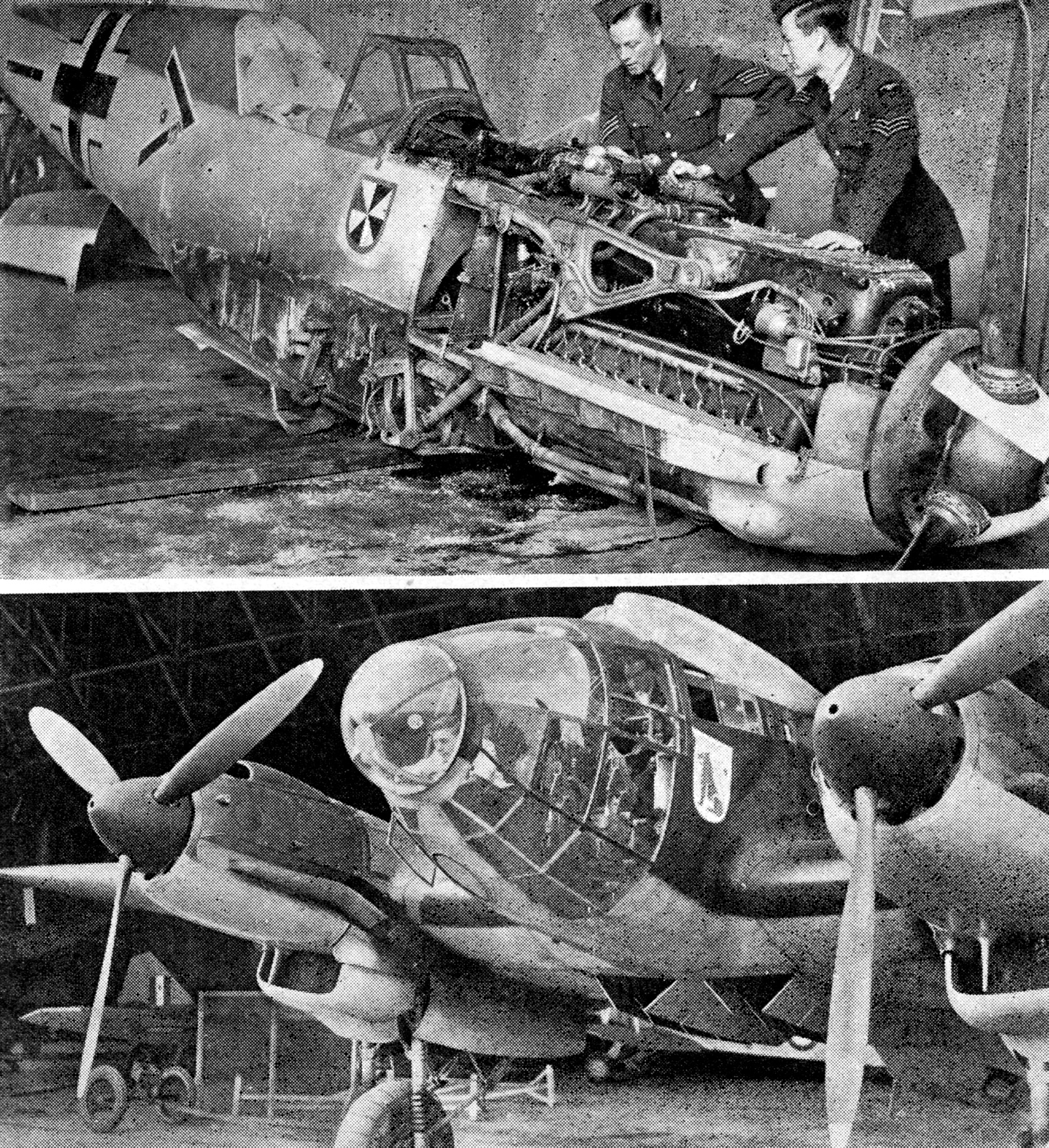
ENEMY
SECRETS LAID BARE
Fig. 11. The R.A.F. in its race to keep
ahead of the enemy in technical development, maintains experimental
stations where captured planes are dismantled and examined. Much
valuable information has been obtained in this way, and the R.A.F. is
not slow to incorporate or improve upon any useful devices it has
discovered in enemy aircraft. The two planes being examined are an Me
.109 fighter (above) and a Heinkel 111 bomber (below)
Aircraft viewed from the ground may appear as impersonal objects going
about their business almost regardless of ordinary human factors. But
they are not really so. Their pilots and crews are ordinary men subject
to the enthusiasms, the faith or the misgivings of ordinary mortals. It
is an essential condition of successful air warfare that the flying
personnel have trust in their leaders, confidence in their own ability,
and reliance on their aircraft and equipment. No other fighting forces
are so susceptible to the encouragement that comes from success, or are
so liable to discouragement from undeserved failure. The strategic and
tactical handling of an air force, therefore, demands the most skilled
direction. If an air force once gets the impression that its efforts
are being wrongly or wantonly expended a vast amount of effort would be
required to instil once more the courage and confidence which
its task demands.

TRAINING
AIRCRAFT OF THE R.A.F.
Flying Training Command employs
several types of aircraft to teach pilots and other members of air
crews their jobs. Engine particulars and top speeds of some of these
are given above
CHAPTER
3
A
pilot in the Making
The medical examination.
The Receiving Wing. Initial Training Wing. Importance of
navigation. Elementary Flying Training School. The parachute. Tiger
Moth trainer. The first flight. Dual control. Working of the controls.
Stalling and spinning. The Link Trainer. The first solo flight. Landing
across wind. Service Flying Training School. Airspeed Oxford trainer.
A.M.L. teacher. Blind approach. Navigation tests. Commonwealth Training
Plan
THE British system of flying training is the finest in the
world, whether in the leisurely days of peace or under the pressure of
the needs of a major war. It is a system which has stood the test of
hard trial, the Battle of Britain, when a mere handful of fighter pilots
fought until they were asleep on their feet and beat off the full might
of the Luftwaffe. It has been imitated in many parts of the world.
Other countries have sent their pilots to Britain to be trained or have
borrowed instructors from Britain. And, finally, it is the system on
which the great Empire Air Training Scheme, about which we will talk
later, has been founded.
CAREER OF A VOLUNTEER
In
order to produce a successful operational pilot, other qualities must
be developed besides the basic ability to fly an aeroplane, so let us
follow the fortunes of a hypothetical John Smith, who has volunteered
for flying duties with the R.A.F., and go with him through the various
stages of his training.
He has already been interviewed by an
aviation candidates’ selection board, and has not been found wanting.
He is told that he must now prove that his physical qualities are up to
scratch by passing a medical examination. A fighter pilot has to
withstand a physical strain rather different from that imposed upon a
bomber pilot; he must ascend to greater heights, at times above 40,000
feet, though for comparatively short periods; he has to stand up to
physical and mental stresses induced by the manoeuvres of mortal combat
at speeds, often, of more than 400 miles per hour.
MEDICAL EXAMINATION
The
R.A.F. Central Medical Board has, therefore, to deal with distinctive
types of potential pilots, and John Smith’s chances and capabilities,
medically speaking, will be painstakingly estimated. The interviewing
doctor soon puts him at his ease, considers his personal and family
medical history, and passes him along to a succession of medical
specialists to each of whom in turn he appears for appropriate medical
and surgical tests, eyesight tests and so on.
He sees, for the
first time in most cases, a bewilderment of intricate apparatus, the
components of which are nevertheless most inoffensive in action, except
perhaps in so far as they are uncompromisingly truthful. The biceps of
one of his arms will be encircled by a rubber bandage (Fig. 1) whose
variable pressure, indicated by a column of mercury, is the means
whereby the secret of his blood pressure is laid bare. He will be
invited to try the strength of his lungs in opposition to another
column of mercury; this is known as the Forty Millimetre Test, and he
will be asked to blow the mercury in the U-tube up to a certain height
and hold it there for at least fifty seconds. This is not as easy as it
sounds.
LUNG TESTS
After
succeeding in the balancing rod test which requires him to raise a
ruler on which is balanced a rod from a table to shoulder level and
back again without upsetting the rod, he is introduced to the
spirometer, an instrument resembling a gas meter, which is used to
determine the capacity of his lungs. The next test is designed to
ascertain the expiratory force of his lungs; for this he is seated
before a manometer, or U-tube of mercury, asked to take a deep breath
and to blow mercury in the tube as high as he can.
After having
his reflexes tested, his height and chest measurements taken, Smith
appears before the President of the Medical Board, a senior officer
whose duty it is to weigh up the results of the various examinations
and tests. In this case there is no doubt of his physical fitness. The
good news is announced, and he leaves the building with the feeling
that he will soon be in the cockpit of a Spitfire. Given keenness,
determination and a certain amount of natural aptitude, the training
upon which he is about to embark will soon transform him from a
civilian into a sound and reliable service pilot.
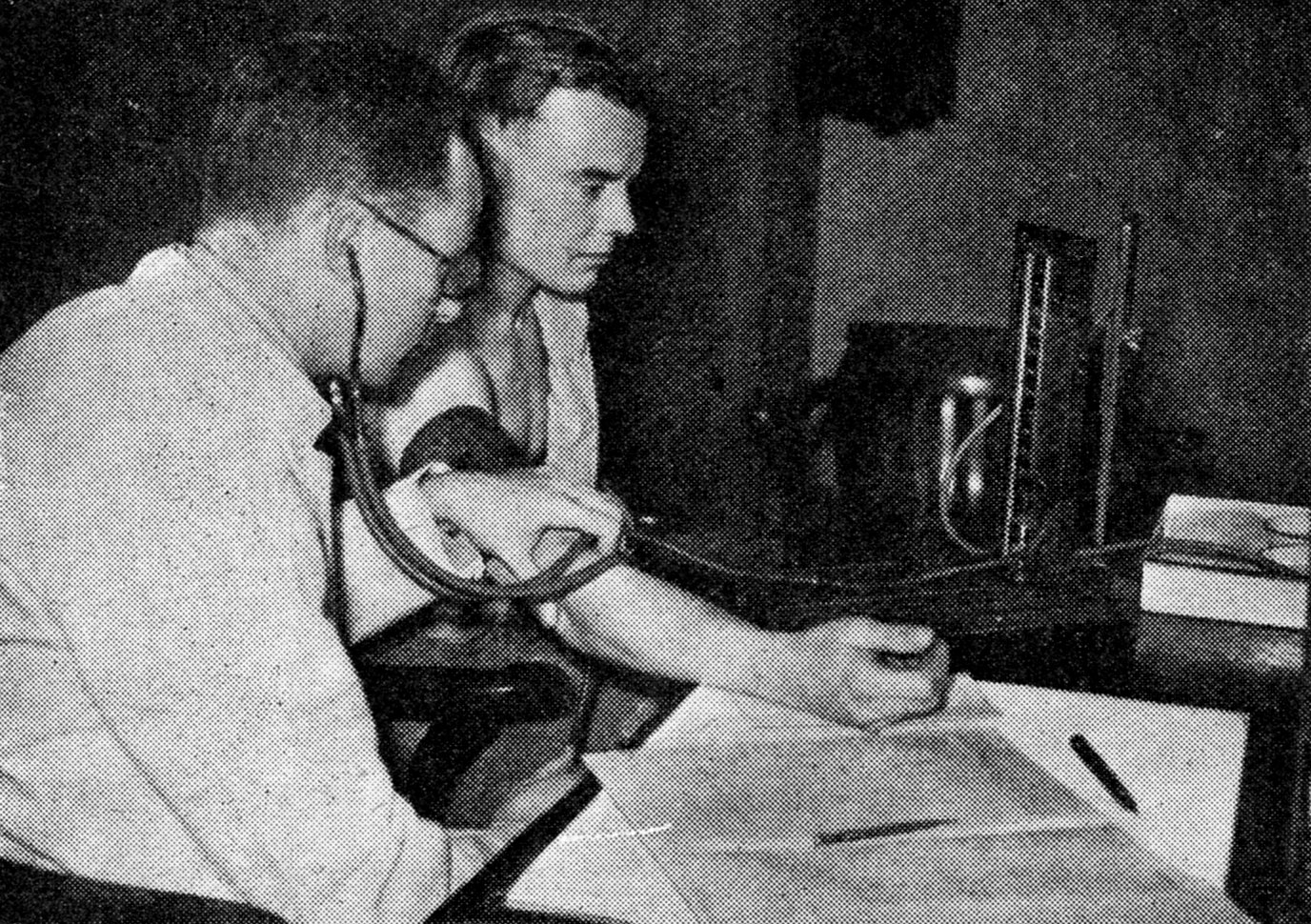
BLOOD
PRESSURE TEST
Fig. 1.
The young volunteer above is having his blood pressure tested during
his medical examination for the Royal Air Force. The rubber bandage
round his arm is inflated and the blood pressure measured by means of
the mercury tube seen on the table
He is posted as
No. 99999999, Aircraftman Class 2, Smith, John, to a receiving wing
where he will be initiated into service life. Here he draws a complete
set of uniform, is paraded and taught how to march, to salute and
generally to conduct himself in a smart and “airmanlike” manner.
A.C.2
Smith hears an address by his commanding oflficer, and is given the
explanation of the rules whereby several hundred men can live
companionably together. The days pass quickly as he attends lectures on
such subjects as navigation, aircraft recognition, law and discipline,
organization, R.A.F. ranks and their equivalents in other services,
anti-gas drill, and elementary mathematics.
Very soon he finds
that he is becoming physically fitter from the drill and physical
training meted out by his energetic instructors, and already a
perceptible change has been wrought in other respects as well. He has
accumulated some knowledge of his job and of the R.A.F. in general, and
is altogether a new man in his outlook on life.
In due course
A.C.2 Smith is posted to an initial training wing whose purpose it is
to implant a thorough foundation in subjects just as essential for a
pilot to understand as that of actual flying, but which must be learnt
on the ground. Attention is paid to the development of physical fitness
and of the spirit of leadership. The commanding officer has to
interview each man individually and, taking into consideration his
record to date, to forward to higher authority his opinion as to
whether the man is suitable to hold commissioned rank.
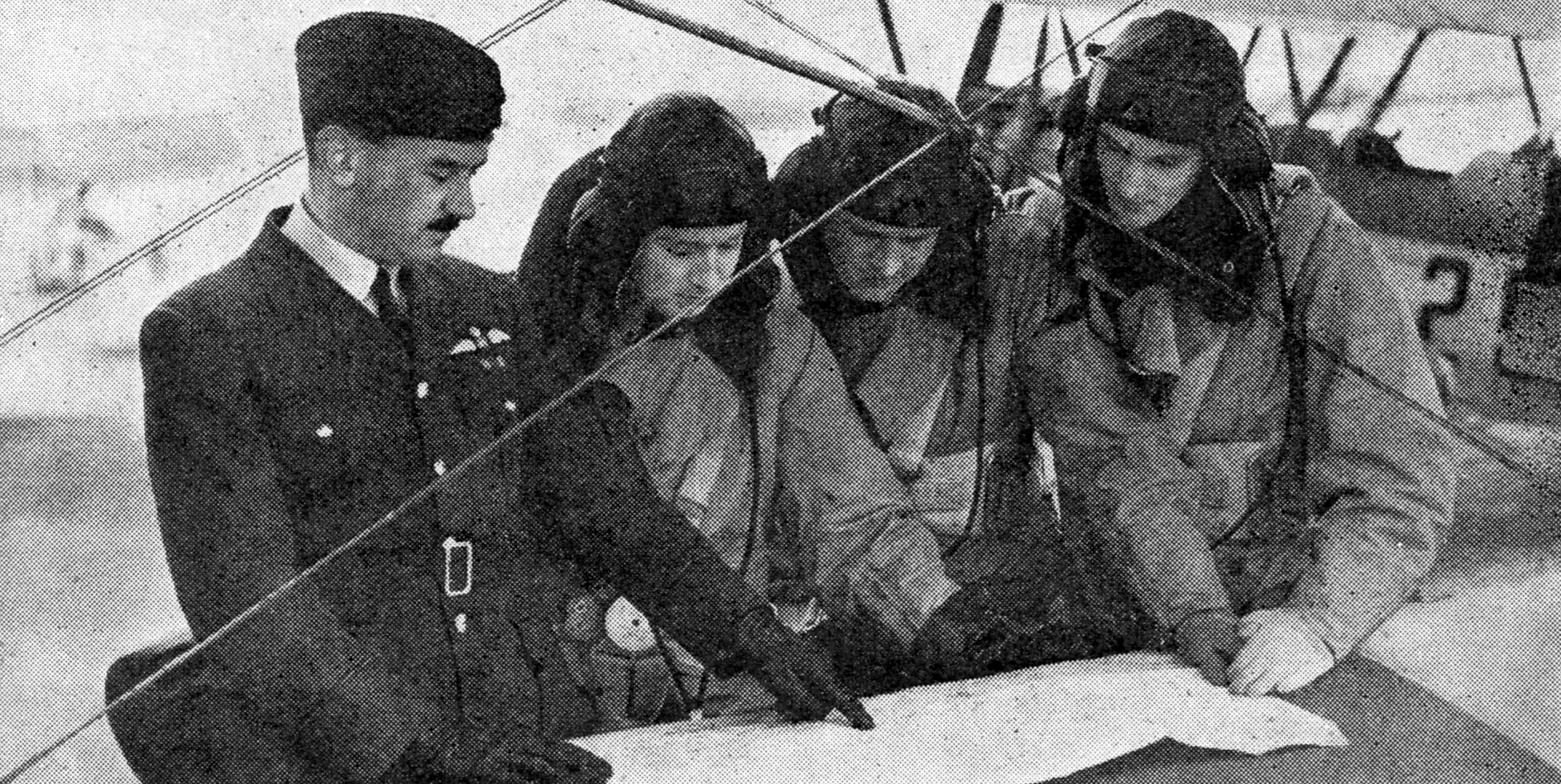
LEARNING
TO FIND THEIR WAY
Navigation
forms one of the most important subjects in the training of a pilot,
for however good he may be at handling an aircraft, he would be useless
if he could not find his way. The young pilots above are studying their
maps before setting off on a cross-country flight
A.C.2
Smith might become a great pilot in favourable circumstances, but that
would avail him nothing if, instead of reaching Berlin as
required, he unwittingly flew to Norway and failed to reach his base
again. He is not surprised that he is to receive more instruction in
navigation than in any other subject. Should he fail the preliminary
examination in mathematics, to which he must shortly submit, it will
mean the end of his ambitions to fly. This may seem rather drastic, but
it is obvious that without a certain minimum knowledge of mathematics
he cannot possibly learn any of the finer points of navigation.
EXAMINATIONS AND TESTS
Near
the end of the course there are other examinations and tests which must
be passed, in such subjects as navigation, signals, armament, defence
against gas, organization, law and hygiene. Of these signals comes next
to navigation in importance. One day Smith’s ability to send and
receive messages in Morse may be the means of saving him from a
dangerous predicament, apart from the not very distant time when,
during night flying, he will have to communicate with the ground staff
by signal lamp.
Smith is also impressed by the logic that skill
in manoeuvring a Hurricane or a Spitfire to secure a position from which
the decisive blow can be administered to the enemy is nullified if the
question of air gunnery has been neglected. So he applies himself to
the study of armament with diligence.
Soon
after his arrival at the initial training wing Smith is issued with his
flying kit. He bears to his locker a leather helmet, earphones, a Sidcot
suit, an inner garment of padded silk and wool, gauntlets, and their
companions, silk undergloves, as well as flying boots lined with lambs’
wool, and longs for the day when he will climb into the cockpit of an
aeroplane, or aircraft, as he has now learnt to call it.
OFFICER OR N.C.O.
Shortly
after passing his maths. examination Smith has the interview already
mentioned, which will help to decide whether at a later stage of his
training, he will wear a pilot officer’s stripe or the no-less
honourable chevrons of a sergeant. The aim of his commanding officer,
whose medal ribbons reflect his distinguished record in the war of
1914-1918, is to discover to what degree Smith possesses initiative,
capacity for leadership, willingness to accept responsibility, and the
ability to criticize constructively any aspect of the work at his unit.
It is soon decided that Smith is the right type of man to hold
commissioned rank, so a recommendation to that effect is included in
his record.
The days pass quickly—the navigation examination
gives Smith some anxious moments, but after what seems an age he learns
he is safely through. Patient study in his spare time is rewarded also
with regard to the other tests, and he is now ready to go forward to
his first flying training school. On his sleeve now appears the badge of
a propeller signifying that he has become a leading aircraftman, and
his pay increases to five shillings a day. After a few days’ well-earned
leave he reports at an elementary flying training school, and the most
interesting part of his training has begun.
Here the task of the
chief flying instructor and his assistants is not merely that of
teaching men to fly. There is far more in it than that. L.A.C. John
Smith, now officially designated as pilot under training, or, more
conciseley, as U.T. pilot, together with others like him may be keenly
disappointed to hear that flying will not figure in his first day’s
programme.
First they are paraded under a flight sergeant who
divides them into two sections, one of which will receive flying
instructions in the mornings and attend lectures in the afternoon and
vice versa. Lockers for flying kit are then allotted, and the whole
course is marched to a lecture room where the chief ground instructor
gives a brief and business-like address.
He begins his talk by
pointing out that more than superficial knowledgeof ground subjects is
expected and that members of the course are advised to set aside some
hours weekly of their spare time to supplement their lecture-room
instruction. John Smith decides that he will exceed the chief ground
instructor’s expectations with regard to private study.
After
being photographed as a course and in flights for record purposes, the
pupils are issued with text books and note books, by the end of which
time the promise of an appetizing lunch looms attractively near.
In
the afternoon Smith is introduced to that constant companion of the
air, his parachute. He watches it being packed and marvels that so much
material can be folded up so as to occupy so little space.
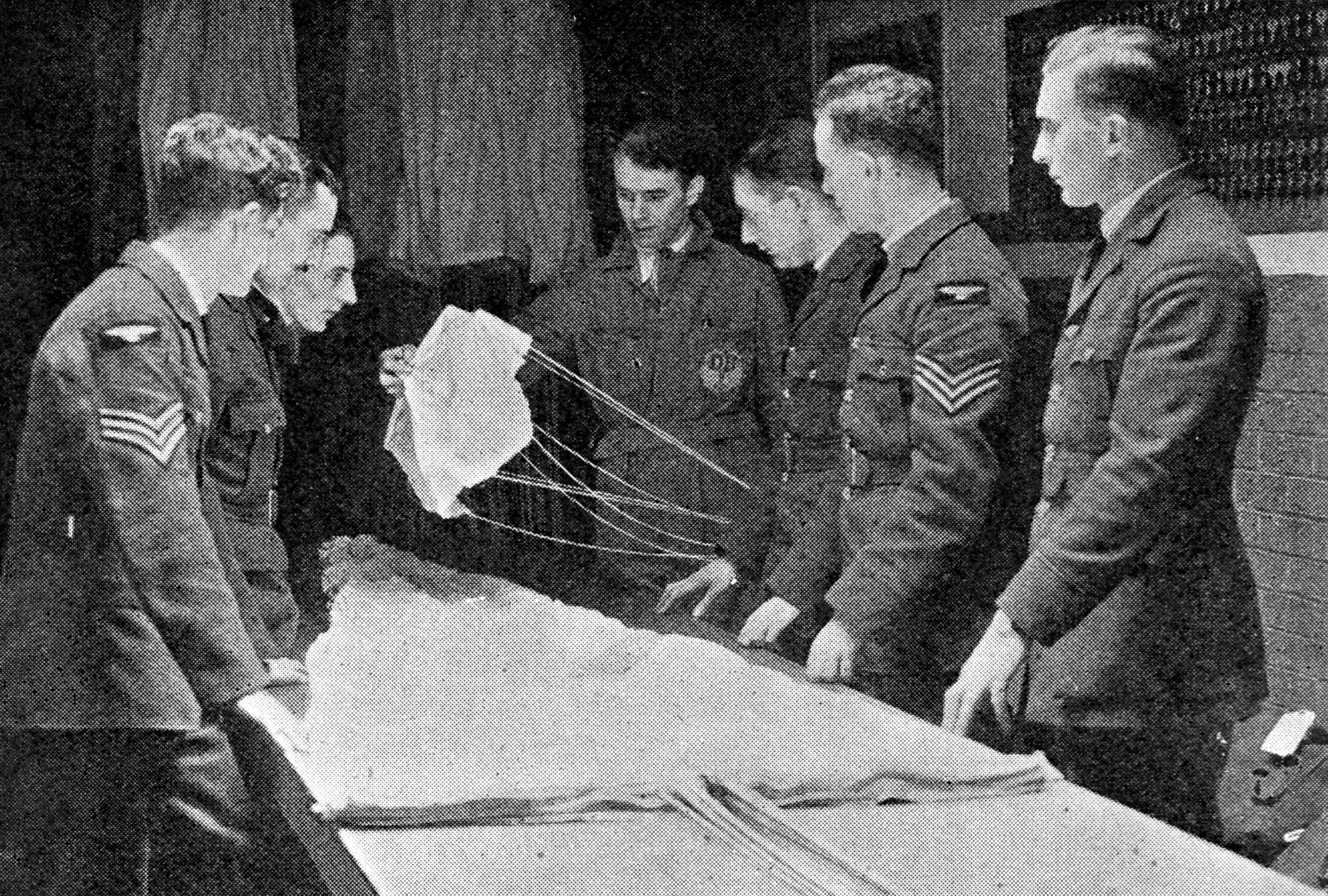
SECRETS
OF THE PARACHUTE EXPLAINED
During
their first day at the E.F.T.S. pilots are introduced to the parachute
and given brief instruction in the operation and care of this valuable
life-saving device. The class above are receiving a demonstration in
parachute folding. A service parachute costs about £70
LEARNING
TO PACK THE ’CHUTE
It
is not long before the U. T. pilot knows all there is to know about his
’chute for, like the young men learning to pack them above, he realizes
that one day his life may depend upon its efficient working
CARE OF PARACHUTE
The
parachute harness is then adjusted to fit him and he is given brief
instruction on how to operate this saviour of thousands of men’s
lives, and on how to take care of it, not for its own sake alone,
though it costs about £70, but for the reason that his life may depend
on its being in good condition. After further lectures you may be sure
that there is very little he will not know about his “chute,” as he
will affectionately call it.
THE
DE HAVILLAND TIGER MOTH
Fig. 2.
The D.H. Tiger Moth initial trainer is a superbly reliable little
machine sturdily built to resist rough handling. Its 130-h.p. Gipsy
Major engine gives it a maximum speed of 109 miles per hour at 1,000
feet; it has an initial climb of 670 feet per minute and a service
ceiling of 13,600 feet. Its wing span is 29ft. 4 ins., its
length
23ft. 11ins. and height 8ft. 9ins. Some of the great air “aces” of the
past and present have received their initiation into flying in one of
these planes which were also much used by civilian pilots
FLYING TRAINING
He
then attends his first lecture on airmanship theory, in the teaching of
which subject a large portion of the instructional syllabus is set
aside. Smith starts to refer to the R.A.F. Flying Training Manual.
After another lecture, this time on armament, the course is dismissed.
All
flying training in the R.A.F. is based on the procedure taught by the
Central Flying School. Here since the early days of the war of
1914-1918 a system whereby selected pilots are trained to become, in
turn, flying instructors themselves, has been built up and brought to a
fine standard of efficiency.
In dealing with those who are, as
yet, unfledged, the wisdom of the very wise is abundantly
necessary. Some of the great “aces” of the past and not a few
of
the notable pilots of today were comparatively slow to learn their
craft, and needed considerably more than the average amount of dual
instruction before “going solo.” On the other hand it is a waste of
time and effort to persevere with a backward pupil when there are good
grounds for concluding that he will never “make the grade.” A good
chief flying instructor has to be something of a psychologist with the
ability to analyse a pupil’s character. It is sometimes his duty—and
then often a painful one, when a pupil is obviously trying to do his
best—to
discontinue his training. No pupil is ever rejected, however, when
there is still reason to believe that confidence will surely come with
practice.
THE
GREAT MOMENT ARRIVES
Having
donned his flying kit and parachute the pupil pilot climbs into the rear
cockpit of the Tiger Moth trainer; the flying instructor sits in front
and when a clear run is available he turns with the wind, opens the
throttle, the aircraft gathers speed and the great moment of his life
has arrived. He is going into the air for the first time and is taking
the first step on the ladder that will lead him eventually to the
cockpit of a high-speed fighter or a heavy bomber
The second day of John Smith’s
course at the elementary flying training school breaks fine and clear,
with no low cloud and a gentle breeze. After breakfast he meets his
first flying instructor whom it is certain he will never forget. He finds
that he will share flying instruction with three other pupils, and after
a few minutes is told to don flying kit and carry his parachute to the
Tiger Moth on the tarmac outside the hangar where the plane is found
waiting.
THE FIRST FLIGHT
Aircraft
suitable for elementary training must be sturdily built to resist
rough, if unintentionally rough, handling, and their engines must be
supremely reliable. Tiger Moths with Gipsy engines admirably fulfil
these requirements (Fig. 2). Smith climbs into the rear
cockpit
and is assisted to do up the Sutton harness correctly. His instructor
follows suit in the front cockpit and in due course tests the engine by
opening the throttle to full revolutions. He next tests each magneto,
and checks oil pressure and temperature. The wheel chocks are
then
removed and the instructor taxies gently across the aerodrome to the
take-off point. On the way he chats through the inter-communication
telephone telling his pupil of the functions of the various controls.
In a short time they are on the leeward side of the aerodrome, and as
soon as a clear run is available the instructor turns into wind and
opens the throttle. The aircraft gathers speed; vibrations transmitted
from the landing wheels suddenly cease, and they are airborne. The
ground seems to fall away and in no time Smith is having a surrealistic
view of things, or so it seems to him on this first great occasion.
He
can just distinguish that some of his fellow pupils are looking up at
him. They appear to be shrinking rapidly and their faces are already
the size of cherry stones. It is an unusual yet exhilarating feeling.
Is it they who have suddenly become Lilliputians, or he who has been
eating Alice in Wonderland’s cake?
BACK TO THE AERODROME
At
a height of 500 feet a gentle turn is made to the left and the hangars
recede still further, with a very excited and slightly nervous pupil
looking avidly down to earth. At 2,000 feet the instructor’s voice,
breaking into his consciousness, comes clearly through the earphones
telling John Smith, who is now gazing fascinatedly at the instruments,
to relax and keep looking over the side as that is the principal
purpose of this first “air experience” flight.
After flying round
to get Smith accustomed to the feel of being in the air the instructor
decides it is time to return. So back they go to the aerodrome, losing
height on the way to save time. At a suitable spot the throttle is
closed and they are gliding in to land in what seems uncanny silence
after the roar of the engine. Smith sees the ground apparently rushing
up to meet them, but the next moment he finds that they are floating
along just above it. With a scarcely perceptible jar they touch down
and run along on the landing wheels till the aeroplane comes to a
standstill.
Having taxied back to the hangar the instructor helps Smith out of his
straps.
“So much for that,” he says. “Have a smoke and read the book of
words—you know, The
Flying Training Manual—while I cope with the other three
lads, and then I’ll be ready to give you some dual.”
Smith’s
successor accordingly takes his place in the cockpit and Smith returns
to the pupils’ crew room where he tries to overcome his vivid
recollections and to concentrate on the “book of words.”
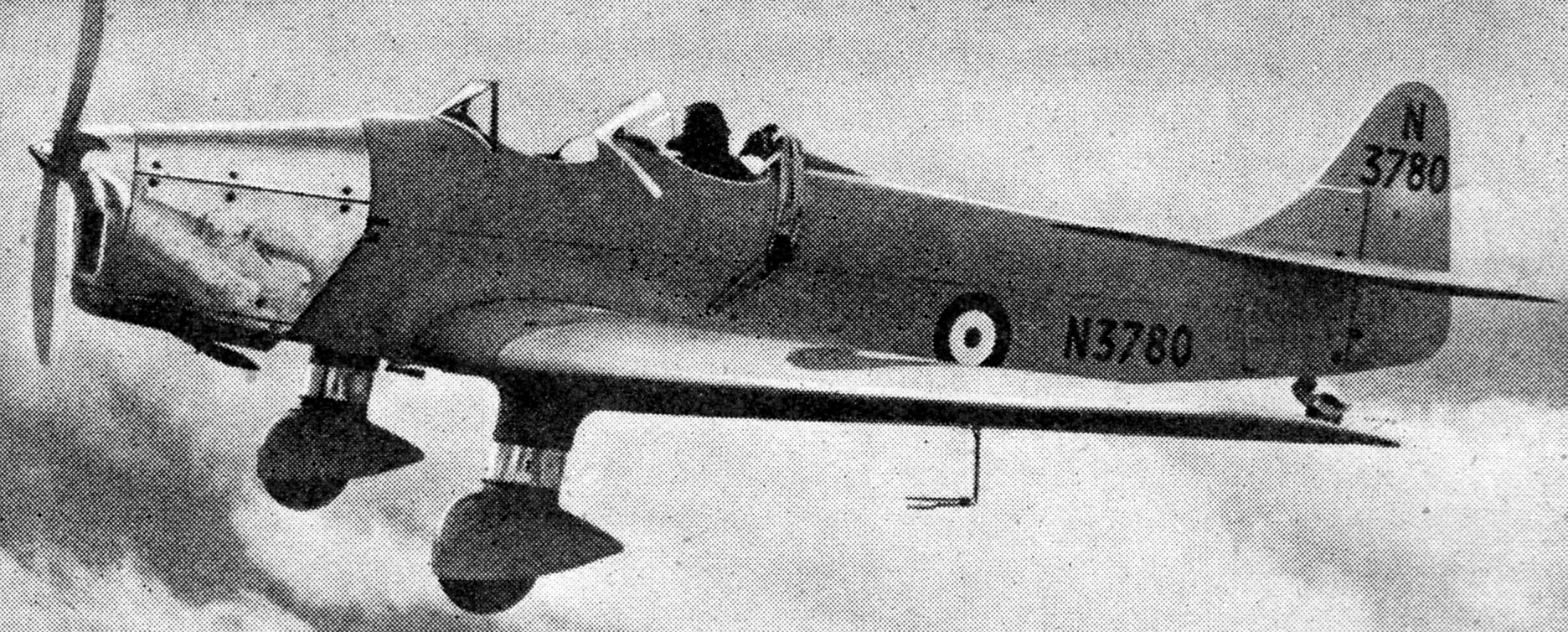
MILES
MAGISTER INITIAL TRAINER
Many
R.A.F. pilots receive their initial training on the Miles Magister,
seen above. This is a cantilever low-wing monoplane of wooden
construction, and like the Moth, it is powered by a 130-h.p. D.H. Gipsy
Major engine. It has an initial climb of 850 feet per minute and a
service ceiling of 18,000 feet. Its maximum speed is 142 miles per hour
and its range 380 miles
It
seems no time before he is once again watching the back of his
instructor’s head as the Tiger Moth skims across the aerodrome and
climbs rapidly into the sky above. Soon they are at 2,000 feet flying
straight and level at 90 miles an hour. A voice is heard through the
earphones which startles Smith, who has just realized that
what he
judged to be strange white flowers in a pocket handkerchief of pasture
land away below—are merely sheep after all. “I want you to put your
hands and feet lightly but firmly on the controls in your cockpit, and
watch the nose of the aeroplane in relation to a point on the horizon.
Notice that if I put my right foot forward, right rudder is applied and
the nose of the aeroplane swings to the right. If you apply left rudder
the nose will swing to the left.” So it goes on.

CONTROLS
OF AN AEROPLANE
Diagram
showing how the control column and rudder bar control an aircraft in
flight. The former when moved fore and aft lowers or raises the
elevator, and when moved laterally raises one and depresses the other
aileron. The rudder, controlled by the pilot’s feet, is used
in
conjunction with the ailerons when turning. Insets show, left, how the
aircraft yaws if rudder is applied without ailerons; centre, position
of elevator and control column when climbing and diving; and right,
position of ailerons and control column when banking to left and to
right
EFFECTS OF ELEVATORS
“And
now for the effect of the elevators. I push the stick forward and
immediately the nose goes down. See how the horizon seems to rise? Now
I’ve pulled the stick back and we’re climbing. I move it forward and
we’re straight and level again.” Smith is also shown the effect of the
ailerons by which the aeroplane is banked—to the left, or to port, if
the control column is moved to the left, and to starboard if it is
moved to the right. Having demonstrated that he understands the first
part of the lesson, Smith is then shown how the controls are responded
to by the aircraft in a glide with the engine throttled back, and how,
owing to the absence of slipstream from the airscrew past the tail, the
elevators and rudder become less effective.
DUAL INSTRUCTION
The
throttle is opened and after lost height has been gained again Smith is
shown how all three types of controlling surfaces—rudder, elevators and
ailerons—are used in combination.
“I’ve put her straight and level again,” continues the instructor. “Now
you take over and continue straight and level—gently
does it to start. You’re swinging to the left. G-r-r-r, you’ve swung
still further to the left. That’s better. In attempting to correct the
swing you forgot yourself and put on more left rudder instead of taking
it off. Never mind, all that’ll become instinctive in time. You’ve put
the nose up too high—ease the stick forward a little. That’s fine.”
During
succeeding flights Smith learns of further effects in addition to
practising what he had already learnt. Stalling gives him some
uncomfortable moments to begin with and makes him feel that he is
parting company with his stomach. A few attempts make him feel quite at
ease, however. Turns being most important manoeuvres, a good deal of
time is expended on them. Spinning at first makes Smith wonder why he
had ever classed stalling as unpleasant. Approaching a distant Mother
Earth head-on is all very well, but when Mother Earth appears to be
spinning like a gigantic top it takes a bit of getting used to. After
trying his hand at half a dozen he is able to reassure himself that
there is nothing in it. Though pretty to watch, spinning, like rolling,
is not of much account as a useful manoeuvre and the main
reason
for learning how to go into a spin is to learn in due course how to get
out of one, as in certain manoeuvres a little bad flying may induce a
spin to develop all by its own cussedness as it were, and the controls
have to be handled rather firmly to correct it.
In due course
Smith’s flying instructor is pleased with his progress. He has a light,
firm touch on the controls, and a rapidly developing air sense. On the
ground his instructors are equally satisfied with his steady painstaking
work. Though classed as ground instruction, part of his training there
is the nearest thing to actual flying that he has ever experienced and
this deserves more than passing mention.
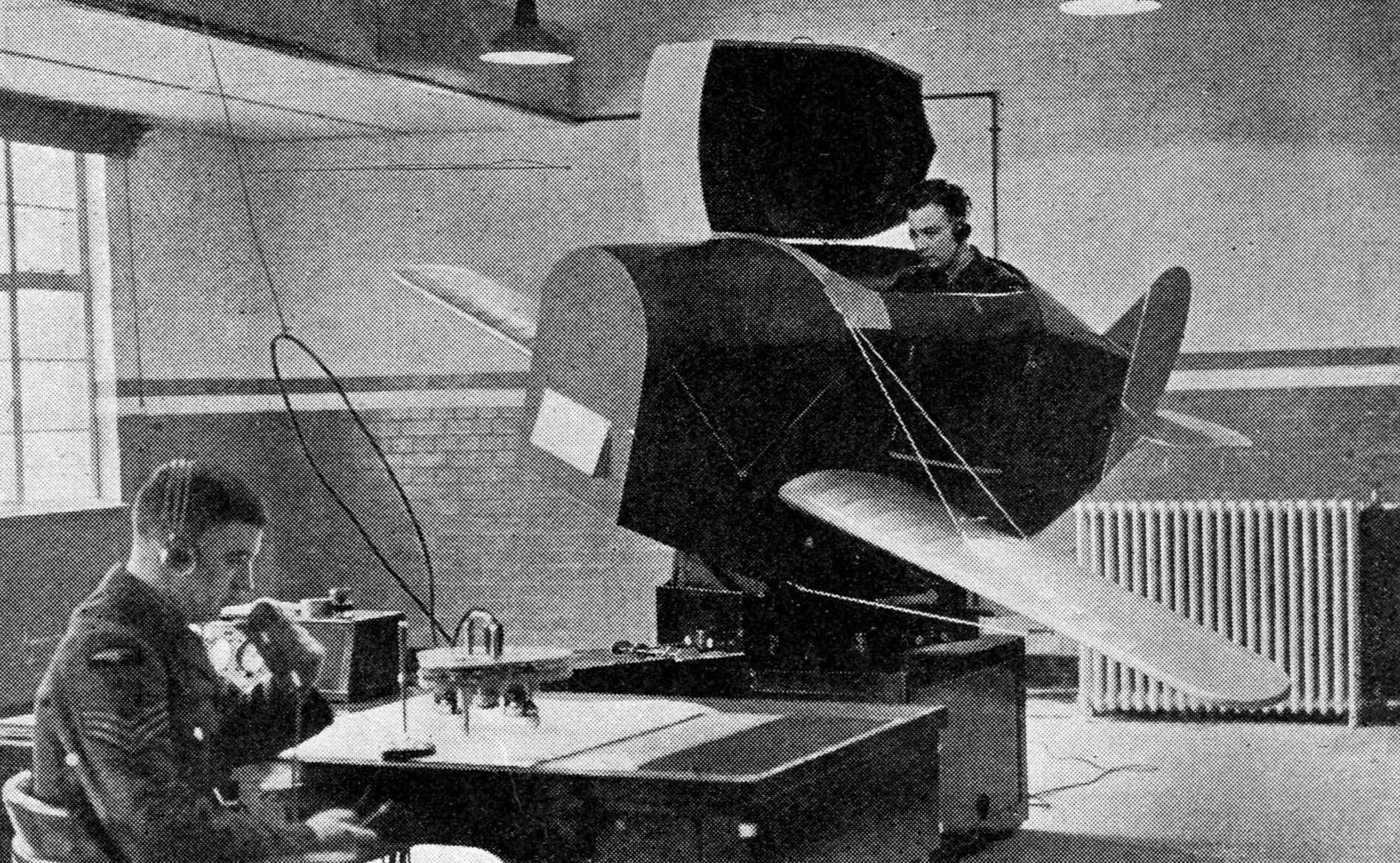
LEARNING
TO “FLY” ON THE GROUND
Fig. 3. The
Link Trainer is used to train pilots in instrument flying on the ground.
It takes the form of a miniature aeroplane mounted on four supporting
bellows which are inflated or deflated by a vacuum turbine the valves of
which are operated by the movement of the control column. It faithfully
imitates nearly all the movements of a real aircraft in flight
THE
“CRAB” TRACES THE PILOT’S COURSE
Fig. 4. The
cockpit of the Link Trainer is fitted with a full set of flying
instruments to guide the pupil on his imaginary flight. The course he
steers is automatically recorded, and traced by the “crab” (seen above)
on a sheet on the instructor’s desk, where there is another instrument
panel electrically harmonized with the instruments in the trainer’s
cockpit
Smith is already learning to fly Tiger Moths
by visual aids, using the horizon as the principal line of reference.
In cloud, heavy rain, fog, mist, or snow the horizon is no longer to
command, and so the pilot has to fly on instruments. In wartime this
ability is of special importance, the bomber pilot on his way to the
target and the fighter pilot seeking to destroy his enemy are equally
handicapped if they cannot use the clouds to their own advantage.
Instrument
flying being entirely a matter of trained reaction to the flying
instruments, plus self-confidence, training and practice in this
important aspect of flying can be most ingeniously given on the ground
by means of the Link Trainer, instruction on which is followed up by
similar exercises in the air.
THE LINK TRAINER
The
Link Trainer (Fig. 3) is in the form of a miniature aeroplane and
consists of a hooded fuselage with wings, tail and control surfaces.
The whole is mounted on four supporting bellows contained within a
turntable mounted upon a square base. These four bellows work in pairs,
being inflated or deflated as appropriate, in conjunction with a vacuum
turbine, by means of an intricate system of valves which are in turn
operated by movements of the pilot’s control column. The fuselage
therefore moves in response to the stick and assumes appropriate
attitudes, being tilted forward in a “dive,” to right or left when
“banking,” and so on.
Turning is accomplished by means of a
reversible motor connected by an endless belt to the turntable. This
motor responds appropriately to movements of the rudder bar.
Inside
the hooded cockpit is a modern instrument panel containing the full
range of flying instruments, some real, some “synthetic,” but all
registering, which are so arranged that they operate as they would in
actual flight. These include an air-speed indicator, an “artificial
horizon,” a rate of climb indicator, a sensitive altimeter, a direction
indicator, a magnetic compass, and an engine revolution indicator.
In
addition to the other controls already mentioned there is a “throttle.”
Complementary to the Link Trainer is an automatic recorder, popularly
known as the “crab” (Fig. 4), which ingeniously traces a detailed
diagram of the course “flown” by the pupil on the instructor’s desk,
where there is also an instrument panel electrically harmonized with
the pilot’s
own instruments, simultaneously indicating “airspeed,” “height” and
“rate of climb or descent.” Instructor and pupil are linked together by
telephone.
In the Link Trainer can be imitated, though not
always quite authentically, every manoeuvre of normal flight, including
stalling and spinning. The last-named gives a good example
of a
lapse from authenticity as regards attitude, since in its synthetic
spin the trainer rotates rapidly, but with its nose up instead of down.
The instrument readings are identical with those of an aeroplane in a
spin, and, equally important, recovery from the spin is effected by
exactly similar manipulation of the controls. A spin can be induced
involuntarily by a mishandling of the controls, or deliberately by first
stalling the aeroplane and then applying full rudder.
The Link
Trainer saves valuable hours of instruction in the air, as well as
lives and aircraft. Link Trainer instruction is given at every stage of
a pilot’s training. Even when fully fledged a pilot has a Link Trainer
in his squadron in which he can practise with advanced
problems.
IMPORTANCE OF VISUAL JUDGMENT
John
Smith is not introduced to the Link Trainer until he has done a fair
amount of visual flying, as it is important that his visual judgment
should be developed before he is allowed to learn how to fly on
instruments and that he should not develop a habit of glueing his eyes
to instruments inside the cockpit when his life may depend on keeping a
good look out.
Nevertheless an experiment has been tried in
the U.S.A. in which a young man learnt all his “flying” in a Link
Trainer, afterwards taking up a real aeroplane for the first time in his
Life, controlling it perfectly, and finally making a blind landing using
a radio beam!
However, we must return to John Smith who is just
getting acquainted with the Link Trainer. He begins his blind-flying
lessons by learning to fly straight and level, to climb, glide and turn.
He learns that whereas in visual flying turns are classified as medium
(thirty to forty degrees bank) and steep (sixty to eighty degrees
bank), in instrument flying only gentle turns not greater than thirty
degrees bank are allowed. These are graded according to rate, a rate 1
turn being made with a fifteen degrees bank, and a rate 2 turn with a
thirty degrees bank. At rate 1 the aircraft turns through 180 degrees
in a minute; at rate 2 through 360 degrees.
Smith’s flying
instructor works in close collaboration with the Link Trainer
instructor to ensure that air exercises in instrument flying are kept in
sequence with the Link Trainer work.

RIGHT
AND WRONG WAYS OF LANDING
Fig. 5.
Top, correct three-point landing, in which wheels and skid touch down
together. Centre, the pilot has misjudged his height and stalled his
machine too far of the ground with the result that he has pancaked.
Bottom, left, bounce due to failure to flatten out, and right, landing
on wheels with too long a run due to failure to stall before touching
down
And now to return to Smith’s visual flying. One
morning he has just made three daisy cutting landings with his Tiger
Moth, whereupon his instructor grins affably and climbs out of the
cockpit.
“For the last few hours’ flying,” he says, “you have
been in complete control of this aircraft, and I have been merely a
passenger. So off you go on your own—just one circuit, a three point
landing, and don’t forget to give me a lift back to the hangars.”
Feeling,
it must be confessed, rather nervously excited, Smith taxies into
position at the leeward boundary, pauses to ensure that his take-off
path is clear and unthreatened by other aircraft coming in to land,
turns into wind, and opens the throttle. Up comes the tail as he
gathers speed while he keeps a straight course by applying rudder
correction as necessary. Then a slight backward pressure on the stick
and the little Tiger Moth is airborne. At 200 feet he eases back the
throttle to climbing speed and carries on steadily to 500 feet where he
does a gentle climbing turn through 90 degrees bringing him across
wind. At 800 feet he adjusts the throttle and tail trim for level flight.
THREE POINT LANDING
He
realizes with a pleasant shock that he is not frightened by the
unfamiliar absence in front of him of the back of his instructor’s
head. He turns down wind for his approach to the aerodrome, keeping a
sharp look-out all the while for other aircraft. A left-hand turn, the
engine throttled back, the tail trimmer adjusted, and he is gliding
down steadily at about sixty-five miles an hour with, the
aerodrome
on his left front. He selects his landing path and when opposite it
turns into wind at 500 feet and glides in to land, crossing the
boundary at 150 feet. The ground seems to rush up to meet him, he eases
the stick back slightly to flatten the glide until the aeroplane is
floating along just above and parallel to the ground. As speed decreases
Smith keeps gradually moving the stick back to prevent his aircraft
sinking until, with the stick right back, he stalls an inch or two
above the ground—a genuine “three pointer” first time (Fig. 5).
His
instructor who, for all Smith knows, has been grinning just like that
ever since he last saw him, climbs up on the step and shakes hands.
This is the greatest moment in John Smith’s flying career; larger and
faster machines it will be his lot in due course to fly; great deeds
against the enemy may one day become part of the day’s work; but there
is nothing to equal the thrill of the first “solo.”
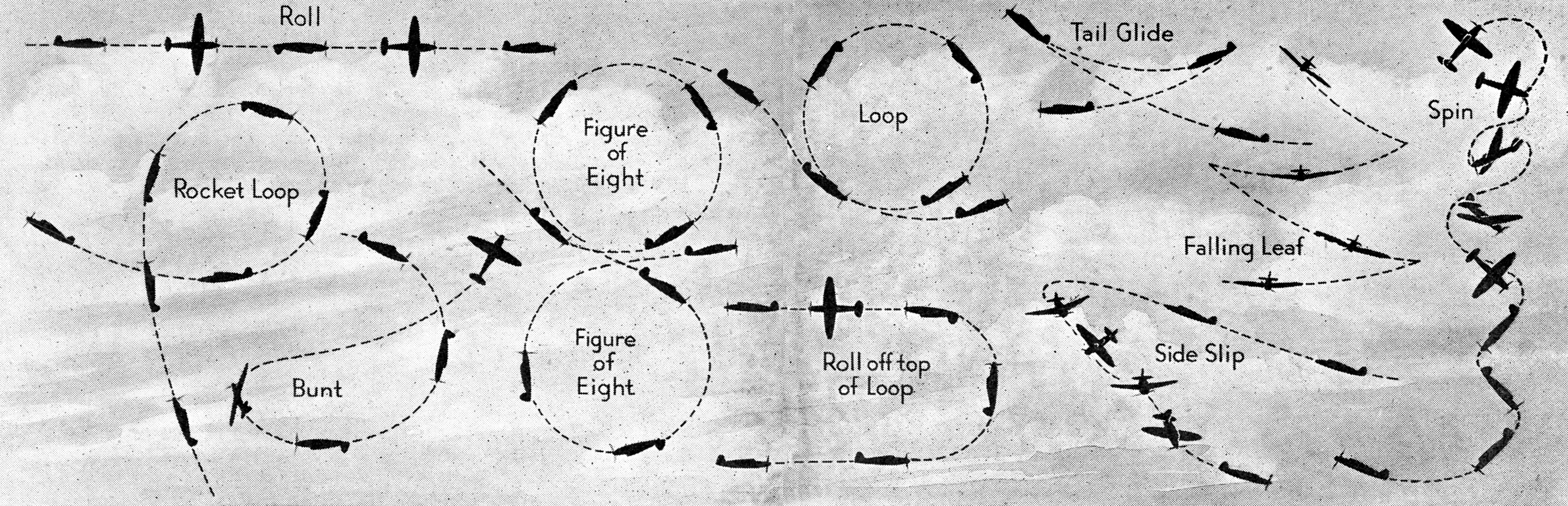
AEROBATICS:
EVOLUTIONS THAT GIVE PILOTS SELF-CONFIDENCE
Fig. 6.
All R.A.F. pilots are given instruction in aerobatics during their
training, for not only do they give the pilots confidence in themselves
and their machines, but they may be the means of outwitting enemy
pilots in actual combat. Some of the most spectacular aerobatics,
however, are of little use in combat. The aerobatics illustrated above
are self-explanatory
It is after his first solo that
Smith really gets down to the business of learning to fly. During his
solo flights he sedulously practises what he has been
taught. Dual
instruction is sandwiched between these at intervals, when more tricks
of the trade are demonstrated, sideslipping, for example, aerobatics,
crosswind landing, and forced landing. Aerobatics (Fig 6), by far the
most spectacular of these, has in addition to what may be termed its
popular appeal a distinct training value, first because it promotes
self-confidence in the air, and, second, because the intelligent use of
aerobatics is often the means of outwitting the pilots of the enemy.
The most spectacular aerobatics, such as slow rolls, are of little use
in combat, however.
So far Smith has invariably landed into wind
which conveniently reduces ground speed. To be able to land across wind
in a restricted space such as a long, narrow field is a useful and
indeed necessary accomplishment at times.
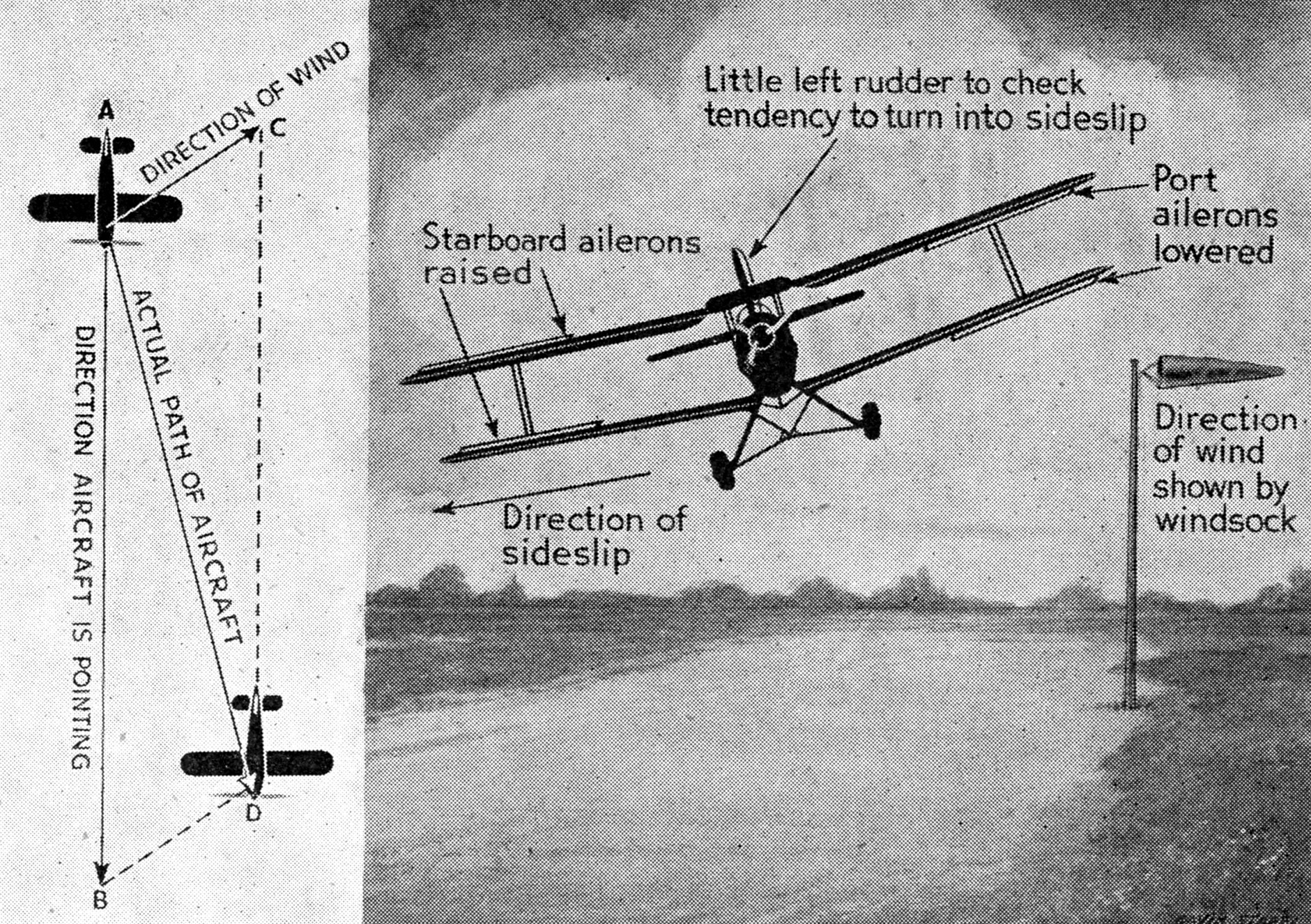
CROSS-WIND
LANDING
Fig. 7.
A pilot landing in a narrow space across wind would drift sideways did
he not counteract this by sideslipping into wind as shown on the right.
Left, effect of side wind on direction of aircraft’s flight. Such
landings and the question of drift are explained in the text
CROSS-WIND LANDINGS
To
understand what has to be contended with in this respect let us
consider the eficect of a side wind on an aeroplane in quite normal
flight, while going cross-country. In the plan view of the aeroplane at
A on the left of Fig. 7 the aircraft is being drawn forward by the
power of its engine, considered separately, along the line AB. The
force of the side wind, however, is tending to blow it along the line
AC. A natural compromise between these two forces results in the
aircraft actually moving along the line AD. It is interesting to note
that if we know the air speed of the aircraft and the course being
steered by it, and the speed and direction of the wind, a diagram
similar to the one in question will give us the speed of the aircraft
over the ground and the actual direction it travels. Thus, if the
lengths of AB and AC are made proportional to the air speed of the
aircraft and the speed of the wind respectively, and the parallelogram
ABDC is completed as shown, the length of AD will be similarly
proportional to the speed of the aircraft over the ground and the
direction AD will be that in which it actually moves.
It is
obvious that if an aircraft attempts to land while drifting sideways in
this way the landing wheels will be subject to a severe lateral thrust
as they touch the ground sufficient in many cases to wreck the
undercarriage at least, and the aeroplane will possess a lateral
momentum which may turn it on its side.
In cross-wind landings,
therefore, the aircraft is persuaded to approach the ground along its
normal landing axis directly fore and aft, and this is achieved by
side-slipping the aircraft into wind at such a rate that the drift due
to the wind is exactly counteracted. This is illustrated in the right
hand sketch in Fig. 7. Similarly in a cross-wind take-off the stick is
held to the side from where the wind is blowing thus giving the
aircraft a tendency to bank as soon as it is able to do so.
Forced
landing practice is very valuable. In this the pupil is taught to
throttle back his engine, to select a suitable field, and to land in it
without opening the throttle again. A well executed forced landing as a
result, perhaps, of enemy action, may be the means of saving
the country the price of a bomber, worth as much, possibly, as £40,000.
And
now John Smith encounters the terminal examinations which he passes
with credit in every subject. The only decision that remains to be made
is whether he is to become a fighter or a bomber pilot. The type of
advanced trainer on which he will continue instruction depends on this
choice. Several types of trainer aircraft were shown previously.
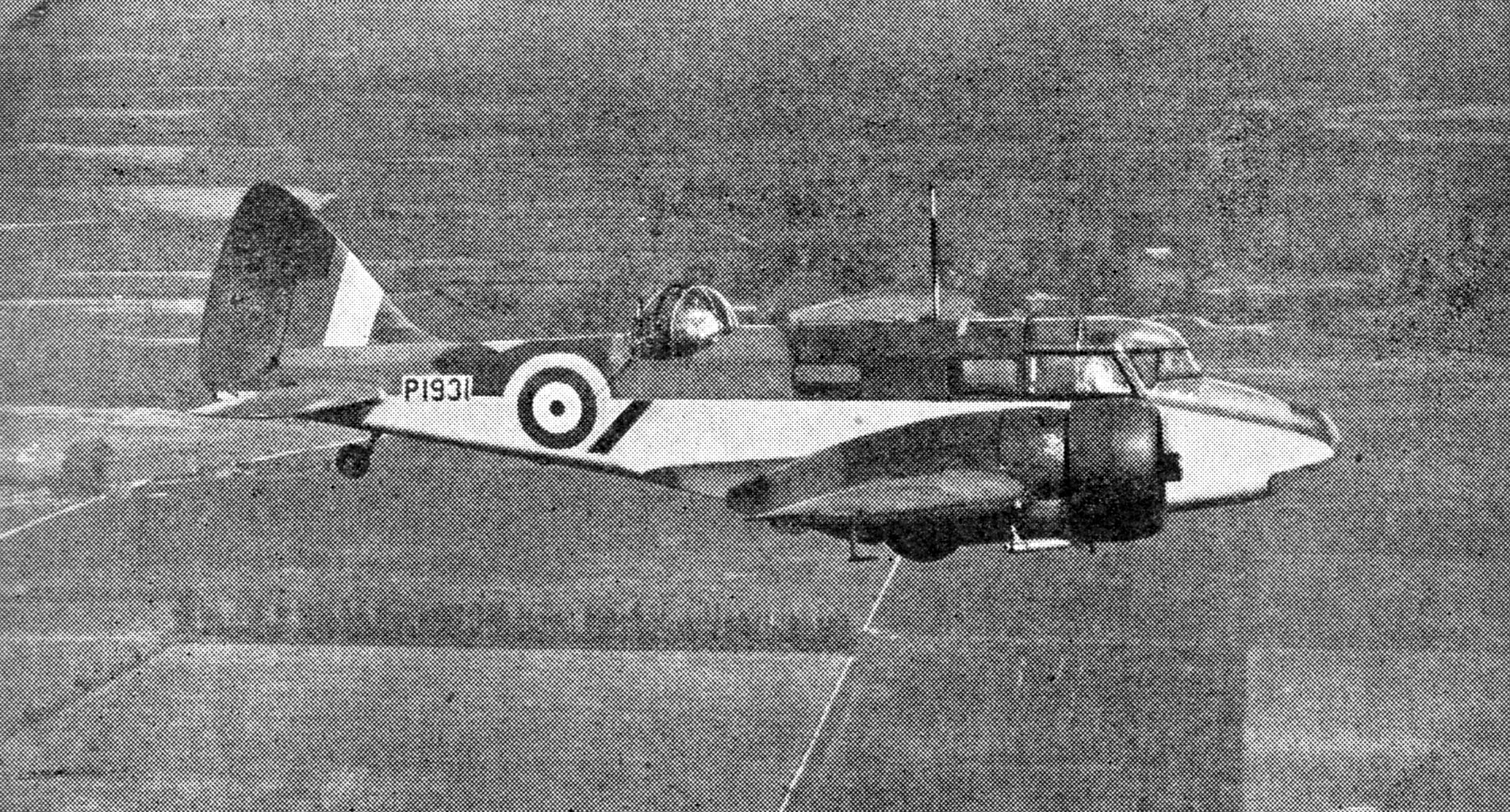
AIRSPEED
OXFORD ADVANCED TRAINER
Fig. 8.
The Airspeed Oxford, used for training bomber pilots, is a twin-engined
low-wing cantilever monoplane with a retractable undercarriage. Its two
375-h.p. Armstrong Siddeley “Cheetah” X engines give it a maximum speed
of 197 miles per hour at 8,300 feet. It has an initial climb
of
1,225 feet per minute and a service ceiling of 23,000 feet
Smith
has expressed a preference for multi-engined types, and the chief flying
instructor thinks his choice a sound one. He is cool headed, possesses
initiative and stamina, his blind flying is good, and he has
demonstrated his ability to navigate. To his delight he is therefore
posted from his elementary school to an appropriate service flying
training school for advanced training on twin-engined Airspeed
Oxfords (Fig. 8).
On his arrival at the new station he finds that
no time is lost in getting down to work, and he soon meets his new
instructor. After a brief chat on John Smith’s flying experience so far,
he is taken along to a superannuated aircraft of the type he will fly,
but from which the engines have been removed and which is jacked up
above the ground. He climbs into the left hand seat, and his instructor
sitting on the right explains the functions of the host of instruments
and controls.
After the almost bare simplicity of the Tiger
Moth’s small cockpit with its few simple instruments Smith is almost
appalled by the bewildering array of instruments of various kinds,
levers, knobs and switches, all requiring attention at certain times.
On
his right hand side are the instruments concerned with the welfare of
the two engines: boost gauges, revolution indicators, cylinder head
temperature gauges, and oil pressure and temperature gauges. He is
shown how to lower the flaps, and the correct way in which to lower and
retract the undercarriage.
Soon afterwards he is given his first
flight in an Oxford. Since a flight in one aeroplane, apart from speed
considerations is very like a flight in any other, this may largely be
left to the imagination. Suffice it to say that Smith is at present
confronted with a host of unfamiliar “gadgets.” Before taking
off
a systematic check must be made. In addition to ascertaining from the
appropriate gauges the amount of fuel in the tanks, boost pressure, and
engine revolutions on the run up, seeing that the cylinder temperatures
are reasonable, and watching the oil pressure, the operation of the
flying controls has to be checked, the elevator trim adjustment made,
flaps positioned, mixture adjustments made, and half a dozen other items
attended to. Small wonder that John Smith regards all this at first as
rather an embarrassment of riches.
The necessity for giving a
pilot instruction on a modern type of trainer such as the Oxford at an
early stage before sending him to fly an operational aeroplane is
obvious. The Oxford, a sturdily built trainer, with a cruising speed of
160 miles an hour provides an excellent stepping stone to bigger things.
CHANGES IN TECHNIQUE
In
addition to its principal differences from the Tiger Moth, such as
having two engines, flaps, and a retractable undercarriage, Smith
notices that there is a wheel control instead of a stick to operate the
ailerons. He also finds that its cabin type of cockpit is comparatively
quiet, the take-off run longer, speeds higher, and glide steeper. Some
dual soon enables him to master the necessary changes in technique, and
he is sent off for a solo circuit, a tame affair by comparison with his
first solo. He progresses steadily in his flying exercises of which night
flying, formation flying, and navigation are perhaps of most importance.
DEVICES
TO OVERCOME ICE FORMATION
Fig. 9.
Ice formation on aircraft is a very serious occurrence for it can, as
shown above, seriously impair its efficiency and may even cause it to
crash. Some of the most common devices used on aircraft to combat this
danger are illustrated in the lower half of the diagram
Ground
instruction assumes a gradually more advanced character and new
subjects are included such as engines, meteorology, and aircraft
maintenance. Science is continually providing the pilot with more aids
to enable him to defy the worst weather. Examples are the standard
blind flying panel such as Smith first encountered on the Link Trainer,
radio aids to navigation such as direction finding equipment, beacons,
and blind landing systems, and de-icing equipment (Fig. 9). The human
factor is still, however, the greatest in any equation, and the really
astute pilot is he who is well aware of what he cannot do.
THE A.M.L. TEACHER
Smith’s
progress is still being carefully assessed. Although reports have
accompanied him from his I.T.W. (Initial Training Wing) and E.F.T.S.
(Elementary Flying Training School) to the service school, these in no
way prejudice the opinions now being formed. After a few weeks he and
other members of his course are transferred to the officers’ mess—clear
evidence that they have been provisionally selected for recommendation
to commissioned rank. This requires official confirmation bythe station
commander at the end of the course.
BOMB
AIMING ON TERRA FIRMA
Fig. 10.
This robot bombing teacher projects a moving picture of the target on
the floor of the building in which it is housed. With its aid pilot and
bomb aimer can practise under realistic conditions without leaving the
ground. It also records the result of the aim
Smith
now encounters a new aid to training—the A.M.L. (Air Ministry
Laboratory) Teacher (Fig. 10), a robot device which makes practice
bombing readily available without leaving the ground. This device is
housed in a tall specially constructed building, and consists of an
elaborate film projector which is located at the top of the building. A
cinema film is projected upon the floor of the building, and an illusion
is created whereby Smith and another pupil—pilot and bomb aimer in
turn—on a gallery half-way up the building, can imagine themselves to
be flying across a stretch of country. The pilot sits in a bucket seat
with stick and rudder bar in front of him, and the bomb aimer, equipped
with a bomb sight is lying on his stomach in front of the pilot. The
countryside appears to be passing beneath them, and the bomb aimer has
first to determine from the amount and direction of drift which is
apparent the speed and direction of the wind. After making the
appropriate setting on the bomb sight he “bombs” a selected target, and
in due course the accuracy of his attempt is revealed. Pupils
can
attain a high degree of accuracy by practising on this trainer.
There
are several ways of finding wind speed and direction, and Smith is using
what is known as the three-course method which involves flying on three
courses and measuring the amount of drift in each case. His fellow
pupil sitting in the pilot’s seat has to steer in the direction
indicated by the bomb aimer, the rudder bar being coupled to the
directing mechanism upstairs, any deflection causing the “scenery” down
below to move exactly as though Smith and his companion were actually
flying. The A.M.L. Teacher is a fascinating and very valuable device
which paves the way admirably for the time when real bombs are dropped
on actual targets.
In the Link Trainer Smith is continuing
advanced work in instrument flying and is rapidly approaching the stage
when he will enter upon “blind approach,” the radio beam system of
finding and landing upon an aerodrome in fog. Later on he will actually
fly on the beam and become master of this marvellous method of defying
the worst weather. The Link Trainer is fitted with a radio set
reproducing all the signals that would actually be heard by the pilot
of an aircraft in the air when flying on a radio beam.
Let us
take a look at the instructor’s desk on which is placed a
celluloid-covered map of a radio approach beam. On this moves the
recorder tracing the imaginary path of the Link Trainer as John Smith
manoeuvres his craft in response to the signals.
THE RADIO BEAM
It
should be explained that a radio beam is projected along a
pre-determined track selected to provide the best line of approach to
an aerodrome. By means of a receiving set in the aeroplane and by
observing a pointer in a special instrument or by listening to signals
the pilot is aware when his aeroplane is flying in the beam which is
characterized by a steady continuous signal. If he deviates to the left
of the beam the continuous signal changes to a series of dots, and if
to the right of the beam to a series of dashes (Fig. 11).
Simultaneously the pointer already referred to “kicks” right or left
indicating the direction the pilot has to turn to regain the beam.
LANDING
BY RADIO BEAM
Fig. 11.
Diagram to illustrate principle of radio beam. If the pilot
flies
on his course he receives a steady continuous signal. If he deviates to
the left or right the signal changes to a series of dots and dashes
respectively. The pilot not only hears the signals, but sees them in a
special instrument in the cockpit. He is also warned when he is above
the main beacon
So much for direction; now for
indication that the aerodrome is near. This is effected by two
low-powered transmitters which are located in the centre of the beam
and which emit vertical zones of radiation in the form of inverted
cones. These transmitters known as the outer and inner marker beacons
(Fig. 11) are sited about two miles apart, the second being on the
aerodrome boundary.
BLIND LANDING
When
the aeroplane flies through these vertical radiations the pilot receives
distinctive signals superimposed upon the steady signal of the beam and
simultaneously a red neon lamp in the cockpit glows. There is also an
indicating symbol called the cone of silence when the pilot is
vertically above the main beacon.
The pilot wishing to locate and land at an aerodrome equipped
with this radio beam in fog
or conditions of low visibility is by means of a recognized procedure
brought into position at the outer marker beacon heading towards the
aerodrome. His height is about 600 feet and his speed, say, 100 miles
per hour. When he hears the warning indication of the outer beacon he
throttles back to a predetermined setting and descends at approximately
400 feet per minute at the lowest safe manoeuvring speed, keeping at
the same time in the centre of the beam. He arrives at the inner beacon
at a height of 100 feet and hears its distinctive signal
indicating that he is correctly placed to make a landing. From that
height he will almost always see the ground. If not, he carries on
keeping straight on his beam until the ground is visible, and lands in
the usual way.
In air training the next important items are the
navigation tests, and Smith is told by his instructor to prepare to fly
cross-country to a distant aerodrome. He notes on the map the best
“checks” on or close to the route, the proximity of high ground and
obstructions such as balloon barrages. A weather report is obtained for
the period covering the flight.
In the air Smith climbs to 3,000
feet and then crossing the aerodrome while actually setting on his
course he notes the time of departure and settles down to steady flying.
After ten minutes he studies his map and checks his position which
should be, say, one mile east of a railway station alongside a main
road. Finding that he is almost dead over the right spot he decides to
carry on on the same course.
In the cabin, with the hum of the
engines sounding pleasantly in his ears, Smith rapidly checks his
engine and flying instrument readings. He finds that everything is just
as it should be.
NAVIGATION TESTS
Some
time later he checks his position again, this time in relation to a
large conveniently situated reservoir, which shows that he is one mile
off his track. The necessary calculations are made and the Oxford’s
course is altered by a few degrees. If considerably off his course it
may be necessary to amend the estimated time of arrival.
The
aeroplane speeds on through the afternoon sky piled high with cloud now
tinged with grey nimbus in the west, over the green fields and little
villages with people looking up to observe its passage, near big towns
with factories belching forth smoke, across rivers, roads and railways.
So it goes on until he sees the aerodrome buildings straight ahead and
that glow of satisfaction peculiar to navigators who have reached their
appointed destination steals over him.
END OF THE COURSE
After
tea, which goes down very well—flying is hungry work—Smith starts off on
his journey home. This is uneventful except for about ten minutes in
the middle which call for some instrument flying. The heavy showers
threatened in his weather forecast arrive with the clouds down to 1,000
feet. Smith does not worry, however. It is obvious that it is only a
bad patch; he is well clear of high ground and he settles down on his
instruments till, as suddenly as it arrived, the rain ceases and he is
“in the clear” again.
After seeing his instructor who goes over
the details of the trip with him and gives him a metaphorical pat on
the back, Smith retires for supper. Another day has gone and his
training is nearing its end. On the flying side there is only night
flying to be done. Smith finds that the Oxford is easy enough to handle
by night, and after a few circuits with his instructor he is sent off
entirely on his own. He has put in some really hard work throughout the
course at his various ground subjects. Now he sees that all his pains
are rewarded when he discovers his name placed third on the list.
He
is interviewed by his commanding officer who, after a few minutes
conversation says: “Well, Smith, you have worked well and what I have
seen of you has convinced me that you are suitable for officer rank. I
shall be pleased to send your name forward for a commission.
“I
have studied your flight commander’s report on your flying,” he
continues, “and his recommendation for your employment on heavy
bombers. I notice that you yourself have expressed a wish for
Lancasters, and I think you would do very well on that type of
aircraft. Therefore I am recommending you for heavy bombers with
Lancasters as the first choice.”
So here we must take leave of
Pilot Officer John Smith, now with wings on his tunic, about to depart
for his operational training unit where he will receive crew training
before joining his squadron.
Good luck, John Smith!

HIS
PROUDEST MOMENT
When
a pilot has successfully completed his course at a service flying
training school he receives the coveted insignia of his calling—his
wings. This badge represents months of mental and physical eflort, and
the job of sewing it on to his tunic is more of a ceremony than a task
JOHN
SMITH’S CHOICE
This
is the type of multi-engined bomber that John Smith was determined to
fly. The Lancaster is an extremely powerful night bomber which carries a
maximum bomb-load of about eight tons. Its speed is well over 300
m.p.h. while it has a range of more than three thousand
miles
We have said that the
British system of flying training is the finest in the world and we have
followed a hypothetical John Smith through all the stages of turning
him, a raw recruit, into a finished pilot. But we did not say where his
training took place—and for a very good reason. It might have been in
Britain, in Canada, Australia, New Zealand, South Africa, Rhodesia or
India. He could even have gone through his initial training in Burma,
Malaya, Trinidad or Bermuda. There is not a part of the great British
Commonwealth which has not contributed men for the air crews fighting
the battle against Germany. There are few parts which do not share in
the training of those crews, at least in the early stages.
Long
before the war began in September, 1939, the Dominions and Colonies
were making their contributions of personnel to the R.A.F. Twenty per
cent of the pilots who joined before the war came, in fact, from
overseas, where Dominion air forces were also being developed along
parallel lines to that of the R.A.F. and with the help of an
interchange of instructors. Consequently, when hostilities began, there
was a framework in existence on whichncould be built the vast training
scheme that it very soon became obvious would be necessary. The Empire
Air Training Scheme, later to be known as the British Commonwealth Air
Training Plan, could be launched with a minimum of delay. It was. And
to give some idea of to what purpose, it is only necessary to mention
that two years later, in Canada alone, more than 40,000 personnel were
employed on the training staff of the Plan.

PILOTS
TRAINING IN CANADA
Thousands
of R.A.F. pilots have been trained in Canada since the British
Commonwealth Air Training Plan came into operation in 1940. Here is an
impressive group f pilots and their machines at Trenton, Ontario, one
of the many wartime flying schools in Canada
AIR TRAINING IN CANADA
The
Empire Air Training Scheme was based on a proposal made to the
Governments of Canada, Australia and New Zealand by the British
Government on September 26, 1939—just 23 days after war was declared.
Subsequently South Africa, Southern Rhodesia, India all developed
similar training plans, but in the first place Canada was chosen as the
pivot round which the whole plan should revolve.
Her wide open
spaces, her consistent weather conditions, the three thousand miles
that separated her from the European theatre of war made her the ideal
centre and she was asked also to provide by far the largest number of
flying recruits. The actual figures aimed at cannot as yet be divulged,
but it can be mentioned that Canada was asked to provide eighty per
cent of the needed number of flying men, Australia and New Zealand eight
per cent and the United Kingdom the balance. Those percentages have
since been adjusted to meet developing conditions, but they were the
basis of the original proposals which, within two days of being
received, were readily and cheerfully accepted by the Canadian
Government and by Australia and New Zealand almost as quickly. The
proposals meant a rapid and extensive increase in the Air Forces of
each of the three Dominions concerned and that Australia and New
Zealand would send to Canada for advanced training, airmen who had
received their initial training in their home countries. Canada would
also give elementary training to her own airmen and to a number that
were to be sent from Britain.
How it could be done had been
agreed and planned by Christmas, 1939. By April, 1940, the plans were
under way, sites for new aerodromes and camps were being cleared,
aircraft procured and instructors got together and trained. A time
limit of two years was fixed for the whole plan to be in full operation
and six months before that time was up all but one of the proposed
establishments was working to schedule.
Twenty-six elementary
flying training schools, sixteen service flying training schools and a
central flying school for instructors, using more than 100 flying fields,
were created, apart from gunnery, navigation, observer, bombing,
wireless, and technical centres. Twice as many trained aircrews were
actually sent overseas in 1940, the first year of the plan, than it had
been thought possible to pass out in such a short space of time.
U.S.A. CO-OPERATION
Before
the United States entered the war, America also provided valuable pilot
training capacity. Four civil schools in the United States provided
“refresher” facilities for American volunteers, with a hundred hours
civil flying experience to bring them up to R.A.F. standard. Facilities
were also provided at several civil schools where pupils who had
completed their preliminary ground training in this country could
undergo an extended course of instruction to fit them for operational
training units.
Our John Smith could have learned to fly almost
anywhere in the Empire, or even in the United States. But wherever it
was, whether he was an English John Smith or a Smith of Canada,
Australia, New Zealand, South Africa or some small island coloured red
in the middle of a map of the Pacific, he would have learned in the
finest possible way.
CHAPTER
4
The
Bomber Aircraft
Factors
regulating design. Take-off run. Speed and defensive power. Range. Day
and night bombers. Stressed skin and geodetic construction. Protective
colouring. Interior of a bomber. The bomb aimer. Tachometric sight.
Bomb distributor. Automatic pilot. Operating the bomber. The captain
and second pilot. Air observer. Wireless operator. Air gunner. Flight
engineer. Oxygen Equipment
THE design of every bomber is
a compromise between a number of conflicting requirements, and the best
bomber is the one in which this compromise has been most happily
solved. The requirements of take-off performance, speed, bomb
carrying capacity, manoeuvrability, defence, range and proper
facilities for the crew must be carefully balanced. Bombers, however,
are not yet standardized in one type, and the purpose for which they
are required will affect the emphasis that is placed on one or more of
these requirements. For instance, in the tip-and-run day bomber, such
as the Mosquito, the emphasis may be placed on speed and
manoeuvrability. On the other hand, in the night bomber, which must be
capable of deep penetration into enemy territory, while speed is
obviously important, the most essential qualities are range and bomb
carrying capacity.
REQUIREMENTS OF BOMBERS
When
the designer lays out his projected bomber aircraft, the first thing he
will ask is how long a take-off run can be tolerated. The longer the
run the greater the load that can be taken into the air with a given
wing area, and therefore the answer to this question is one of the
principal factors governing the geometry of the aircraft. The length of
the take-off run is limited by the size of the aerodromes from which
the bomber will operate and on their freedom from surrounding
obstructions, such as high ground, trees, buildings, etc. It is for
this reason that the Air Ministry has always insisted on the provision
of aerodromes of a size sufficient to prevent bomber design being
hampered by inadequate take-off run.
TAKE-OFF RUN
With
this question settled, the designer knows his maximum length of run and
the rate of climb which his aircraft must have after it has taken off.
If our aerodromes provide, say, at clear run of 1,500 yards in one
direction for use when there is no wind and 1,200 yards in two or three
other directions, we can very safely give the designer a take-off run
of 1,500 yards in a still air to clear a 50-foot obstacle.
BOMBER
AIRCRAFT OF THE R.A.F.
Details
of engines and maximum speeds of seven well-known types of British
bombers. They are all used for long range night bombing with the
exception of the Boston which is a medium bomber. The Mosquito is a
light day and night bomber and is the fastest aircraft in the world
The
landing run in a bomber is of less importance as the aircraft will be
lightly loaded, as normally the bombs will have been dropped and most
of the fuel used up. If a bomber should have to return for any reason
before it has reached the sea or the enemy country and the bombs cannot
therefore be got rid of, arrangements are provided for jettisoning the
bulk of the fuel so as to reduce the load before landing. The fuses of
the bombs can be made safe so that apart from an outbreak of fire even
if the aircraft crashes the bombs will not explode (Fig. 1).
The
next requirement, that of speed, depends on the engine power which the
designer can provide consistent with the size and construction of the
aircraft, and on the cleanness of the streamlining.
SPEED AND DEFENSIVE POWER
The
requirement of defensive power conflicts very much with speed as it
entails the provision of power operated gun turrets with good arcs of
fire and good fields of view for the gunners, which cannot be provided
without interference with the perfect streamline shape of the aircraft.
Defensive power does not, however, consist only in the provision of
good gun positions. That may be called the active side of defensive
power, but there is in addition the very important passive side which
consists of the provision of armour, self-sealing tanks (Fig. 2),
bullet-proof glass and so forth.
BOMB
SAFETY DEVICE
Fig. 1.
Diagram illustrating how bombs are “safe” until they have been released
from the bomb rack. The air pressure during descent operates the small
propeller which unwinds the striker pin and makes the bomb “live”
SELF-SEALING
PETROL TANK
Fig. 2.
Diagram showing principle of one type of self-sealing fuel tank used in
bomber aircraft. When a bullet or other projectile penetrates the tank
the petrol acts on the plastic rubber lining, of which it is a solvent,
and the hole is thereby automatically sealed
Good
facilities for the crew also conflict with the requirement of speed, as
they demand a hull of sufficient size to give reasonable accommodation
to the crew for flights often lasting nine or ten hours, and good fields
of view for the pilot and bomb aimer which again are difficult to
reconcile with the perfect streamline shape.
The range of an
aircraft is the distance it can fly without landing to refuel. The
requirement of range chiefly conflicts with the bomb load and these two
requirements are therefore made as interchangeable as possible by the
provision of large tanks and large bomb carrying capacity.
This
arrangement allows the aircraft to fly a very long distance with a
small bomb load or a short distance with a very large bomb load,
although with tanks full and bombs on all the racks the aircraft would
be so overloaded that it would probably be unable to take off. This
enables the best possible use to be made of the load carrying capacity
of the bomber for both short and long journeys over enemy territory.
A
very careful study of these factors and their application to air
warfare has, since the war of 1914-18, been a principal preoccupation
of the Air Staff. They realized very clearly that one of the main
lessons of the last war was the supreme importance in air warfare of
technical superiority. It has a profound influence on the morale of the
air crews and consequently on their ability to carry out, day after
day, their difficult and dangerous tasks. The fruits of this study
ensured that the Royal Air Force entered the war equipped with aircraft
which, type for type, had no equal in the world, and were certainly
much superior to their German and Italian counterparts. More than four
years after the war began this superiority is still maintained. The
Luftwaffe has no aircraft which can be considered equal to the modern
British types.
ENEMY BOMBERS
SPEED
AND ENGINE PARTICULARS OF WELL-KNOWN GERMAN BOMBERS
Leading types of German bombers.
The two Dorniers are developments of
the famous Do.17, or “Flying Pencil.” The 17z is more heavily armed
than the 215, which it is gradually superseding. The Heinkel 111K, like
the Dorniers, has been used in great numbers for raids on Britain. The
two Junkers bombers, besides being used for raids on land targets have
been employed in support of armoured vehicles and attacks on shipping.
The Focke-Wulf Kurier is used for long range reconnaissance work and
also for attacks on shipping convoys
Generally speaking, the British bombers are altogether more highly
specialized than those of the Luftwaffe.
The
Germans designed no bombers specifically for use at night, and, when
their daylight offensive ended in a costly failure in the autumn of
1940, they were compelled to alter their whole policy and adopt night
bombing as the main feature of their air offensive with aircraft that
were not very well suited to this particular task.
The day
bomber, which always runs the risk of being intercepted and overwhelmed
by superior numbers of enemy fighters, is compelled to fly in formation
so that the guns of one aircraft may cover the blind spots, of another.
In order to make full use of the advantages of formation flying, pilots
must be trained to an extremely high standard of skill and must keep in
constant practice.
NAVIGATING THE BOMBER
Much
experimental work was done during the years of peace to determine the
best type of formation to adopt to minimize casualties both from fighter
attack and anti-aircraft fire, and the huge unwieldy formations escorted
by fighters to which the Germans pinned their faith have never been
popular in the Royal Air Force. The British always preferred to operate
with comparatively small manoeuvrable formations with the aircraft so
disposed as to give each other the maximum possible support in the face
of enemy attack.
SHORT
STIRLING FOUR-ENGINE LONG-RANGE HEAVY BOMBER
Diagrammatic
drawing illustrating the main features of the Short Stirling. This
aircraft is readily recognizable by its large single tail fin and the
distinctive hump over the pilots’ cockpit. The bombs are carried
beneath the fuselage in three bays. The armament consists of a two-gun,
power-operated turret in the nose, and a four-gun turret in the tail
BOMBERS
OVER THE SEA
The
increasing range and armament of aircraft has made them invaluable in
the work of submarine detection and destruction. By means of gunfire,
bombs and depth-charges they can often cripple submarines. This
disabled U-boat was forced to surrender to a Hudson aircraft
The
heavy night bomber with its powerful defensive armament and relative
freedom from fighter attack, does not require, except possibly on very
bright moonlight nights, to fly in formation. It flies alone and the main
difficulty of its task is accurate navigation to its target area in the
dark, the finding of the precise target and the successful return to its
base. When it is remembered that this must be carried out in all
weathers, not excluding fog, it will be realized that the provision of
the best facilities for navigation is vital in a night bomber.
This
preliminary survey will give us some idea of what sort of aeroplane the
bomber should be. The tip-and-run day bomber will be a fast
twin-engined monoplane with a bomb carrying capacity of about one ton
and a range of about 1,500 miles. This will give it an operational
radius of action of about 600 miles. It should have a top speed of over
300 miles per hour, and should be easily manoeuvrable. The Mosquito
conforms to this general description, although its speed is
considerably greater. Its armament consists of four fixed cannon and the
same number of machine guns in the nose.
MODERN NIGHT BOMBERS
The
latest type of night bomber is multi-engined with a cruising speed of
300 miles per hour, and a range of 3,000 miles with some six to eight
tons weight of bombs. It is equipped with power-driven turrets in the
nose and tail and amidships, each carrying a powerful battery of guns.
Britain has several such types, notably the Stirling, Halifax,
Lancaster, and the American Fortresses and Liberators. A table, for
comparison of engine particulars and performance, etc., of seven
prominent British bombers, is given below (Fig. 3).
In the War
of 1914-18 our bombers were constructed of wood, reinforced with steel
tubes and braced with steel wires. As their speed and weight increased
it became obvious that wooden construction would no longer suffice, and
preparations were made to change over to metal construction. This was
an entirely new branch of engineering, in which we had no experience to
guide us and the rival claims of steel and light alloys were pressed by
rival constructors. After much trial and error it was found that in
order to compete with light alloys for weight, steel had to be of paper
thinness, and it was impossible to guarantee its immunity from rust, a
small amount of which might dangerously reduce it strength.
Nowadays,
for all practical purposes throughout the world, the stressed skin
method of construction (Fig. 4) using light alloys is universal for
high performance aircraft. The only notable exception is the wooden
construction of the Mosquito. The stressed skin method consists of
using frames and stringers, rather like those of a ship, but very much
lightened and refined, with a thin metal skin riveted on to it. This
system is extremely strong and reasonably simple to build. An
alternative scheme used for the Wellington bombers is the geodetic
system (Fig. 4) in which the framework of the aircraft resembles a
basket-like network made of corrugated light alloy strips.
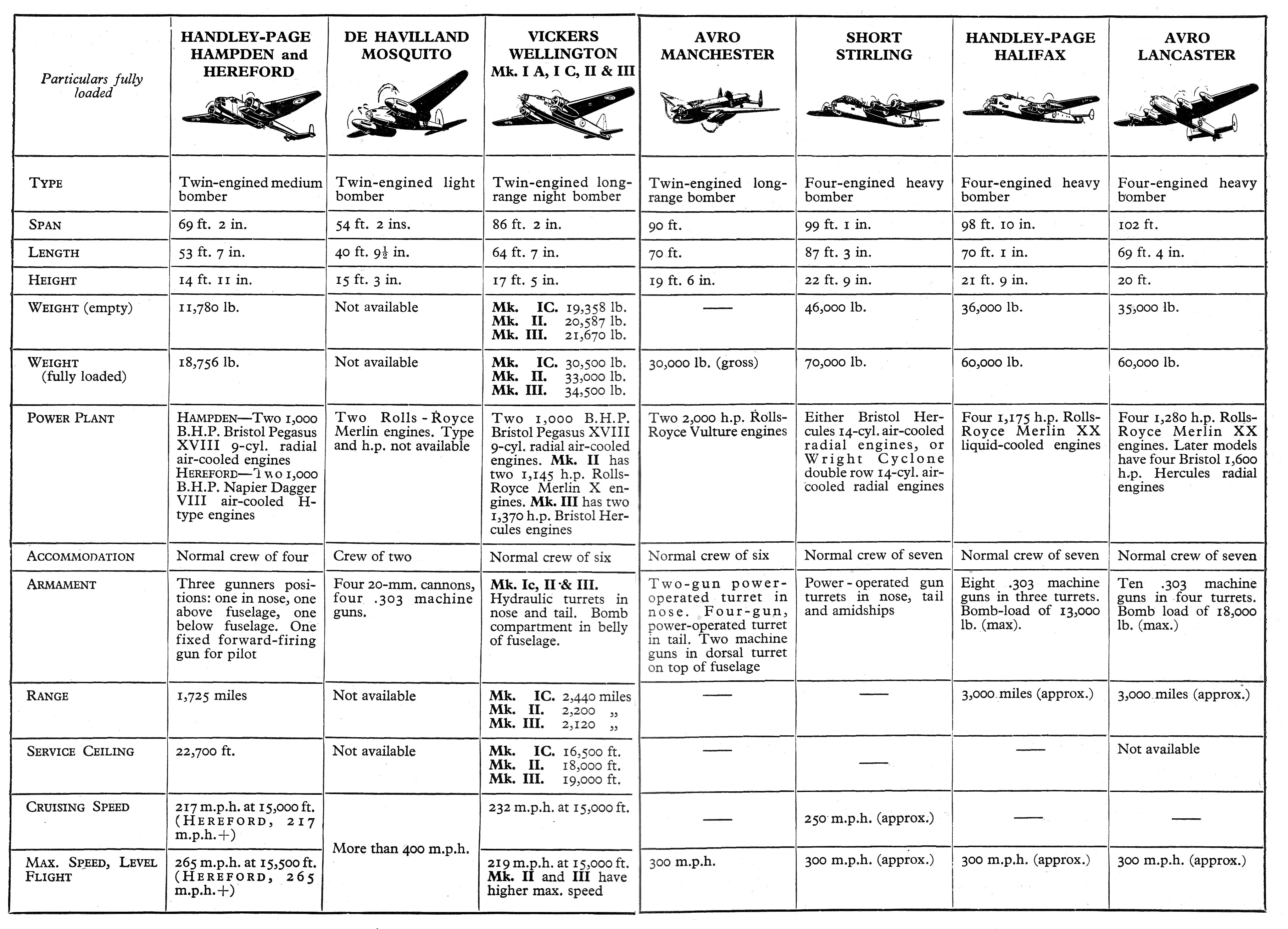
Fig 3. PERFORMANCE
AND SPECIFICATION OF SOME TYPICAL BRITISH BOMBERS
GEODETIC
AND STRESSED SKIN CONSTRUCTION
Fig. 4.
The stressed skin method of construction (lower) consists of using
frames and stringers with a light metal skin riveted on to it. The
geodetic method (above) used on Wellingtons, resembles a basket-like
network of corrugated light alloy strips covered with fabric
THE
SHORT STIRLING
Dimensions
of Britain’s largest four-engine bomber. The Stirling is powered by
four 1,600 h.p. Bristol Hercules 14-cylinder engines and carries a crew
of seven. Its bomb load is about 8 tons
HANDLEY-PAGE
HALIFAX
The
Halifax, although slightly smaller than the Stirling in length and
height, has a similar wing span of 99 feet. Its twin tail fins
and
distinctive nose make it simple to identify
GRACEFUL
LINES OF A MODERN HIGH-PERFORMANCE BOMBER: THE HALIFAX IN FLIGHT
The
Halifax is a mid-wing monoplane powered by four Rolls-Royce Merlin
engines. In the nose is a two-gun, power-operated turret below which
the bomb aimer’s compartment is situated. On each side of the nose is a
transparent blister for observation purposes. The undercarriage
retracts backwards into the engine nacelles, and the Boulton-Paul
electrically operated rear turret, which protrudes well behind the twin
tail fins, mounts four guns. The Halifax carries a crew of seven,
composed of first and second pilots, navigator-bomb aimer, wireless
operator, flight engineer and two air gunners. The bomb compartment, in
the fuselage below the wing, can accommodate a very heavy load of bombs
BOMBS
FOR A STIRLING
The
Stirling seen above is bombing up in readiness for the night’s
operations. Its bomb load, which is three times that of a Wellington,
is carried internally in three long bays running almost the whole
length of the aircraft. The lugs, which can be seen on the bombs in the
foreground, are for attaching the bombs to the bomb carrier. The
Stirling carries a crew of seven
The
system is ingenious and has certain advantages in construction, but it
requires about the same structural weight as the stressed skin method.
It has, moreover, the disadvantage that large holes, such as are
required for the removal or changing of fuel tanks, cannot be made in
the framework and that the whole aircraft must be covered with linen
fabric. This reduces its all-weather qualities, which is an important
matter in time of war, when hangars are seldom used and our bombers are
dispersed round the aerodrome in the open day and night, summer and
winter, in all weathers.
Much work has been done in recent years
in protecting aircraft from the effects of corrosion. Light alloys
receive a special anodic treatment which not only protects them from
the effects of rain and exposure to the air, but also prevents them
from being damaged by salt water or sea air.
The preparation of
a suitable scheme of protective colouring is of great importance to a
bomber. The upper surface must be coloured so as to harmonize with the
ground, so that dispersed aircraft in the open do not give away the
camouflage of our aerodromes, while the undersides must be toned so as
to be inconspicuous against the sky. Day and night bombers therefore
require different colouration for their undersides, the day bombers
being painted a pale blue, while the night bombers are treated with a
special matt black dope. This dope has a remarkable power of absorbing
light and reflects very little when the aircraft is caught in the beam
of a searchlight.
The first impression produced on entering a
modern heavy bomber is surprise at its amazing complexity. In every
direction run large numbers of pipes, electric leads and controls,
while the engineer’s control panel has scores of gauges and many cocks
by which the fuel distribution is automatically controlled from the
tanks to the engines.
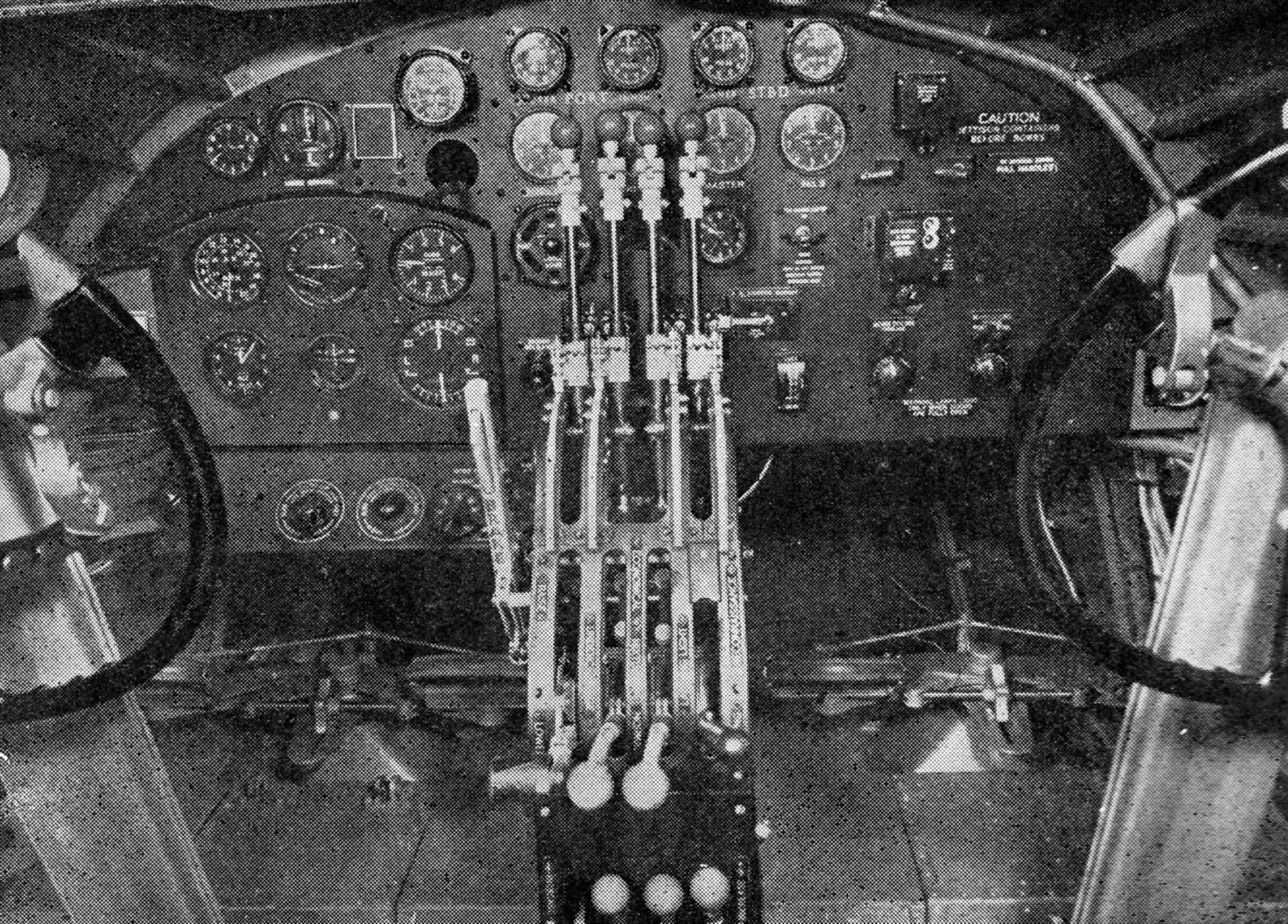
CONTROLS
OF A STIRLING BOMBER
Fig. 5.
Interior view of pilot’s compartment of a Stirling four-engine bomber
showing instrument panel. With so many controls every moment of the
trip demands the pilot’s utmost concentration. He must be able to
handle them calmly and correctly even at the most critical junctures.
The key to the various dials and instruments is given below
DETAILS
OF STIRLING COCKPIT
Key
to Fig. 5. 1, time of flight
clock; 2,
blind approach indicator; 3,
wheel brake pressure gauge; 4-7,
engine boost gauges; 8-11,
engine revolution indicators; 12,
bomb jettison controls; 13,
air-speed indi- cator; 14,
artificial horizon; 15,
rate of climb indicator; 16,
undercarriage position indicator; 17,
time of flight clock; 18,
undercarriage master switch; 19,
bomb emergency switch; 20,
altimeter; 21,
drift indicator; 22,
turn and bank indicator; 23,
bomb release switch; 24,
undercarriage indicator switch; 25,
vacuum gauge; 26-27,
bomb-door warning lights; 28-29,
airscrew de-icing controls; 30,
oxygen regulator unit; 31,
pilot’s control columns; 32,
rudder control; 33,
control box, including: (a), engine control levers; (b), undercarriage
retraction control; (c), landing lamp control; (d), aircrew variable
pitch control; 34,
the aircraft compass
THE PILOT’S COCKPIT
A
casual glance at the pilot’s dashboard (Fig. 5) would lead one to
suppose that the number of gauges and instruments is limited only by
inability to find room for any more, while all round the pilot’s cockpit
are the numerous switches and levers which control the engines; the
lever for actuating the flaps, which enable the pilot to make the
gliding angle steeper (Fig. 6); the gear for operating the
undercarriage; the trimming tabs which trim the aeroplane and enable it
to fly “hands off” (Fig. 7), and the control for the dashboard lighting.
Then there is the compass; a very important instrument indeed. In
modern bombers a master compass, placed where it is as free as possible
from magnetic interference, controls a number of repeaters. One of
these is required by the pilot (Fig. 8). The wireless operator’s
station is surrounded by all the complicated apparatus which enables
him not only to keep in constant communication with his home base, but
to assist the navigator by obtaining bearings from direction finding
wireless stations in this country and even, in certain circumstances,
those of the enemy. There is also the radio telephone which enables the
crew to establish short range communication with an aerodrome or to
talk to another aircraft in the air, and the inter-communication
telephone which enables the crew to talk to one another. In addition,
there is the apparatus which enables the aircraft to home in
on a
wireless beacon and to make its approach and landing on the airfield in
anything short of the densest fog (Fig. 9).
In the navigator’s
station we find a compass and a large plotting table with a screened
electric lamp, charts, maps, rulers, dividers and pencils. There is
also his sextant for fixing his position by taking observations of the
stars and an ingenious instrument for plotting his position on the map
from these observations without the need for working out complicated
sums in arithmetic. Near to him is the astrodome, a perspex dome in the
roof through which he operates his sextant. Near at hand also is the
drift sight, through which he can ascertain, the drift of the aircraft
even at night (Fig. 10).
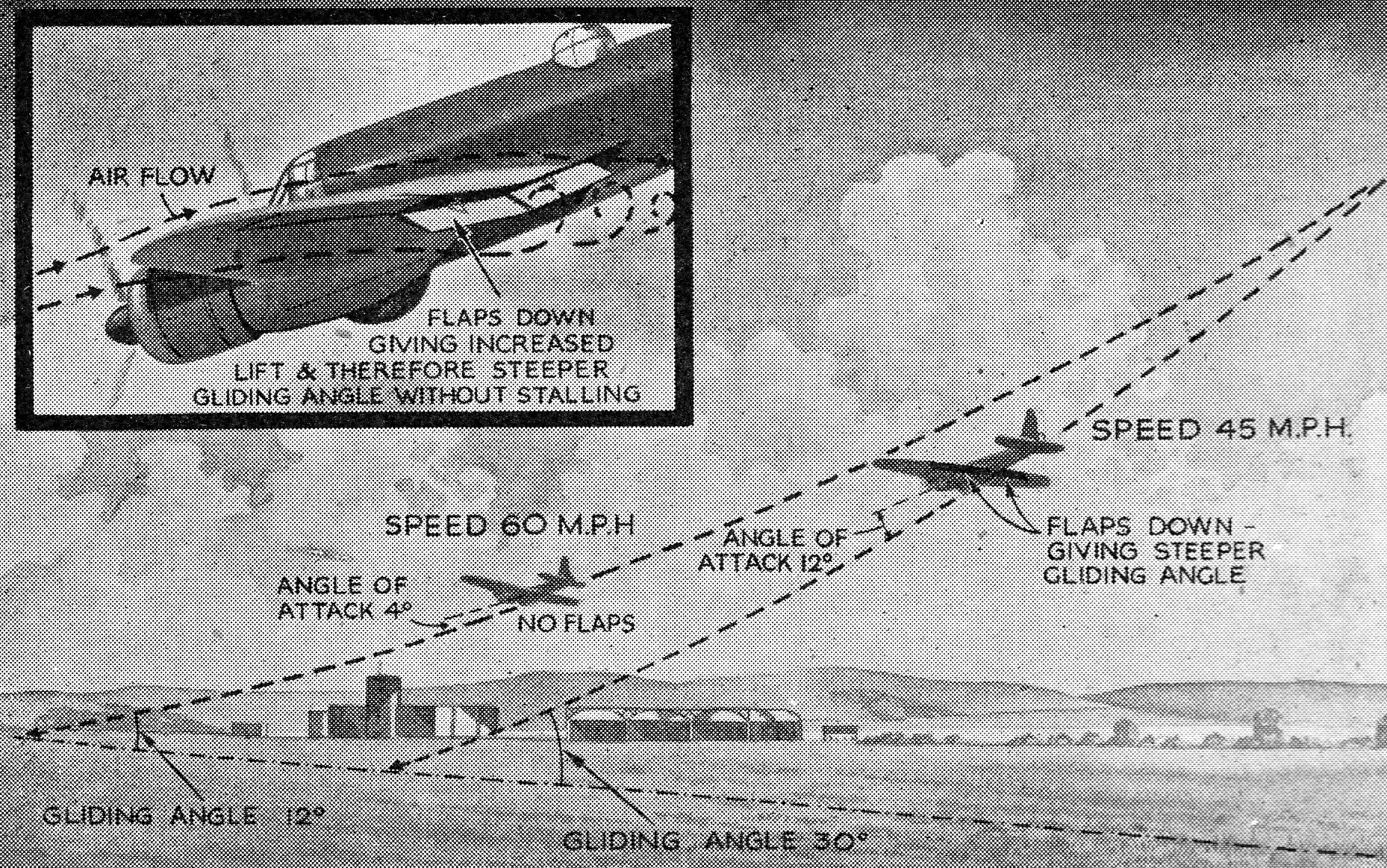
PURPOSE
OF FLAPS
Fig. 6.
Flaps, which are arranged beneath the trailing edges of aircrafts’
wings give increased lift, and are used in taking off and landing. The
diagram shows how they increase the gliding angle and reduce the speed
of an aircraft during landing. Inset, direction of airflow over wings
with flaps down
TRIMMING
TABS
Fig. 7.
Trimming tabs on a bomber. These adjust the trim of the aircraft
according to the shifting centre of gravity (i.e., when bombs are
dropped or fuel used up), and enable the pilot to fly “hands off.” In
addition, in some aircraft the whole tail plane can be trimmed as a
complete unit, as shown inset
MASTER
COMPASS AND REPEATERS
Fig. 8.
In modern bombers the compass is placed where it is as free as possible
from magnetic interference. It controls a number of repeaters, as shown
in an imaginary aircraft above, which are required by the pilot,
navigator, bomb aimer and wireless operator
HOMING ON
A RADIO BEAM
Fig. 9.
By taking bearings on two ground transmitting stations a lost aircraft
can ascertain its exact bearing by means of a radio compass. Generally,
however, three stations are used and the course plotted on a map. To
keep to that course the loop aerial is turned at right angles to the
station required. So long as the aircraft keeps to the correct course
no signals are heard, but should it deviate to left or right the loop
aerial becomes excited and a warning is given. To ascertain the
direction of deviation the fixed aerial is switched into the circuit and
the increase in signal strength right or left is transmitted to a
visual indicator. Inset, aircraft off course to left with visual
indicator showing position of station
FINDING
THE ANGLE OF DRIFT
Fig. 10.
Diagram showing how an aircraft’s course is corrected for drift by
means of the drift sight. The sight is set until an object on the
ground appears to pass between the parallel lines, and the angle is
read off the scale. This gives the pilot the necessary correction in
degrees
THE GUN TURRETS
Then
there are the power operated turrets, which enable the gunners, by
means of a simple control, to bring their powerful battery of machine
guns to bear on an attacking fighter. The turrets are a tight fit for any
but small men when in flying clothes, and air gunners, like jockeys,
should be of small size and light weight (Figs. 11 and 12).
In
the nose of the aircraft is the bomb sight, a very important instrument
(Figs. 13 and 14). Its purpose is to tell the bomb aimer the correct
moment at which to drop the bombs in order to ensure that they hit the
target. When we recollect that an aircraft travelling in the air is
free to move in all three dimensions, it is easy to believe that the
problem is not a simple one. So many things enter into it. The speed at
which the aircraft approaches the target is the resultant of the
aircraft’s own speed and the speed of the wind at the height at which
it is flying. The direction from which it approaches the target is the
resultant of the direction in which the aircraft is pointing and the
direction of the wind at that height. It is therefore most important
that the bomb aimer should be able to know not only the speed and
direction of his aircraft, but also the speed and direction of the wind
which is affecting it. This is by no means an easy thing to discover;
it can be done by measuring the angle of drift of the aircraft and
calculating it from that; or a tachometric sight can be used which
automatically solves the problem by measuring the apparent velocity of
the target from the aircraft itself. The sight must also allow for the
time of fall of the bomb, since, when it is released, the bomb has a
forward speed equal to that of the aircraft, and during the time that
it is falling to earth it will travel forward a long distance (Fig.
15). The time of fall is proportional to the height at which it is
released and the sight must therefore be adjusted to allow for this
factor. The resistance of the air will gradually slow up the forward
speed of the bomb and this produces what is called “trail angle,” which
must also be allowed for. The modern tachometric sight,
gyroscopically stabilized and fully
automatic in its
operation, even releasing the bombs electrically at the right moment
without any action on the part of the bomb aimer, is a marvel of
ingenuity.
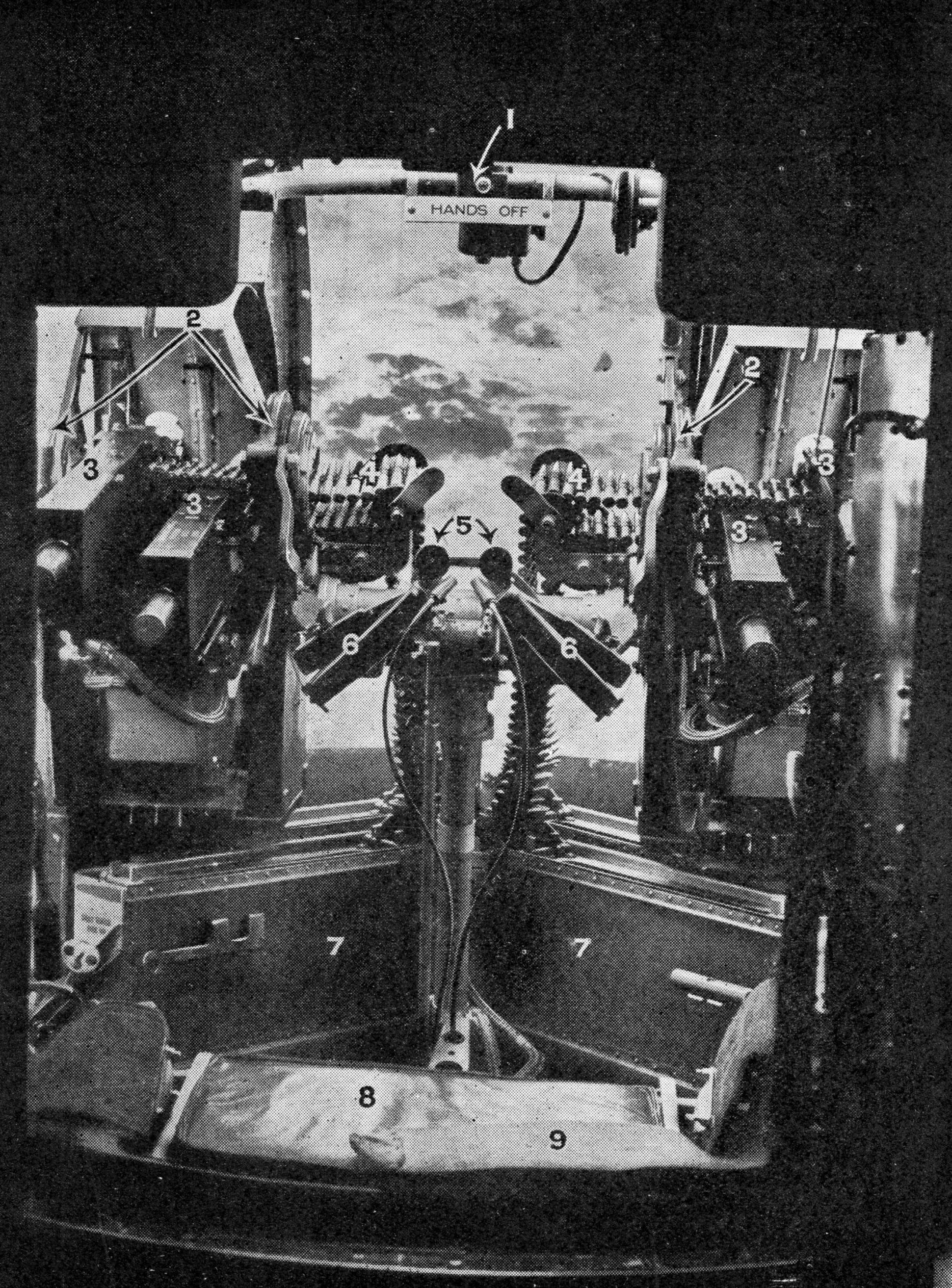
REAR
GUN TURRET OF A BOMBER
Fig. 11. Interior of the Frazer-Nash
power-operated rear gun turret as fitted to bombers. The numbers
indicate: 1,
sight; 2,
trunnions carrying guns for vertical traverse; 3, breech blocks of
four Browning machine guns; 4,
ammunition belts; 5,
firing buttons for four guns; 6,
control grips; 7,
ammunition boxes; 8,
gunner’s seat; 9,
gunner’s safety belt
EXTERIOR
OF REAR GUN TURRET OF A WHITLEY
Fig. 12.
Exterior view of the Frazer-Nash power-operated, four-gun turret, the
interior of which is illustrated in Fig. 11. The turret can be made to
rotate by means of a simple control, and the gunner can rapidly bring a
powerful concentration of fire to bear on the enemy from his four
Browning machine guns. The transparency is bullet resisting and
splinter proof. Slightly modified and improved turrets are used on the
more modern four-engined bombers
HOW
BOMBS ARE AIMED
Fig. 13.
Details of Wimperis course-setting bomb sight. If the sights are
correctly set the target will pass down the drift bar in the direction
indicated by the arrow. Inset, view of target as seen by bomb aimer
when point of backsight is in exact line with point of foresight.
Fig. 14.
The bomb aimer in the nose of a Wellington taking his sights
with the
Wimperis bomb sight. He gives the pilot directions as to the course to
fly
WHEN
BOMBS MUST BE RELEASED TO HIT A TARGET
Fig. 15.
Diagram showing distances from a target at which H.E. and incendiary
bombs must be released by aircraft flying at 200 miles per hour at
heights 20,000, 12,000 and 5,000 feet. It will be noted that whereas
the aircraft is almost above the target when H.E.s strike, it is well
past by the time incendiaries arrive. The scale is in units of 1,000
feet
WELLINGTONS
ON THE WING
The
Vickers Wellington long range bomber is easily recognizable by its long
narrow wings and single large tail fin. It has a wing span of 86 feet 2
inches, a length of 64 feet 7 inches, and a height of 17 feet 5 inches.
It carries a crew of five and has a ceiling of 26,300 feet. It is armed
with power-operated turrets in nose and tail. Its top speed is 250
m.p.h.
ARMSTRONG-WHITWORTH
WHITLEY
The
Whitley bomber, like the Wellington, carries a crew of five. It has a
wing span of 84 feet, a length of 70 feet 6 inches, and a height of I 5
feet. Its service ceiling is 25,000 feet and its top speed about 245
m.p.h. The Whitleys were the machines which bore the brunt of the
leaflet and bombing raids carried out by the R.A.F. in the early days of
the war
TWO
METHODS OF DROPPING BOMBS
Fig. 17.
Bombs can either be released all together as a salvo (inset) or in
succession as a stick. When a stick is dropped the order of and
interval between each bomb can be determined by means of the
distributor. In the diagram above the interval between each is
two-fifths of a second, and distance 100 feet. The aircraft is
travelling at 165 miles per hour
The
bombs can be released either all together as a “salvo” or in succession
as a “stick.” In order to drop the bombs in a stick an ingenious
pieceiof mechanism is employed called the bomb distributor. This can be
set so as to allow any desired interval between the release of each
bomb, and also makes it possible to select the order in which the bombs
are released. For example, if it is desired to drop a stick of bombs
with a distance of 100 feet between each bomb, it is easy to calculate
the interval—thus at, say, 165 miles per hour the aircraft travels
approximately 250 feet in a second, and the time interval required to
be set on the distributor would be two-fifths of a second (Fig. 17).
Another
very useful piece of equipment is the automatic pilot, popularly known
as “George.” An aeroplane flying in the air is free to pitch, roll or
yaw, and the automatic pilot must therefore be capable of controlling
it in all three axes. For this, three separate gyroscopes are required,
each connected to a servo-motor or pneumatic system which, acting upon
the controls, is able to correct any tendency for it to alter its trim.
If, therefore, a bump should force the nose of the aircraft down, the
gyroscope controlling the pitching movement would at once bring into
operation the mechanism which would raise the elevator, depress the
tail and so bring the nose back to its original position. The automatic
pilot will therefore keep the aeroplane flying steadily along a given
course at a given height and at the same time keep it laterally stable
(Fig. 18).

GEORGE,
THE AUTOMATIC PILOT
Fig. 18. A, directional
control indicator; B,
elevation indicator; C,
gyroscope to hold aircraft on even keel; D, course-setting
control; E,
control column untouched by pilot when automatic pilot is in operation;
F, valves
controlling air cylinders operated by movement of gyroscope; G, H and J,
compressed air cylinders for operating rudder, ailerons and elevators.
In electrical types, servo motors replace the pneumatic system, and
although one gyroscope is sufficient to counteract any alteration of
the axis of the machine, three are generally employed
In addition to all this astonishing complexity, the
bomber’s equipment is governed by yet another very important factor,
the need for making everything as light as possible. The role of the
bomber is to carry the maximum weight of bombs to the target and drop
them with accuracy, and the weight of all this ancillary equipment
detracts from the ability of the bomber to carry bombs. Nothing
therefore can be allowed to have a place unless it justifies its weight
by assisting the crew to fly and navigate the aircraft and drop their
bombs with accuracy on the target. In addition, every piece of
equipment is itself made as light as possible. A fraction of an ounce
scraped away here, a penny-weight there, the substitution of a light
alloy or bakelite for a heavier substance, will add up into a saving of
hundreds of pounds of weight, which means that another heavy bomb can
be carried. This need for saving weight has had the effect of refining
the bomber’s equipment, and has put a premium on good design and really
first-class workmanship.
Let
us now think for a moment about the
problem of operating these bombers. In the days of the war of
1914-1918, and for some time afterwards, it was customary to focus
attention on the pilot. Most aircraft were single-seaters and two
seaters, and the pilot was the all-important person. He was usually an
officer, and the remainder of the crew until recent times possessed an
inferior status. Those days are now past, and all members of bombers
air crews enjoy equal status, although it is true that only a pilot may
be captain of the aircraft. The Bomber Command of the Royal Air Force
never talks about “pilots,” but always about “air crews,” and
everything possible is done to encourage and foster team work among the
crew. Team work is the secret of success in the operation of a modern
bomber, and it is for this reason that, during the later part of their
training, air crews work together as a team. The pilots, the air
observers, who navigate and aim the bombs, the wireless operators, the
air gunners, and the flight engineers, all go to their separate schools
at first where they learn their own basic trade. They then go to an
operational training unit where they are formed into a crew and begin
to learn team work. The duties of all members of the crew are carefully
defined as far as their principal tasks are concerned, but the
captain of each aircraft is responsible for arranging the details of
the duties of his crew and for seeing that they carry them out
punctually and efficiently.

VICKERS
WELLINGTON BOMBER
Diagrammatic
illustration of general lay-out and construction of a Vickers
Wellington long range bomber, showing positions of crew, bombs
and
other items of equipment. It is drawn by G. H. Davies and reproduced by
courtesy of the “Illustrated London News”
We have
seen in the previous paragraphs how complex is the equipment carried by
the modern bomber, and it is no exaggeration to say that faulty
manipulation of this equipment on the part of any member of the crew is
only too likely to end in disaster to the aircraft. Each man must carry
out his duties with the most painstaking care. No haste, no
preoccupation can excuse a false move which will end in disaster. It
can be imagined how difficult it is to instil this precision and almost
superhuman patience and care into young men, for youth is traditionally
given to impatience and irresponsibility. To assist them in their
difficult job a very carefully worked out drill is employed which lays
down the sequence of operations and enables the captain, with the
minimum of talking, to ensure that each member of the crew is at his
place and has carried out at the correct time the duty which has been
allotted to him.
It is a guiding principle in laying down the
composition of crews of large bombers that there must be at least two
men capable of carrying out each major task. Thus, there are two
pilots, the senior of whom is the captain of the aircraft. Either of
them can not only fly the aircraft, but can, in emergency, do the work
of the air observer. The two wireless operators are also air gunners,
and so is the flight engineer. Thus, if any one member of the crew
should become a casualty there is another man available to take on his
work and play his part in carrying out the task allotted and bringing
the aircraft safely back to its base.
The captain of the
aircraft, like the captain of a ship, is responsible for the safety of
his aircraft and for carrying out the orders given to him by his
superior officer. He is also the first pilot of the aircraft and he will
certainly make it his responsibility to take off the aircraft when
fully loaded, and also to land it unless conditions are quite
straightforward. Upon his judgment will rest the decision to go on or
to turn back in bad weather or other emergencies, and he will decide
the tactical method of approach to the target. If the aircraft gets
into difficulties he will decide whether to order the crew to “bale
out” or whether it would be better for them to stick to the aircraft
and try to land. When attacked by enemy fighters he will fight his
aircraft, controlling its manoeuvres and giving instructions to the
gunners in the various turrets. He is responsible for checking the work
of the navigator and for seeing that crew drill and flying discipline
are correctly maintained, His is a very responsible and important
position, and it is remarkable that captains of aircraft more often
than not are young men scarcely out of their teens. No doubt they are
the same young men whose irresponsibility in a sports car often calls
down on them the denunciation of their seniors, but when they are on
the job in their bombers they are serious, well disciplined and
responsible leaders.
The second pilot, who may be regarded as a
captain under training, will take over the controls of the aircraft
when the captain is busy with his other responsibilities and as he
grows more experienced, may even be allowed to do all the flying. He is
also capable, in emergency, of manning the front gun turret, aiming the
bombs or completely taking over the navigation of the aircraft.
To
the air observer is allotted the very important duty of navigating the
aircraft to the target and home again and of finding and identifying the
target and aiming the bombs, though in the modern four-engined aircraft
a separate air gunner is carried to do the bomb aiming. It is not too
much to say that the success of a bombing mission depends on his
faithful discharge of his task.
The wireless operator is
responsible for maintaining communication with the outside world. From
time to time, as requested by the air observer, he will obtain fixes of
the aircraft’s position from the direction finding wireless stations. In
bad weather conditions the safety of the aircraft may well depend on
the skill and accuracy of this man.
The
air gunner, perhaps, has
the most arduous and thankless task of all. Squeezed into a power
operated turret, he does his work in isolation. He is cut off not only
from the outside world, but also from the other members of the
crew for many hours at a time, except for the slender link provided by
his intercommunication telephone. Throughout long hours of darkness he
must maintain a constant vigilance, searching the night sky for signs
of enemy fighters. For long periods, for weeks together, he may not see
an enemy fighter, but one night suddenly the attack will come. When it
does come the gunner may only have a few seconds in which to swing his
guns into position and fire. He has, however, the satisfaction of
knowing that his powerful battery of guns has a very good chance of
sending the enemy fighter crashing down to the earth below.
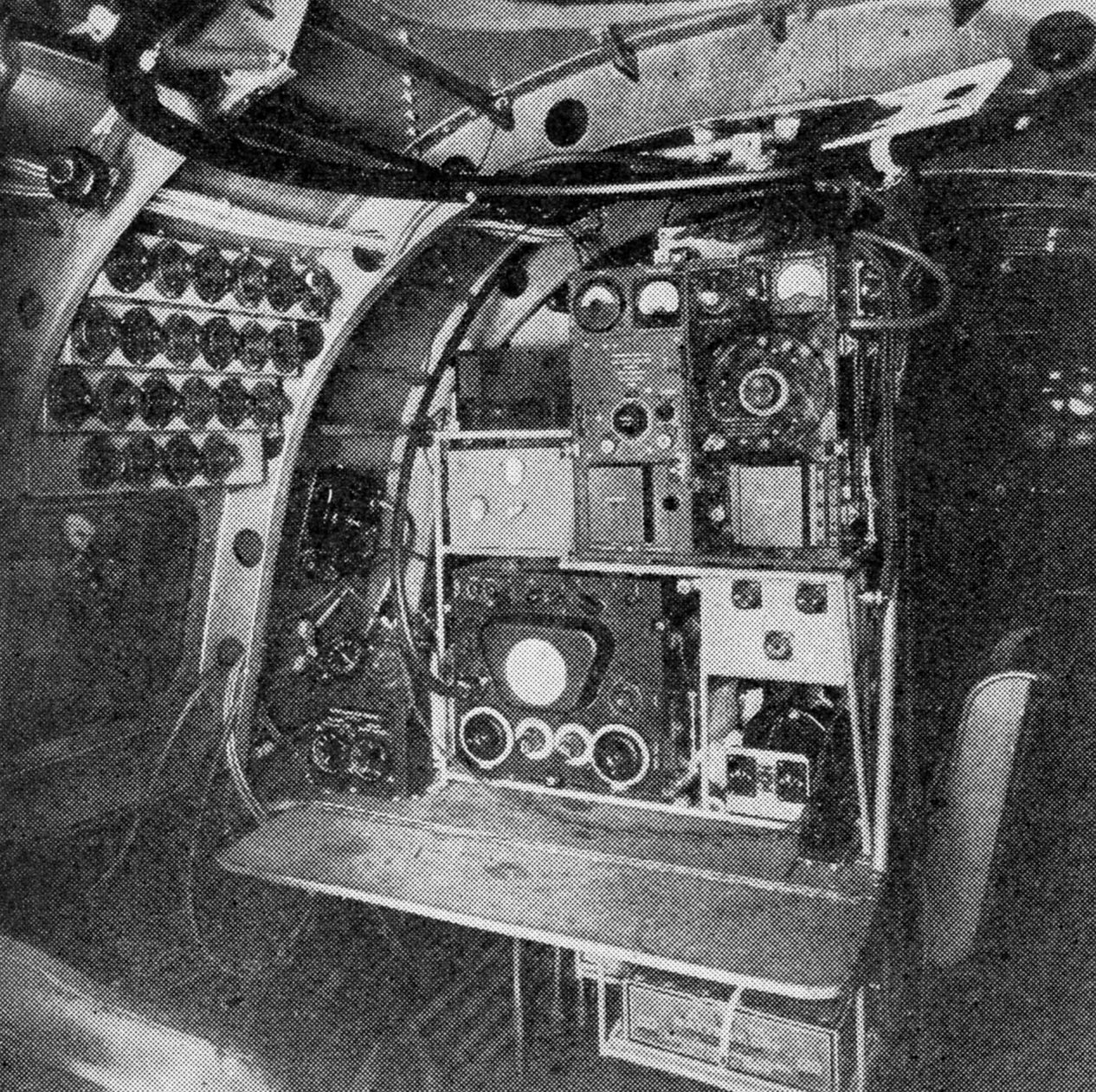
SPARKS’
OFFICE
Wireless
operator’s station in a heavy bomber. He keeps in touch with the
outside world, and in bad weather the safety of the aircraft may well
depend on the skill with which he carries out his task
FLIGHT
ENGINEER
Fig. 19.
The flight engineer is usually carried only in bombers with more than
two engines. He watches over the gauges and dials that register the
performance and condition of the engines, but he also acts as an air
gunner if necessary
The
flight engineer (Fig. 19) is usually carried only in bombers which have
more than two engines. His task is to watch over all the tell-tale
gauges which record the condition and performance of the engines, and
to control the petrol supply and the temperature of the engines. In a
four-engined bomber he may have to watch as many as thirty different
instruments which will tell him the cylinder temperature, the
temperature of the oil going into the engine and coming out again, the
oil pressure, the fuel pressure, and the boost pressure, while he must
watch the fuel-contents gauge so as to change over the supply from
tanks which have been emptied to those which are still full. All this
used to be the responsibility of one of the pilots and still is part of
their duty in twin-engined bombers. In multi-engined aircraft, however,
the work is sufficiently complicated and responsible to require the
whole time attention of one man. In addition, the flight engineer is
trained as an air gunner, so that he can man a gun if necessary.
To
complete the picture which this brief survey has attempted to convey,
it must be remembered that the crew of a bomber are not only carrying
out delicate and responsible tasks in a cramped and noisy aeroplane,
but they are doing so, even in the height of summer, in conditions of
extreme cold and ratified air. In a civil air liner it is possible to
seal up the passengers’ cabin and supply it with heated air so that the
travellers may sit in comfort in their ordinary clothes. It is not
possible in the same way to seal up a military aircraft equipped with
turrets, cameras, bomb sights, etc., and although heated air is
supplied, it cannot be made so effective. If the hull of the aircraft
is penetrated by bullets or shell splinters, the outside air, which may
well be at a temperature of 50 deg. or 60 deg. Fahrenheit below
freezing point, will rush in. The crews must therefore wear thick, warm
clothing, which cannot be other- wise than hampering and to some extent
uncomfortable. In the turrets, which are even more exposed,
electrically heated clothing, gloves and boots must be worn.
The
rarefied air at the great altitudes at which military aircraft must be
prepared to fly makes the provision of oxygen necessary for the crew.
This is carried in high-pressure metal bottles and led by pipes to each
crew station. It is inhaled by each member of the crew through a mask
which is permanently worn and connected to the supply point by a
flexible pipe. Included also in the mask is the microphone for the
intercommunication telephone.
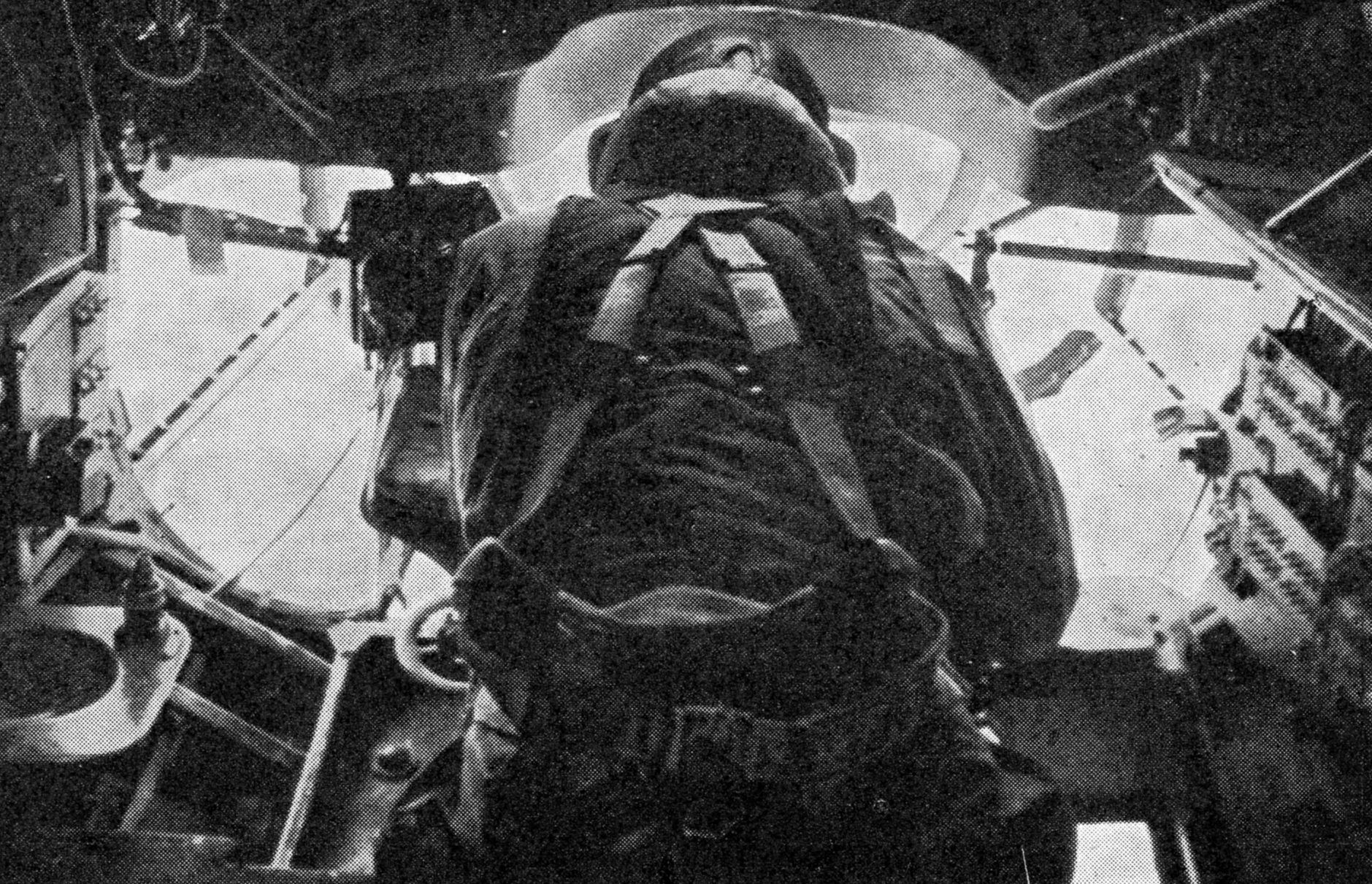
THE
MAN WHO AIMS THE BOMBS
The
entire flight of a bomber across hundreds of miles of hostile territory
may be wasted if the man who aims the bombs is a fraction of a second
out in timing their release. The picture above shows the air observer
at the bomb sights in the nose of a Stirling four-engined bomber
The
bomber aircraft, like any other piece of machinery, is subject to
constant modification and improvement. Very little of its equipment
remains the same for more than a few months at a time, for
continuous research and development are going on with the object of
eradicating weaknesses and improving its efficiency. The guiding
principle underlying this research and development is that complication
in design and production can be tolerated if it leads to simplicity in
operation. The work of air crews under the severe conditions that have
been briefly described above must be made as simple as possible, for
there can be no doubt that in the air the number of mistakes a man will
make is directly proportional to the amount of complication involved in
the task.
Such is the bomber aircraft of today, a complicated,
deadly weapon of war, as yet in its infancy, little more
than a
quarter of a century old. While it would be rash to attempt to prophesy
the trend of its future development, it is quite safe to say that it
will not grow less complicated, nor will it become less deadly.
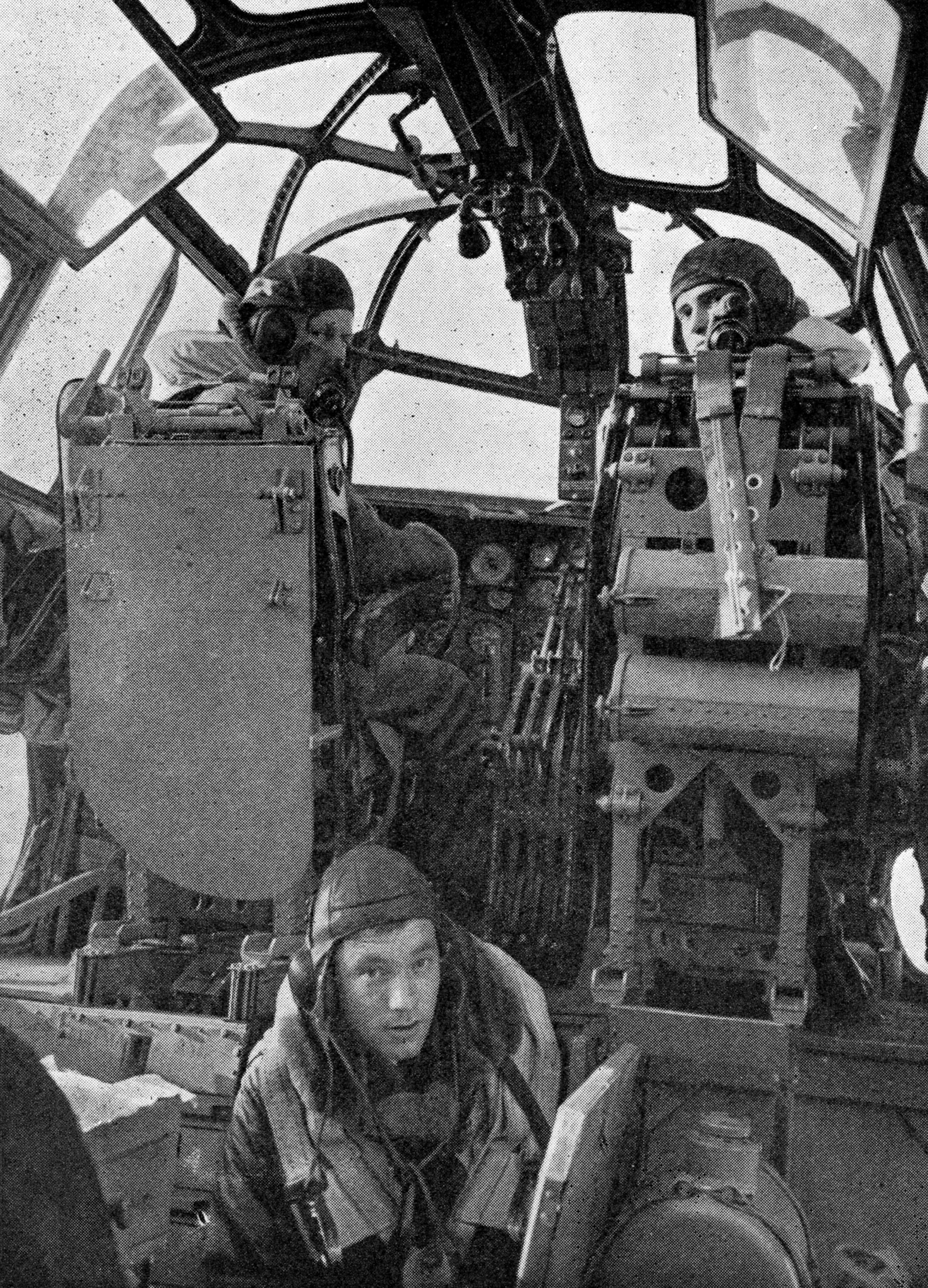
PILOTS
AND BOMB AIMER OF A STIRLING
Interior
of the pilots’ cockpit of a Stirling bomber. The first pilot (left) is
the captain of the aircraft and is responsible for the safety of the
machine and its crew. On his right sits the second pilot who takes
control of the aircraft when the captain is otherwise engaged. In the
foreground the air observer bomb aimer is seen leaving the bombing
compartment in the nose